The Enduring Legacy of Jewish Life in Marrakech
Marrakech, a city rich in cultural heritage, once thrived with a vibrant Jewish community that played a significant role in shaping its identity. The historical Mellah, the old Jewish quarter, features synagogues, cemeteries, and traditional houses that serve as poignant reminders of a once-thriving community. For Jacky Kadoch, who has dedicated over two decades to leading the Jewish community in Marrakech, this history transcends mere architecture; it embodies the memories of neighbors, religious celebrations, and a uniquely Moroccan sense of belonging that persists despite the community's stark decline. Kadoch’s personal connection to this heritage is profound, as he reflects on the shared experiences of a community that has weathered significant demographic changes over the years.
The Jewish presence in Marrakech dates back to the city’s early days, enduring various fortunes under different Moroccan dynasties. The establishment of the Mellah in 1558 during the Saadian Sultan Moulay Abdallah al-Ghalib's reign marked the beginning of a vibrant communal life for Jews in the city. This quarter became a melting pot of cultures, housing generations of Jewish residents with diverse roots, including those from the Atlas Mountains and descendants of Jews expelled from the Iberian Peninsula. Despite periods of coexistence and cultural exchange, Jewish communities faced challenges, such as segregation and economic hardship. Historical research indicates that Marrakech was home to approximately 16,700 Jews in 1951, just a year before Kadoch's birth. The subsequent waves of emigration, particularly to Israel, France, and Canada, drastically altered the community’s landscape, with only a few thousand Jews remaining in Morocco today, primarily concentrated in Casablanca, while the vibrant community of Marrakech has significantly diminished, though its descendants continue to honor their roots abroad.
Jacky Kadoch: A Guardian of Heritage
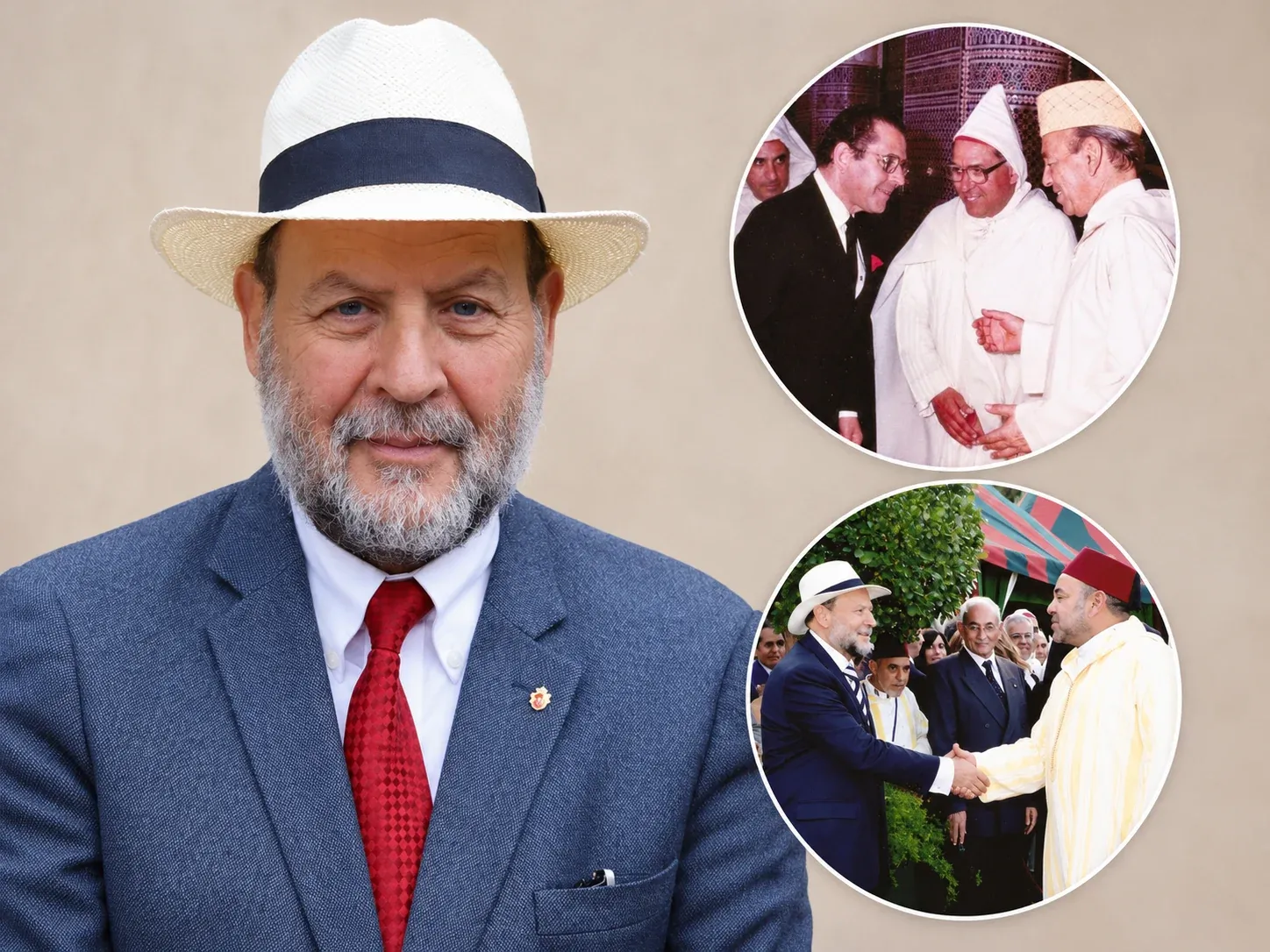
Jacky Kadoch, born in 1952 into a prominent Marrakchi Jewish family, has inherited a deep-seated connection to the community's institutions. Following in the footsteps of his father, Henri Kadoch, a former communal president, Jacky has been instrumental in preserving the Jewish legacy in Marrakech and Essaouira since 2003. His role extends beyond merely safeguarding places of worship; it includes maintaining communal services, offering support to vulnerable members, welcoming visitors, and fostering relationships with Jewish communities worldwide. Kadoch has also been a champion for Jewish-Muslim dialogue, organizing events such as the interfaith Ramadan gathering in May 2019 at Marrakech's Beth El Synagogue, where Jewish and Muslim participants celebrated together, symbolizing the lasting relationships he aims to preserve amidst the community's decline.
Morocco’s commitment to preserving its Jewish heritage reflects a broader acknowledgment of the Hebrew component within its national identity. The 2011 Constitution recognizes this aspect alongside the nation’s African, Andalusian, and Mediterranean influences, a sentiment reinforced by King Mohammed VI. His advocacy for restoring synagogues and promoting them as cultural dialogue spaces is evident in initiatives like the rehabilitation of the Mellah, which has helped restore historical sites such as the Slat Al Azama Synagogue and the Miâara Jewish Cemetery. Nevertheless, Kadoch faces the pressing reality that the survival of historic buildings does not necessarily equate to a thriving community. As attendance dwindles, he emphasizes the need to connect Marrakech's smaller resident Jewish population with the larger diaspora and advocates for the recognition of Jewish holidays like Rosh Hashanah as national holidays, hoping to weave Jewish heritage into the fabric of Moroccan civic life.
The renewal of diplomatic relations between Morocco and Israel in December 2020 has opened up new avenues for travel and cooperation, yet it has also brought about renewed sensitivities, particularly following the recent conflict in Gaza. Kadoch has found himself navigating these complex dynamics, clarifying misconceptions about the identities of Jewish visitors to Marrakech and reinforcing the importance of recognizing the distinction between Moroccan Jews and the policies of the Israeli government. His efforts aim to foster understanding and coexistence while addressing the challenges that come with a shrinking community and the impact of external political events on intercommunal relations.
Ultimately, Kadoch envisions a future where Moroccan Jewish life thrives not just as a relic of the past but as an active part of contemporary Moroccan identity. His ambition to establish a synagogue and community center alongside a mosque and church encapsulates his dedication to preserving memory, nurturing Jewish religious life, and ensuring that the rich cultural tapestry of Morocco, inclusive of its Jewish heritage, continues to be a living legacy for future generations. In his reflections, Kadoch highlights the importance of intercommunal dialogue, educational initiatives, and cultural tourism as essential components in maintaining the vibrancy of the Jewish community in Marrakech, advocating for a future where Moroccan Jewish heritage is not merely remembered but actively lived and celebrated.
As reported by blogs.timesofisrael.com.