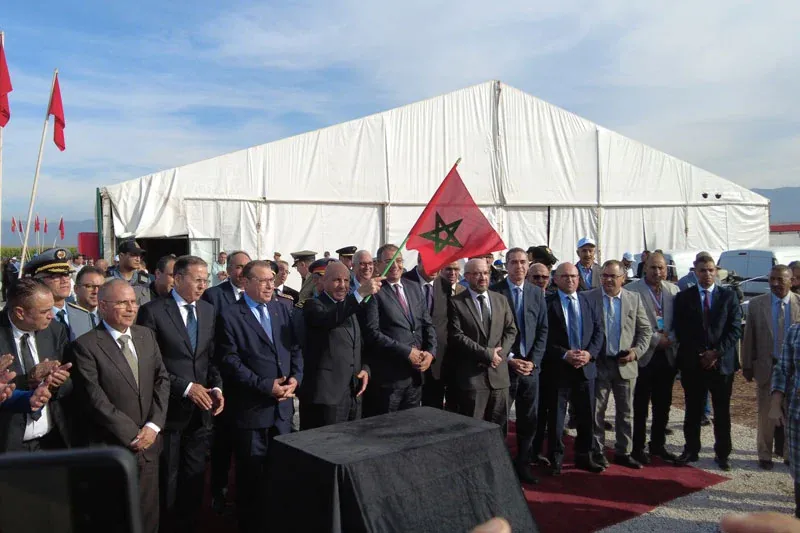
Khalid Hatimi, the Minister of Agriculture, Fisheries, and Food Sovereignty, officially launched the 2026-2027 agricultural season on Saturday in the Beni Mellal-Khenifra region. This event took place during a field visit that included several agricultural projects and facilities in both Beni Mellal and Fkih Ben Salah provinces, with aspirations to achieve abundant production, create new job opportunities, and strengthen the food sovereignty of the Kingdom of Morocco.
The visit was attended by the Wali of the Beni Mellal-Khenifra region, the President of the Regional Council, and numerous officials from the agricultural sector. This follows the successful 2025-2026 season, which recorded a cereal yield of approximately 90 million quintals, attributed to favorable rainfall. In preparation for the new season, the ministry has implemented a series of measures that include securing production factors, enhancing agricultural chains, modernizing irrigation systems, and expanding agricultural insurance, alongside encouraging investment and supporting farmers.
Production and Employment Challenges
In statements to Hespress during his field visit, Minister Hatimi noted, "From the heart of the Tadla plain, we are launching the new agricultural season 2026-2027, and we expect this season to yield high productivity and abundant production that benefits both farmers and consumers alike." He emphasized the need to create new and sustainable job opportunities, which directly contributes to reinforcing food sovereignty and ensuring the Kingdom's food security. Hatimi pointed out that achieving these goals requires adopting new approaches to managing the agricultural sector.
The government official acknowledged that climate change, geopolitical disturbances, and rising agricultural input prices necessitate a review of working methods and planning strategies. He affirmed that "continuing with the same methods" in addressing the challenges facing Moroccan agriculture is no longer viable, and that the current phase demands an update of planning and programming methods.
Hatimi stressed that the adopted strategy focuses on increasing productivity and production volume while creating added value for both farmers and consumers. This approach aims to generate new job opportunities as part of the ongoing implementation of the "Green Generation" strategy and mobilizing institutions involved in the sector.
Supporting Cooperatives and Ensuring Seed Supply
The official delegation began its tour by visiting the women’s cooperative “Synd” in the Ouled Mbark municipality in Beni Mellal, where they explored a space showcasing local products and the activities carried out by the cooperative in valuing and marketing spices, cereals, pasta, and couscous. These initiatives are part of social and solidarity economy projects aimed at enhancing the economic and social conditions of women in rural areas.
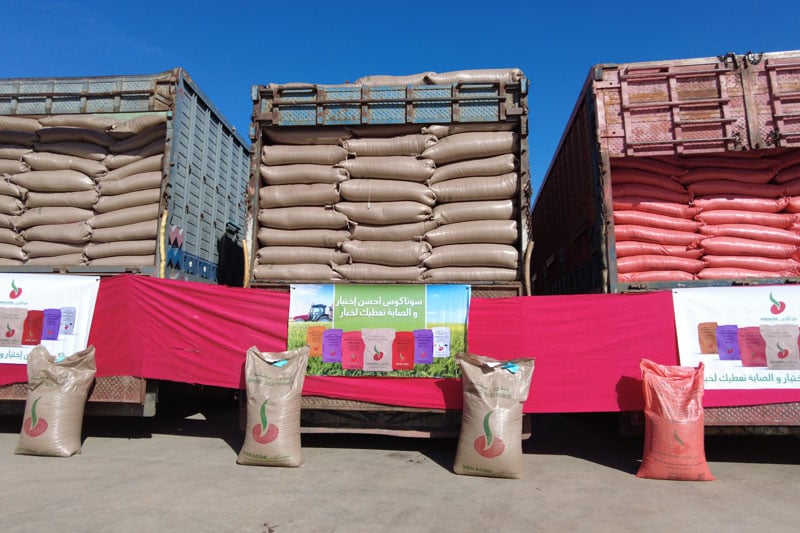
In the Sidi Hamadi municipality of Fkih Ben Salah, the Minister of Agriculture inspected the regional center for selling certified seeds, managed by the National Seed Marketing Company (Sonacos). He was briefed on the measures taken to ensure farmers have access to certified and subsidized seeds, as well as the organization of their distribution to facilitate farmers' access during the new agricultural season.
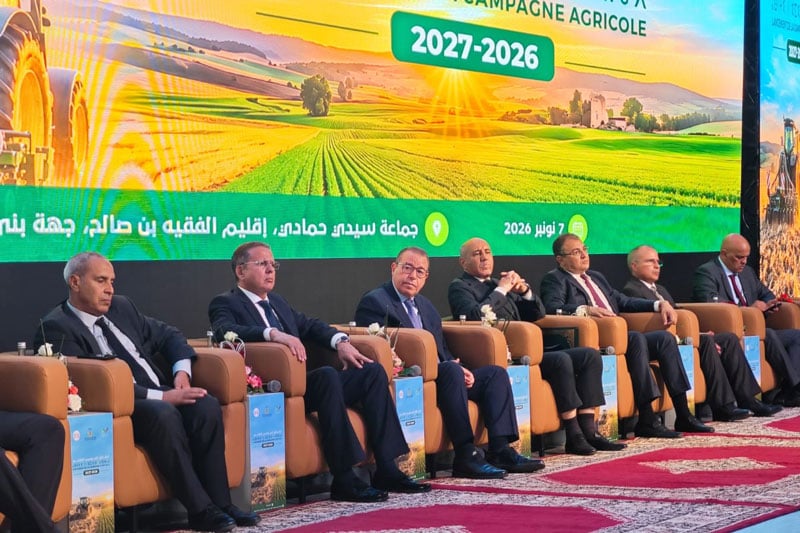
Additionally, Sidi Hamadi hosted a wide-ranging meeting to present the preparations for the 2026-2027 season, featuring representatives from the Directorate of Production Chain Development, the National Office for Agricultural Advice, and the National Institute for Agricultural Research, along with Kosumar Group, the Moroccan Agricultural Insurance Mutual, the Agricultural Credit Group of Morocco, and the Agricultural Chamber. The meeting highlighted the measures related to securing production requirements and supporting farmers through professional and financial institutions, before Minister Hatimi officially launched the seeding process, marking the commencement of agricultural activities for the new season.
The field tour also included an inspection of the purification station in sector “G9”, located in the Western Beni Moussa irrigation district within Fkih Ben Salah province, which was established as part of the “REDI” project at a cost of 15 million dirhams. The minister was presented with explanations about the station's equipment and operational methods.
This station covers an agricultural area of approximately 3,243 hectares, benefiting around 900 farmers. The interventions associated with the project include transitioning to localized irrigation, renewing the main channel control system, and modernizing it within the Beni Moussa irrigation perimeter, as part of the Tadla irrigation scheme.
Minister Hatimi concluded his tour by visiting the modernization project of the Zaidania canal in the city of Qasbat Taddla, which is part of Beni Mellal province. He assessed the progress of the works aimed at updating this water resource, which is being carried out under the “REDI” project with a financial allocation of 395.22 million dirhams. The goal of the Zaidania canal modernization project is to improve the hydraulic performance of the canal, minimize water loss, and ensure the provision of irrigation water to agricultural lands, while also enhancing the sustainability of irrigation infrastructure in the region, as part of programs dedicated to modernizing irrigation facilities in the Tadla area.