Renewed Debate on National Representation
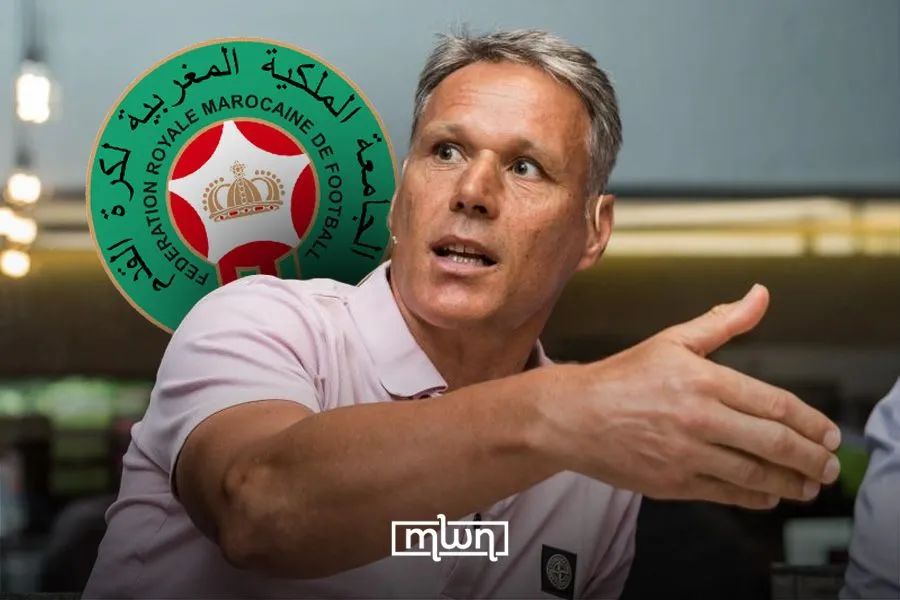
In the vibrant city of Rabat, the conversation around football players of Moroccan heritage choosing to represent Morocco instead of the Netherlands has resurfaced, almost a decade after the renowned Dutch footballer Marco van Basten labeled such decisions as 'stupid.' This latest discussion was catalyzed by the recent decision of Ayoub Oufkir, a forward at AZ Alkmaar, to don the Atlas Lions jersey. Dutch sports columnist Sjoerd Mossou, in a provocative article for Algemeen Dagblad, revisited Van Basten's controversial statements, asserting that his remarks were not only misguided but also reflected a failure to understand the evolving dynamics of international football.
The debate traces its roots back to 2016, when both Hakim Ziyech and Oussama Tannane opted to represent Morocco, despite their eligibility for the Dutch national team. Their choices were not merely based on sporting opportunities but were deeply intertwined with their Moroccan heritage and personal connections to the country. Van Basten's criticisms at that time highlighted a belief that players sacrificing the chance to play for the Netherlands were missing out on a more prestigious footballing opportunity. However, Mossou argues that such reasoning is outdated, particularly with the transformative changes in the Moroccan football landscape over recent years.
Shifting Dynamics in International Football
Mossou's analysis emphasizes the significant shifts in the footballing fortunes of both Morocco and the Netherlands. Historically, the Dutch football team has been a powerhouse, producing generations of world-class talent and asserting dominance on the international stage. However, the recent FIFA rankings tell a different story: as of October 2026, Morocco is ranked seventh globally, just ahead of the Netherlands in ninth place. This upward trajectory is a testament to Morocco's remarkable progress, particularly following their groundbreaking performance in the 2022 World Cup, where they became the first African and Arab nation to reach the semi-finals.
Morocco's rise in the footballing world is not merely a reflection of successful tournaments but is also rooted in strategic investments made by the Royal Moroccan Football Federation (FRMF). The establishment of the Mohammed VI Football Academy in 2009 has played a pivotal role in nurturing young talents, providing them with the necessary training, education, and development opportunities. By actively engaging with players of Moroccan descent in Europe, the federation has succeeded in attracting a new wave of talent, including prominent figures like Achraf Hakimi and Hakim Ziyech, who have significantly bolstered the national team's profile.
For many dual-nationality players, the decision to represent a national team is often shaped by more than just statistics or rankings; it encompasses a deep-rooted connection to family heritage and cultural identity. Mossou's argument reflects a fundamental shift in how players perceive their futures, suggesting that if they follow their hearts, an overwhelming majority would choose to represent Morocco. This evolving sentiment indicates that Morocco is no longer simply a nostalgic choice for players of Moroccan descent but a competitive and ambitious national team that offers a promising future.
As the footballing landscape continues to evolve, the discussions surrounding Oufkir, Ziyech, and Tannane signify a broader transformation in international football, where traditional power dynamics are being challenged. The emergence of Morocco as a formidable force in the sport underscores the importance of recognizing the emotional dimensions that influence players' choices. With a renewed focus on heritage, identity, and competitive spirit, Morocco is poised to redefine its narrative in the world of football.
As reported by moroccoworldnews.com.