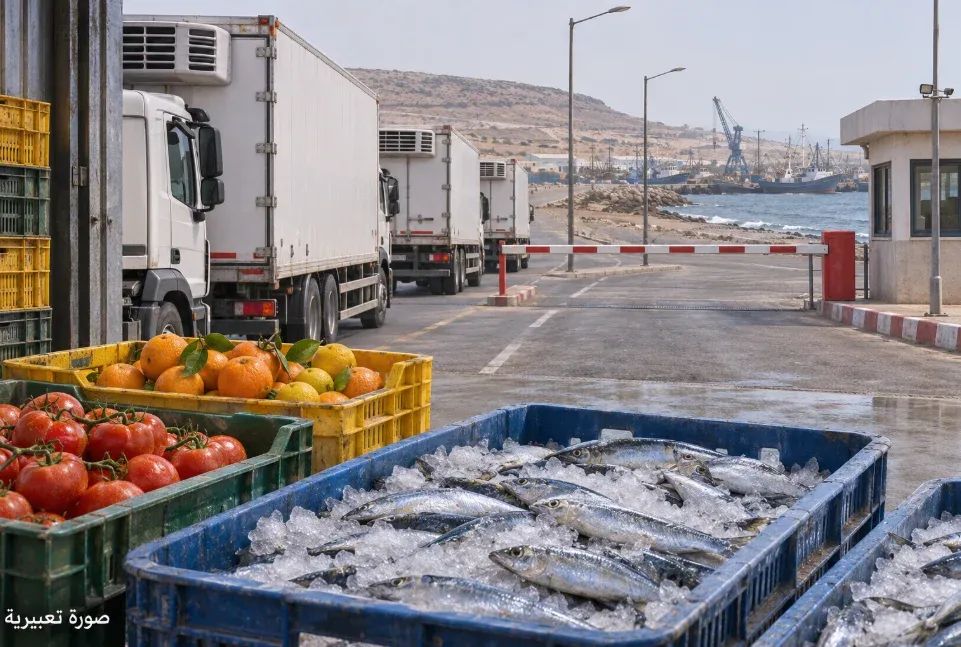
Morocco Enforces Export Restrictions Amid Regional Uncertainties
On November 5, 2026, Morocco implemented significant restrictions on the export of agricultural and food products to African markets, a move that has sparked considerable apprehension among transporters and commercial operators across the country. This abrupt decision coincides with the closure of the United Nations Mission for the Referendum in Western Sahara (MINURSO) and growing concerns regarding regional security. While some Moroccan sources attribute the restrictions to domestic supply management and price control, others raise critical questions about the safety of trade routes in the region. This situation is particularly relevant in the occupied territories of Western Sahara, especially in Dakhla and Laayoune, which are known for their fishing activities and trade with Africa.
The announcement regarding these export restrictions became known on the night of November 4, when transport and export professionals received directives that directly impacted their operations toward African markets. The Moroccan newspaper Al3omk reported a temporary suspension of new export licenses for fruits and vegetables, while other outlets, such as Chouf TV, noted broader restrictions affecting various food products intended for multiple African nations. The sudden communication of these measures, coupled with discrepancies in reported details, has cultivated uncertainty regarding the extent and duration of these restrictions.
According to sources close to the administration cited by Al3omk, the suspension is aimed at regulating export quantities and ensuring adequate supply for the Moroccan market. Transporters with existing licenses are still permitted to operate, indicating that this is not a blanket closure of trade routes. The economic rationale behind these restrictions finds its roots in similar measures taken throughout 2026 to stabilize prices on essential food items. However, the initial broad scope of information and the lack of a public timeline for a return to normalcy have left many sectors dependent on exports feeling anxious about their future.
The potential consequences of these restrictions are particularly acute in Dakhla and Laayoune, where Morocco has established a significant industry focused on the processing, freezing, and marketing of fish products sourced from the waters of Western Sahara. The specialized media outlet Albahr Info reported the confusion among industry operators regarding the instructions they received and the risk of accumulating stored goods. The National Federation of Fish Processing and Valorization Industries (FENIP) had previously warned about the economic repercussions that trade restrictions could have on fishing facilities in these territories.
Moreover, this development carries a broader regional significance that deserves attention. The closure of MINURSO, following the unsuccessful Security Council votes on October 30, has raised questions about the monitoring of the ceasefire and the security of areas adjacent to Mauritania. The Moroccan media outlet Elhourriya has tentatively linked these trade restrictions to the new regional scenario, highlighting emerging concerns regarding the safety of trade routes. The Moroccan publication Saout Sahara has also mentioned this hypothesis. At present, there is no official explanation explicitly connecting these two circumstances.
The situation also warrants close monitoring due to the importance of the Guerguerat crossing, through which goods destined for Mauritania and other African markets flow. This trade corridor traverses a particularly sensitive area of Western Sahara and was the scene of the crisis that preceded the collapse of the ceasefire in November 2020. Although available reports indicate that transporters with valid permits can continue to operate, any prolonged disruption to exports could have significant consequences for companies, workers, and established trade commitments on both sides of the border.
Meanwhile, reports from the fishing sector suggest that some initial restrictions may be under review. On the afternoon of Thursday, there were news reports about the resumption of certain licenses for seafood products, reinforcing the perception that the situation remains fluid. What began as a commercial decision has thus taken on a broader dimension due to the political context in which it occurs and the importance of the affected trade routes.
Morocco is navigating a new phase in Western Sahara following the disappearance of MINURSO while maintaining substantial economic interests tied to the occupied territory and its connections with Africa. The restrictions announced on November 5 may address internal supply needs, but concerns about regional security are also beginning to emerge in reports published by Moroccan and Mauritanian media. The evolution of these measures, their duration, and their impacts on Dakhla, Laayoune, and the Guerguerat corridor will provide better insight into the implications of a decision made during such a delicate moment.
As reported by noteolvidesdelsaharaoccidental.org.