The Enigmatic Presence of Crocodiles in Southern Morocco
When one envisions crocodiles in Morocco, the usual thought may be of a zoo or an exotic habitat. However, for the children who grew up near the guelta of Tanzida in southern Morocco, these formidable reptiles were once a closer reality. While today, the notion of wild crocodiles roaming the southern regions of Morocco may seem far-fetched, historical narratives and testimonies from local communities around the Drâa basin suggest otherwise. These accounts depict a time when crocodiles thrived in remote pools before eventually vanishing, leaving behind a shroud of mystery regarding their fate.
Herpetologist Jean Lescure delved into this intriguing history in his 2014 publication, "Présence du Crocodile au Sahara : vérités, mythes et légendes", featured in the Bulletin de la Société Herpétologique de France. By synthesizing ancient texts, the writings of naturalists, and oral histories, he explored the extent of crocodile presence in Morocco and the duration of their existence in the wild.
Historical Accounts and Local Memories
Historical references to crocodiles in the region trace back to Hannon, a Carthaginian navigator whose expedition occurred around 460 BC. He recounted encountering a "great and wide river, full of crocodiles and hippopotamuses," which Lescure hypothesized could be the Saguia el Hamra. Another notable mention from the annals of history involves an expedition commissioned by Juba II, the king of ancient Mauretania, which encompassed a significant part of northern-central Morocco. Citing Roman author Pliny the Elder, Lescure reported that a crocodile was brought back from a lake in Morocco, where it was dedicated to the temple of Isis at Caesarea.
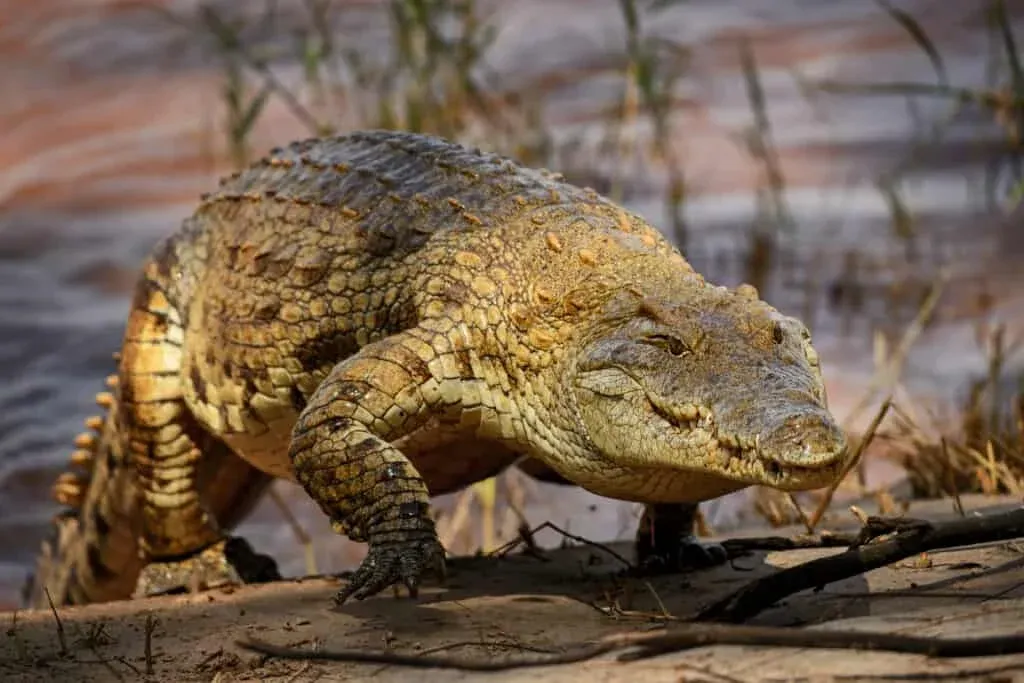
Various ancient authors have documented sightings of crocodiles in rivers emerging from the High Atlas and Anti-Atlas mountain ranges. Although some of these accounts may have echoed one another, Lescure identified a noteworthy detail: a description by the Greek traveler Pausanias, who referred to crocodiles approximately 1.5 meters long near the Atlas foothills. This smaller size aligns with the characteristics observed in Saharan crocodiles, which tend to be smaller than their Nile counterparts. "We can affirm that there were crocodiles in the Oued Drâa region during Roman times and in Saguia el Hamra during Carthaginian times," Lescure asserted, adding that some may have lingered in a few gueltas of the Oued Drâa until the early twentieth century.
The last memories of crocodiles in Morocco are primarily preserved through oral tradition rather than official records. French Orientalist Vincent Monteil, in his 1951 work titled "Contribution à l’étude de la faune du Sahara occidental : du sanglier au phacochère", documented reports from local nomadic tribes, specifically the Ait Oussa and Rguibat, who identified three gueltas where crocodiles were believed to have recently lived or were thought to still exist. Monteil noted the Tanzida guelta, south of Foum-el-Hassan, as a location where crocodiles had just vanished, alongside Tizgi r-Ramt and Taffegumt, locations where they were still said to reside, although his botanist friend found no evidence of crocodiles at Taffegumt during his visit.
In 1994, researchers revisited these narratives. Philippe Geniez and Paul Soto gathered testimonials from Tanzida residents, who recalled the presence of crocodiles in the guelta approximately fifty years prior. Geniez shared that, according to the elderly locals, these reptiles were part of their childhood memories, often invoked as a threat when children misbehaved, with tales of being handed over to the "black men" of the guelta, referring to the crocodiles. Additional accounts compiled by Fabrice Cusin and referenced by Lescure indicated sightings of crocodiles in pools of the Oued Drâa as recently as the early twentieth century.
The disappearance of crocodiles from these regions remains an enigma without a clear timeline. The residents of Tanzida have noted significant alterations in their environment, with the guelta having drastically shrunk and devoid of crocodiles. Jacques Gandini, a source consulted by Lescure, believed that crocodiles might have already been extinct in Tanzida by the 1930s or 1940s, citing the lack of sightings by French officers and the detrimental effects of grenade fishing on the local aquatic life. This perspective diverges from local recollections that suggest the species persisted until the 1940s, indicating a rich tapestry of memory and history surrounding these magnificent creatures.
Interestingly, crocodiles have also permeated Morocco's political discourse, albeit in a metaphorical sense. Former head of government Abdelilah Benkirane famously referred to "tamasih and afarit"—crocodiles and demons—when alluding to forces he believed were hindering his administration. For those intrigued by crocodiles today, while they may no longer inhabit the wilds of southern Morocco, a visit to Agadir's Crocoparc will reveal Nile crocodiles in a preserved environment, bridging the gap between history and modern curiosity.
As reported by en.yabiladi.com.