Morocco's Increased Petroleum Storage Capacity
In a significant development for the energy sector, Morocco has successfully increased its petroleum stockpiles to a level that guarantees 77 days of diesel consumption. Sharfat Afailal, the Minister of Energy, Mines, and Sustainable Development, announced that the country's total storage capacity for petroleum products has surpassed 3 million cubic meters. This impressive capacity includes 2.4 million cubic meters of liquid petroleum products, with 90% linked to ports, and 805,000 cubic meters of gaseous petroleum products, where 91% is also port-connected.
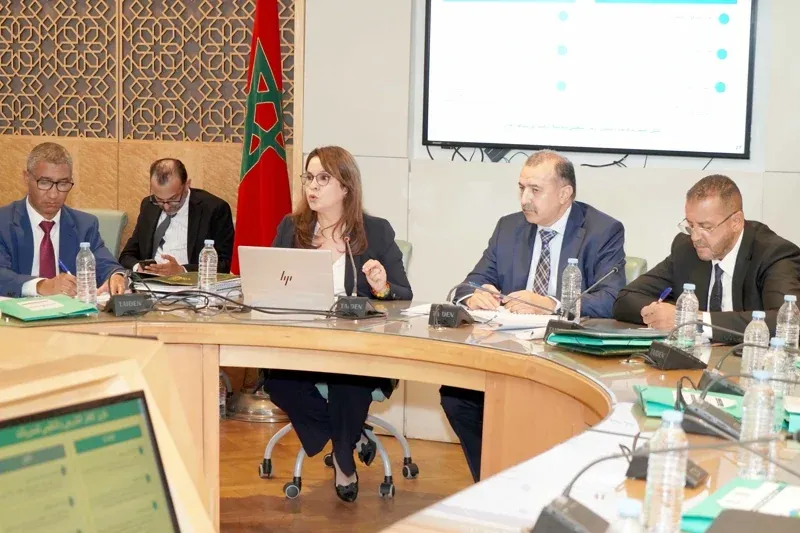
During a presentation of the ministry's budget for the year 2027 before the Infrastructure Committee of the House of Representatives, Afailal highlighted that storage capacities have exceeded the reference threshold of 60 days, with premium gasoline covering 94 days, fuel oil 87 days, and aviation fuel 61 days. Notably, the diesel stockpile now stands at 77 days, which is 17 days above the reference level.
Infrastructure Developments and Future Plans
Minister Afailal also provided insights into the remarkable growth of storage infrastructure over the past years. Between 2009 and 2026, the capacity for storing liquid petroleum products increased by an astonishing 129%, driven by significant investments in this sector. Similarly, the storage capacity for butane gas rose by 127%, owing to dedicated investments in port infrastructure.
Looking ahead, the ministry projects that by 2030, more than 1.7 million cubic meters will be added to the current storage capacity between 2026 and 2030, with over 700,000 cubic meters anticipated to be operational by the end of 2027. This ambitious plan includes the proactive and integrated development of storage infrastructure, which will be aligned with the needs based on product types and regions, in coordination with all relevant stakeholders.
Additionally, a proactive approach has been adopted to ensure a continuous supply of petroleum products, aiming to regulate import programs and available stock levels while also overseeing the unloading of petroleum vessels at ports, especially amid ongoing tensions in international markets. This strategy encompasses four main mechanisms, including a monitoring cell to define roles, meeting frequencies, and alert thresholds, alongside dashboards to track stock levels, imports, and shipping activities.
In parallel, the ministry is set to establish a vigilance unit dedicated to ongoing supply situation monitoring, facilitating regular information exchanges with involved parties. During periods of strain, meticulous tracking of available stock and import programs will be crucial to identify potential discrepancies and take timely measures.
Moreover, the ministry's operational vision includes developing an emergency plan for managing supply crises, leveraging lessons learned from previous disruptions, particularly those caused by extreme weather conditions and international energy crises. This plan will outline scenarios, responsibilities, coordination mechanisms, and priority measures to ensure uninterrupted supply.
On the subject of major gas projects, Morocco is focusing on three main areas: port facilities, a liquefied natural gas (LNG) terminal, and natural gas pipeline networks. Afailal mentioned that the port facilities project includes the establishment of a dock to receive LNG at the port of Nador, as well as marine mooring supports and dredging operations. The LNG terminal project will involve creating a floating facility for receiving, storing, and regasifying LNG, along with necessary gas infrastructure within the port. Furthermore, there are plans to construct a new gas pipeline linking the LNG terminal to the Maghreb-Europe gas pipeline, aimed at supplying power stations with natural gas, in addition to building a gas pipeline connecting the Maghreb-Europe pipeline to industrial areas in Kenitra and Mohammedia.
As reported by hespress.com.