Transforming African Agriculture Through Digital Innovation
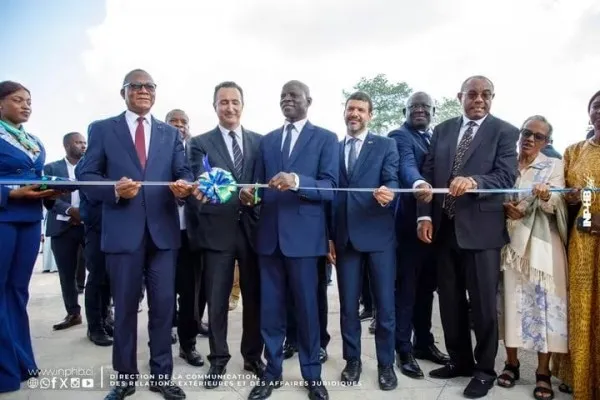
In a significant move towards modernizing agriculture in Africa, Morocco and Côte d'Ivoire are set to revolutionize the sector with the establishment of a Digital Farming School (DFS) in Yamoussoukro. This strategic partnership, inaugurated on October 31, 2026, involves Morocco's Mohammed VI Polytechnic University, OCP Africa, and the Félix Houphouët-Boigny National Polytechnic Institute (INP-HB). The initiative aims to train 50 students out of 3,700 applicants in a fully funded two-year program dedicated to integrating digital technologies into agricultural practices. The goal is to cultivate a new generation of African experts capable of enhancing productivity, improving yields, and ensuring food sovereignty across the continent.
The DFS represents a pivotal shift for African agriculture, which has long struggled with challenges related to productivity, mechanization, and technological innovation. This newly inaugurated facility is designed to address these issues and foster the transformation of agricultural systems through education and training. The partners involved in this project believe in leveraging local human, scientific, and technological resources to meet the continent's developmental challenges.
A Collaborative Vision for a Sustainable Future
At the heart of this initiative, the Mohammed VI Polytechnic University is committed to providing the academic and scientific impetus necessary for the project. According to Hicham El Habti, the university's president, "Africa must trust Africa," emphasizing the importance of South-South cooperation in addressing the continent's challenges. The partnership also highlights the need for skill transfer and collaboration among African nations to create tailored solutions that meet local needs.
OCP Africa plays a vital role in this endeavor by supporting training, innovation, and the transformation of agricultural systems. Hajar Alafifi, the general director of OCP Africa, stressed the significance of investing in human capital to prepare for future changes in the agricultural sector. Meanwhile, INP-HB contributes its academic and scientific foundation to this international cooperation, thereby enhancing the training and research capabilities of the Ivorian institution.
Côte d'Ivoire was strategically chosen to host the Digital Farming School due to its pivotal role in the national economy, where agriculture constitutes approximately 25% of GDP and nearly 40% of export revenues. Despite its economic significance, the sector faces structural constraints that hinder its growth potential, such as limited mechanization, inadequate irrigation infrastructure, vulnerability to climate change, and challenges in accessing modern technologies. Current statistics indicate that there is only one tractor available for every 1,000 hectares of farmland, and only 130,000 hectares are irrigated out of an estimated potential of 3.4 million hectares.
The introduction of digital technologies in agricultural practices is recognized as a critical lever for improving productivity, optimizing resource use, and enhancing resilience against climate-related challenges. The Digital Farming School is set to address these issues by offering a multidisciplinary training approach that encompasses agronomy, computer science, artificial intelligence, drone technology, connected sensors, and data analysis. This hands-on curriculum aims to equip students with practical skills to monitor crops, optimize irrigation, detect anomalies, and manage soils effectively, ultimately leading to informed decision-making in agricultural operations.
The interest generated by this new educational initiative is already evident, as only 50 students were selected for the inaugural cohort from a large pool of applicants. The DFS's inauguration also witnessed significant institutional and diplomatic attendance, underscoring the importance of science, research, and innovation in transforming African economies. The presence of Moroccan Ambassador Otman El Ferdaous and former Ethiopian Prime Minister Hailemariam Desalegn at the event added a diplomatic and pan-African dimension to the occasion.
This collaboration aims to create a robust ecosystem that connects universities, businesses, researchers, entrepreneurs, investors, and agricultural stakeholders. The ultimate objective is to transform the knowledge gained into innovations that are accessible to producers, tailored solutions for farms, and measurable productivity gains. In the long run, this initiative could propel the transition towards a more efficient, resilient, and technology-driven agricultural sector in Africa.
The establishment of the Digital Farming School in Yamoussoukro marks a new chapter for scientific cooperation across the African continent. Beyond training the first 50 specialists, this initiative holds the promise of enabling Africa to develop its own technologies, master innovation, and bolster food sovereignty. The real challenge ahead will be to translate innovation from laboratories and classrooms into practical applications that are accessible to African farmers.
As reported by koaci.com.