Strengthening Morocco's Military Role in North Africa
The recent updates to the United States defense strategy signify a pivotal shift in military resource allocation, emphasizing a stronger presence in the Indo-Pacific region to counter the strategic challenges posed by China. Within this framework, Morocco emerges as an increasingly vital military ally for the U.S. in North Africa, the Sahel, and the western Mediterranean. This alliance is not merely a matter of bolstering the conventional capabilities of the Royal Armed Forces (FAR); it also focuses on enhancing their technological transformation, promoting interoperability with Western military forces, and preparing Morocco to serve effectively as a regional partner in security operations, crisis response, and counter-terrorism initiatives.
This enduring partnership, which has been nurtured over decades, is reinforced by one of the Pentagon's longest-standing alliances in Africa, known as the State Partnership Program (SPP), established in 2003 between the Utah National Guard and Morocco. Initially rooted in training exchanges and joint military maneuvers, this collaboration has evolved significantly, expanding into capacity development projects and training programs across various critical areas, including intelligence, special operations, cyber defense, drone technology, and emergency management.
Morocco as a Benchmark for Military Talent Recruitment
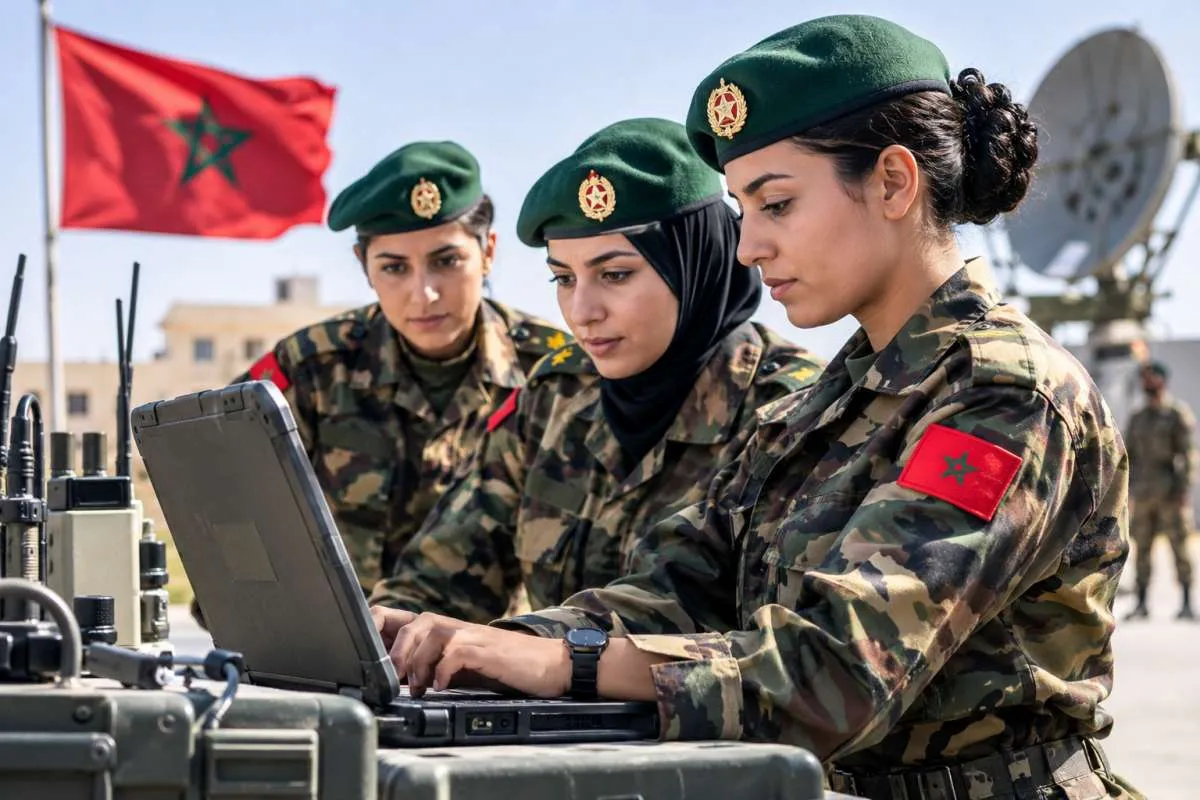
Morocco's approach to recruiting and retaining military personnel has become a point of reference in North Africa and the Arab world, particularly due to its effective strategies for attracting young individuals with technological expertise and increasing opportunities for women in certain military specialties. The reintroduction of mandatory military service in 2019, coupled with calls for voluntary enlistment, has allowed the Moroccan army to broaden its recruitment base while providing training in technical fields. For many young people, especially those from disadvantaged socioeconomic backgrounds, a career in the Armed Forces represents a pathway to valuable training, job stability, and professional advancement.
The gender aspect is particularly noteworthy. Data from UNESCO indicates that women compose 42.2% of engineering graduates in Morocco, a proportion that stands out favorably when compared to many Western nations. However, the challenge lies in successfully integrating this talent into the labor market. For women trained in engineering, computer science, or telecommunications, a military career presents a viable professional alternative, offering access to specialized training, stable employment, regulated compensation, and opportunities for advancement within the state framework.
Furthermore, sources familiar with the Moroccan military system emphasize the attractive housing conditions, healthcare, social benefits, and pensions as significant factors that enhance the retention of technical personnel once they enlist. In Morocco, the disparity in salaries and quality of life between rural regions and larger cities is pronounced. The military retention package, which includes covered housing, military healthcare for families, and state pensions, is so appealing that the dropout rate among non-commissioned officers and technical officers after signing contracts is remarkably low.
While the Moroccan recruitment model presents distinct advantages, it also reflects substantial differences from the recruitment and military career structures found in Western democracies. One of its core elements is the binding nature of contracts, where military training is linked to commitments that make it difficult for those who have received specialized training to exit prematurely. Violating certain contracts can result in financial penalties and other repercussions, thereby enhancing the retention of technical personnel who might otherwise seek employment in civilian sectors such as technology firms or consultancies that offer competitive salaries.
Moreover, while the inclusion of women in technical and support roles within the military has progressed, access to specific combat units remains more restricted compared to countries like Spain, the United States, or Israel. Consequently, the representation of women in the Moroccan military is predominantly concentrated in areas such as cyber defense, electronic warfare, aviation, healthcare, logistics, and administration, which complicates direct comparisons with Western armed forces where women have broader access to operational positions.
In summary, Morocco's military partnership with the U.S. not only strengthens its own defense capabilities but also sets a precedent for integrating technology and enhancing women's roles in the military. As the Pentagon continues to focus its resources in the Indo-Pacific, Morocco is positioned to play a critical role in addressing regional security challenges and humanitarian crises, all while fostering a more inclusive military environment.
As reported by escudodigital.com.