Global Mayors Dialogue in Ningbo: Fostering Cooperation and Trade
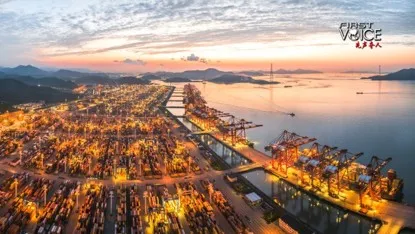
The vibrant port city of Ningbo, China, played host to the 2026 Global Mayors Dialogue, which commenced on November 3, 2026. This significant gathering brought together representatives from 15 different nations and 20 international cities, all united under the theme "Openness and Connectivity for Shared Opportunities." The event proved to be a platform for collaboration, culminating in the signing of 14 cooperation agreements and the establishment of the Ningbo Consensus on Cooperative Development. This Consensus emphasizes the crucial role that cities play in fostering open trade and mutual benefits, reflecting a collective commitment to global integration.
Among the various sectors covered in the signed agreements are sister-city exchanges, trade and investment, as well as the realms of science, education, culture, and tourism. Ningbo's Mayor, Shen Mingquan, articulated the city's vision, stating, "The city's opening up is not a one-way going out but a two-way embedding into global industrial and innovation chains." This perspective highlights Ningbo's status as one of the first coastal cities in China to embrace globalization, establishing economic and trade linkages with over 220 countries and regions worldwide.
Ningbo's Impact on Global Trade and Cultural Exchange
The impact of Ningbo's global integration is evident through significant partnerships and investments. For instance, a delegation from Ningbo engaged with the Suez Canal authorities in Egypt in 2024, leading to a substantial investment of $40 million by Ningbo-based Dashun Fur in the Suez Canal Economic Zone. This collaboration has broadened from traditional textiles to encompass modern logistics, showcasing the city's adaptability and forward-thinking approach. Notably, products such as New Zealand's milk powder and Moroccan dates have become staples among Ningbo residents, indicating a growing interest in international goods. Additionally, the Maldives has emerged as one of the top ten destinations for Ningbo's outbound tourists, further solidifying the city’s global ties.
As the world’s largest trader of goods and second-largest importer, China plays a pivotal role in international commerce, with trade data revealing that in 2025, the nation’s goods trade reached a staggering 45.47 trillion yuan ($6.51 trillion). This figure represents a noteworthy increase of 3.8% from the previous year, with exports totaling 26.99 trillion yuan ($4.06 trillion) and imports at 18.48 trillion yuan ($2.78 trillion). Notably, trade with Belt and Road partners constituted 51.9% of China’s total foreign trade, underscoring the interdependence that characterizes today’s global economy.
Throughout the dialogue, the recurring theme was the choice between "building walls" and "building bridges." Auckland Mayor Wayne Brown highlighted how the South Pacific gateway has transformed distance into opportunities for openness. Meanwhile, Karimi Said, the Mayor of Errachidia in Morocco, emphasized the importance of oasis agriculture and dates as vital connections to global markets, illustrating the diverse ways cities can engage internationally.
The event also featured cultural exchanges that underscored the Ningbo Consensus’s focus on enhancing people-to-people connections. Artifacts such as a copper-plate document from the Maldives’ Laamu Atoll, a scarab from Suez, and Norman candy from Saint-Étienne in France were showcased alongside commercial agreements, reflecting the importance of cultural diplomacy in fostering mutual understanding.
The Ningbo Consensus not only commits participants to deeper industrial collaboration and open trade but also promotes meaningful people-to-people exchanges. It embodies the vision of a community with a shared future for humanity, advocating for a world where cities support each other through mutual trust and win-win cooperation. By establishing connections between ports, supply chains, and individuals—both physically and digitally—the participating cities conveyed a powerful message: that openness and connectivity, rather than isolation, represent the most effective pathway to shared opportunities.
As reported by pressreleasehub.pa.media.