The Historical Significance of Jbel Gueliz Mosque in Marrakech
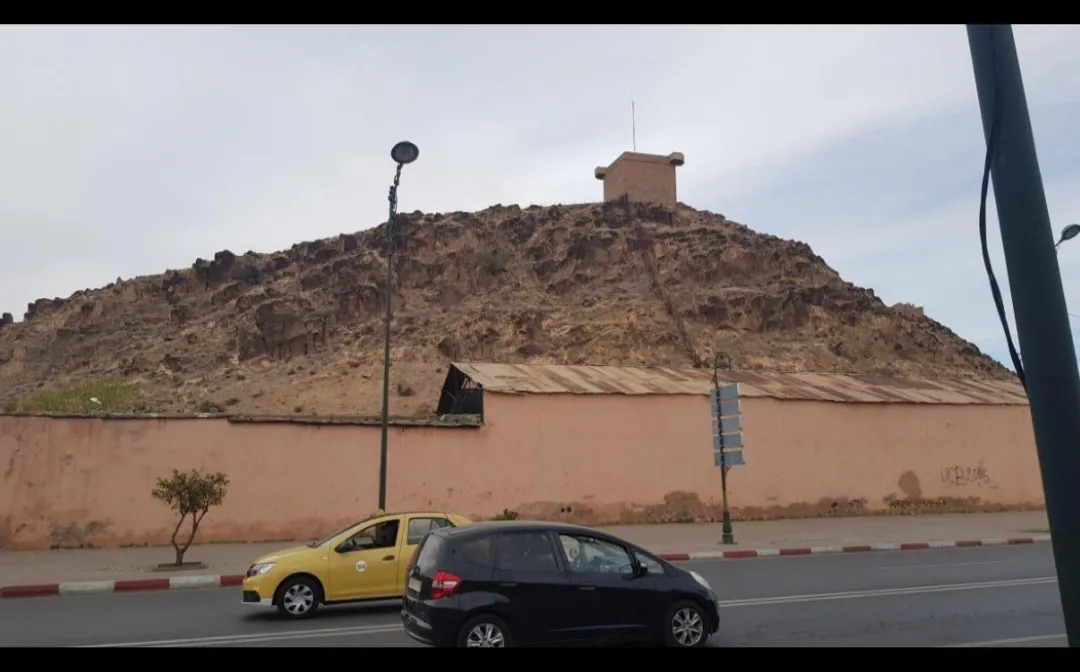
Marrakech, a city steeped in rich history, is not solely defined by the mosques within its walls but also by the narratives surrounding religious structures located in its vicinity. One such narrative involves the Jbel Gueliz Mosque and its long minaret, which were mentioned in the historical text "Al-Hullal Al-Mawshiya." This mosque was established by Abd al-Mu'min ibn Ali during the early 12th century when Marrakech served as the capital of the Almoravid state.
According to sources, in the year 541 AH (1146 CE), Abd al-Mu'min arrived in Marrakech and settled at a nearby mountain known as Jbel Al-Jabalayn. It is recorded that he constructed a city there, complete with a mosque and a towering minaret that overlooked the city of Marrakech. This construction holds a significant place in the historical context of the conflict between the Almoravids and Almohads, marking a pivotal period that culminated in the transition of power to the Almohad dynasty.
The importance of this narrative lies in its connection to significant political and military transformations in the region, highlighting the religious structures that accompanied these changes. The mosque symbolizes the intertwining of faith and governance during a time of monumental shifts in power dynamics.
Contemplating the Location and Historical Context
However, caution is advised when interpreting the details surrounding the mosque's location. The available text references Jbel Al-Jabalayn, while the commonly discussed site is referred to as Jbel Gueliz. The similarity in names does not suffice to confirm the geographic identity of the two locations. Furthermore, the narrative lacks architectural details that would allow for precise reconstruction of either the mosque or the minaret.
To approach the Jbel Gueliz Mosque as a historical artifact necessitates comparing the account from "Al-Hullal Al-Mawshiya" with other historical sources, ensuring a thorough investigation into the names of locales and their evolution over time. This diligence is essential before definitively attributing the site to a well-known location today. Nevertheless, the narrative remains an essential testament to how historical sources have documented the relationship between the area surrounding Marrakech and the significant transformations experienced by the city during the shift of power from the Almoravids to the Almohads.
Restoring the attention to this mosque does not imply a claim of having rediscovered its exact position but rather opens a historical file that warrants further investigation. Such an inquiry could elucidate the nuances of the narrative and contribute to a deeper understanding of Marrakech's history and its architectural heritage.
As reported by almarrakchia.net.