Morocco's Advanced Drone Capabilities
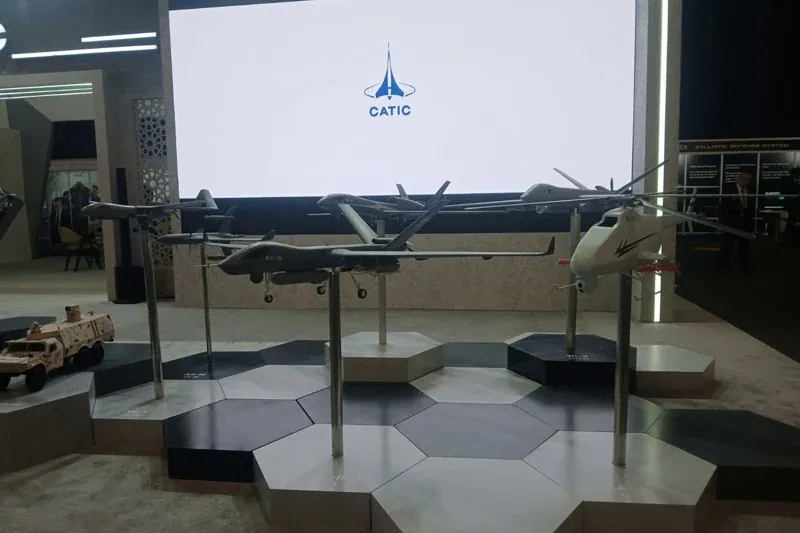
A comprehensive report released by the U.S. Pentagon's African Strategic Studies Center, titled "Lessons Learned from Drone Wars in Africa," sheds light on Morocco's sophisticated and varied drone fleet. The report outlines that Morocco has successfully acquired drones from several nations, including advanced models from Israel, China, and Turkey. Notably, the Moroccan arsenal includes the Turkish-made "Bayraktar" and "Akinci" drones, as well as the Chinese "Wing Loong" and Israeli systems such as "Hermes" and "Heron." This impressive collection underscores Morocco's commitment to enhancing its military capabilities in response to evolving security challenges.
Challenges and Strategic Implications
The report further emphasizes that the ease of access to small, unmanned aerial vehicles (UAVs) has provided non-state actors in Africa with a significant asymmetric advantage. Consequently, it is becoming increasingly essential for African governments to adopt multi-layered defense systems. The rapid proliferation and growing utilization of low-cost, disposable UAVs by armed groups on the continent have led to a diminishing traditional air superiority of state militaries. By concentrating their efforts on high-end UAVs, approximately 10 countries hold nearly four-fifths of the total units purchased, primarily focusing on long-range systems that have formed the backbone of African arsenals over the last decade.
The report also notes that armed groups in Africa have adopted a different strategy by focusing on acquiring or modifying small, easily assembled or smuggled UAV systems. Within just three years, major armed factions have developed combat capabilities supported by technical assistance from certain states or through clandestine training via international jihadist networks. These groups utilize drones for intelligence, surveillance, and reconnaissance (ISR) missions, with organizations such as the Group for the Support of Islam and Muslims and ISIS West Africa (ISWA) employing these capabilities since 2018. Drones are also used for propaganda purposes and to document operations to boost recruitment efforts.
One particularly alarming trend highlighted in the report is the increase in suicide drone attacks utilizing fixed-wing UAVs. Earlier this year, Niger's Niamey airport experienced a coordinated attack by ISIS in the Sahara involving approximately ten suicide drones, resulting in the destruction of several aircraft. Moreover, some groups have begun deploying drones equipped with fiber-optic guidance systems, surpassing the capabilities of certain regular African armies.
The document stresses the critical need to enhance the protection of vital installations through integrated radars, acoustic sensors, and optical cameras, along with cost-effective interceptor drones. It advocates for comprehensive training of military forces on rapid response procedures and engagement rules, alongside stringent regulations for the import and shipping of drone manufacturing components. To maintain battlefield superiority, it is imperative for African armies to widely integrate low-cost, small unmanned systems, which significantly reduce the costs associated with continuous monitoring and control compared to expensive drones. Furthermore, establishing local drone manufacturing industries is crucial, as reliance on external sources poses risks of support and maintenance disruptions, as well as loss of data and software sovereignty.
As reported by hespress.com.