Morocco's Growing Industrial Landscape and Trade Imbalance
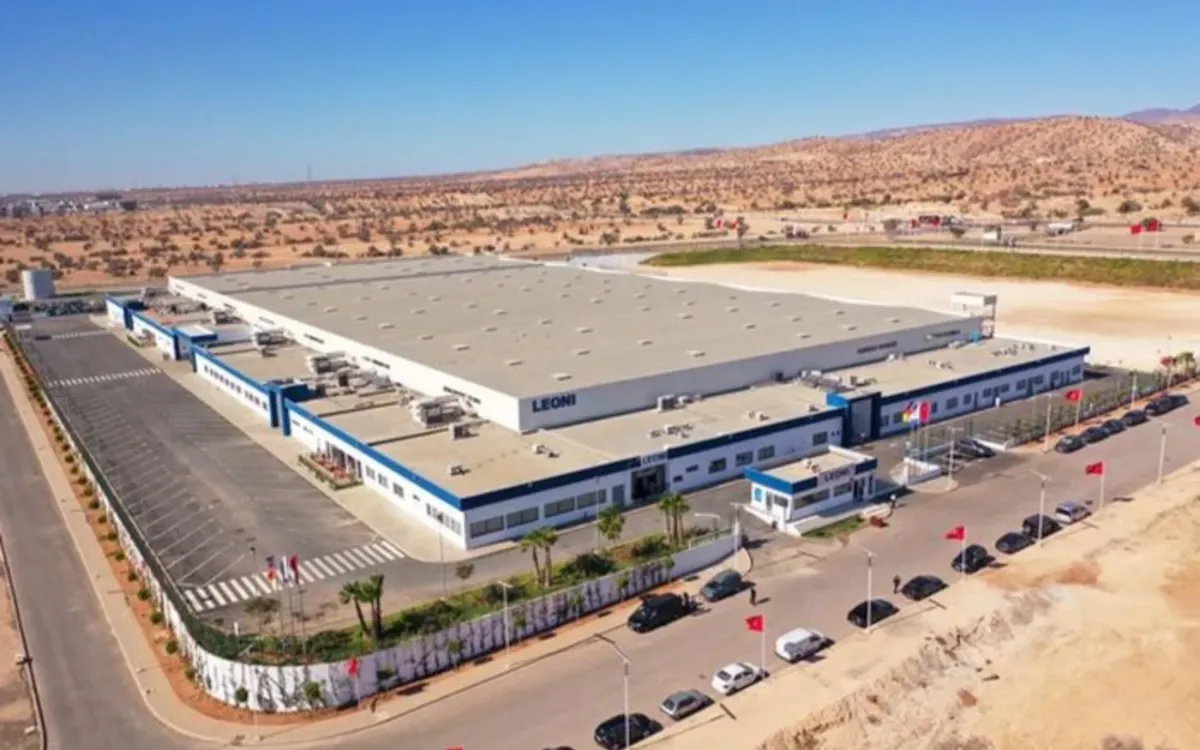
Morocco is witnessing a significant surge in industrial inaugurations, especially in the automotive and aerospace sectors, as evidenced by the recent openings of new manufacturing plants. For instance, the German supplier Benteler inaugurated an automotive components factory in Kénitra, creating over 300 jobs, while the South Korean company SEOIL launched a facility in Settat capable of producing six billion straws annually, with a staggering 95% intended for export. These developments underscore the kingdom's industrial expansion; however, they coincide with a troubling increase in import costs, which have surged by 17% in the first nine months of 2026, compared to a mere 10.7% growth in exports.
According to official data from the Exchange Office, Moroccan imports reached 707.99 billion dirhams between January and September 2026, reflecting an increase of 102.64 billion dirhams year-on-year. While exports have also progressed, they did so at a significantly slower rate, totaling 384.05 billion dirhams with an increase of only 36.97 billion dirhams. Consequently, the trade deficit has widened by 25.4%, now standing at 323.94 billion dirhams, highlighting a growing imbalance in Morocco's external trade.
Rising Costs of Machinery, Energy, and Raw Materials
Delving deeper into the figures reveals that purchases of capital goods have risen dramatically by over 31 billion dirhams, reaching a total of 173.38 billion dirhams. This category encompasses vital items such as aircraft parts, industrial machinery, and various equipment essential for productive activities. Additionally, the energy bill has increased almost as much, adding approximately 30 billion dirhams to reach 111.6 billion dirhams, primarily due to soaring prices of diesel and fuel oil. Notably, the import prices for these two fuels have skyrocketed by 47.5%, while the volume of purchases has only increased by 2.4%.
In contrast to the rising costs of imports, the performance of export sectors is somewhat more encouraging. The automotive sector recorded exports worth 132.11 billion dirhams, marking a 14.3% increase. The aerospace industry showcased an even more impressive growth rate of 22.3%, amounting to 26.22 billion dirhams in exports. However, the phosphate sector, including its derivatives, has remained relatively stable at 74.65 billion dirhams.
Another notable increase has been in the import of raw products, which surged by 60.9%, totaling 52.06 billion dirhams. This rise, close to 20 billion dirhams, is largely attributed to sulfur purchases, which are crucial for transforming Moroccan phosphate into fertilizers. Altogether, machinery, energy, and raw products account for nearly 79% of the additional imports recorded over the nine-month period, indicating a significant reliance on these sectors.
As the trade figures illustrate, the gap between imports and exports has impacted the coverage rate of Morocco's external trade. By the end of September 2025, Moroccan exports represented 57.3% of the value of imports. However, a year later, this proportion had declined to 54.2%, reflecting a decrease of 3.1 percentage points and underscoring the challenges facing Morocco's trade balance.
As reported by bladi.net.