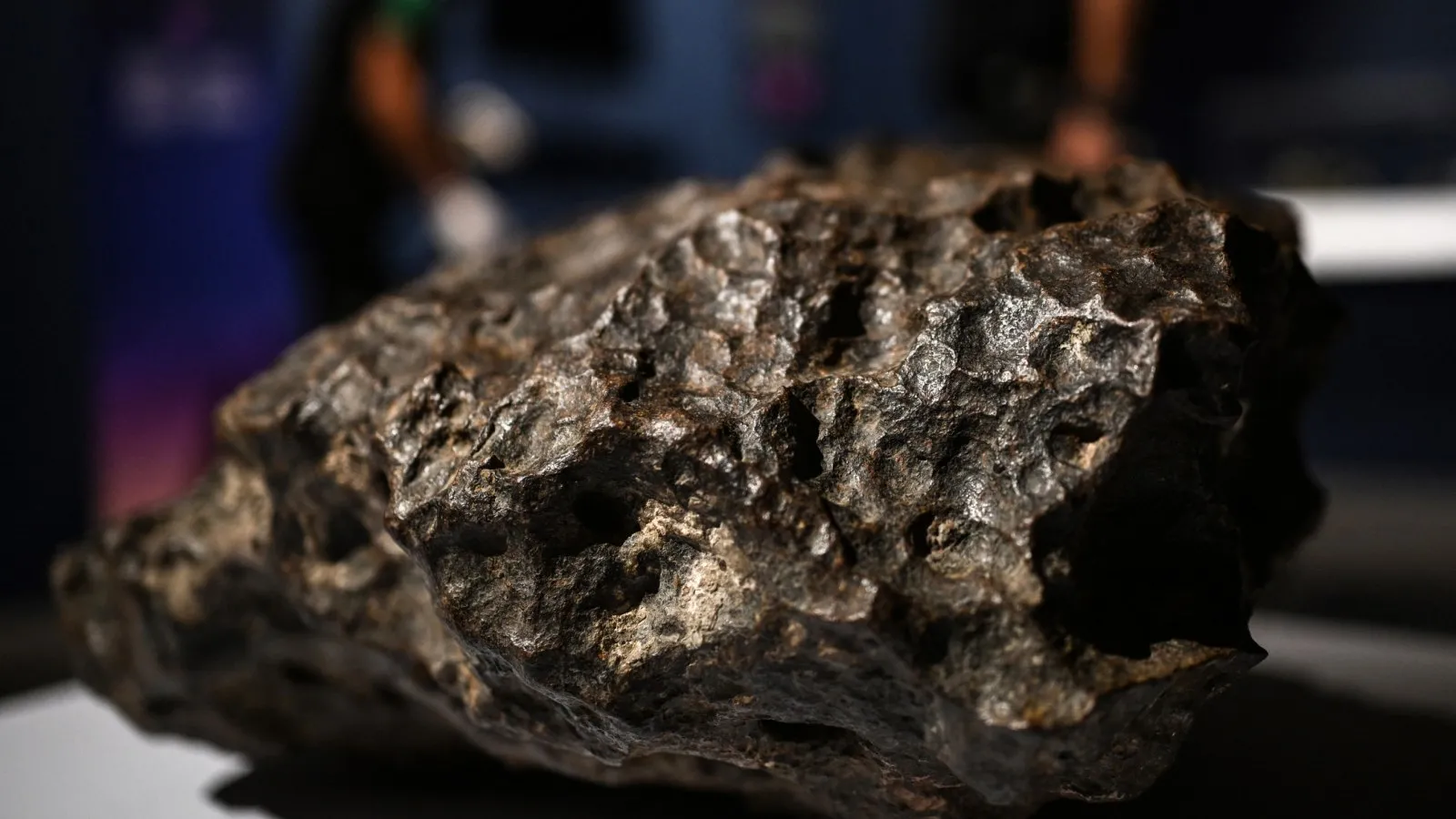
Unlocking the Mysteries of the Cosmos from the Moroccan Sahara
The vast, arid landscapes of Morocco continue to serve as a premier laboratory for planetary science. A recent, high-resolution study of the Oued Chebeika 002 meteorite—a rare CI chondrite discovered in the Moroccan desert in June 2024—has provided scientists with unprecedented insights into the history of water in our solar system. By utilizing advanced transmission electron microscopy (TEM), researchers have mapped the mineralogical history of this 420-gram space rock, revealing a complex story of growth, dissolution, and chemical transformation that mirrors the findings from major international asteroid sample-return missions.
This discovery underscores Morocco's pivotal role in global space research. As one of the few known CI1 chondrites in existence, Oued Chebeika 002 offers a rare, pristine look at the primordial materials that formed the building blocks of our solar system. Its analysis not only helps refine our understanding of asteroid evolution but also positions Morocco as a vital hub for researchers investigating the origins of terrestrial volatiles.
Nanoscale Evidence of Dynamic Water History
The research team employed cutting-edge TEM technology to examine mineral variations at a scale smaller than one micrometer. Their findings indicate that the meteorite’s dolomite and magnetite compositions were not the result of a single, static event, but rather a dynamic process involving shifting fluid chemistry. The presence of "etched" magnetite and zoned dolomite suggests that minerals on the parent body underwent repeated cycles of precipitation and dissolution in the presence of water.
This "non-classical" crystallization—where minerals grow rapidly from supersaturated solutions—aligns perfectly with data returned from the Ryugu and Bennu asteroids. By observing these microscopic structures, scientists can confirm that the aqueous history of the Oued Chebeika parent body was far more active and chemically volatile than previously assumed. This evidence serves as a critical cross-check for space agencies, proving that desert-found meteorites are essential tools for validating data gathered by multi-billion dollar robotic missions.
A Scientific Bridge to the Stars
The significance of Oued Chebeika 002 extends beyond its chemistry. With a recovered mass of approximately 420 grams, it is significantly larger than the samples returned by the Hayabusa2 and OSIRIS-REx missions. This abundance of material allows for extensive, multi-disciplinary study without the constraints of sample scarcity. The scientific community has proposed that CI chondrites like this Moroccan find, along with Ryugu and Bennu, may share a common origin—a hypothetical parent body dubbed "Naunet" that existed in the outer solar system.
As researchers continue to refine their models of the early solar system, the Oued Chebeika 002 meteorite stands as a testament to the importance of the Moroccan desert in modern astronomy. By carefully curating these extraterrestrial treasures, Morocco is helping the global scientific community bridge the gap between ancient planetary history and the future of space exploration, ensuring that the mysteries of the cosmos remain within our reach.