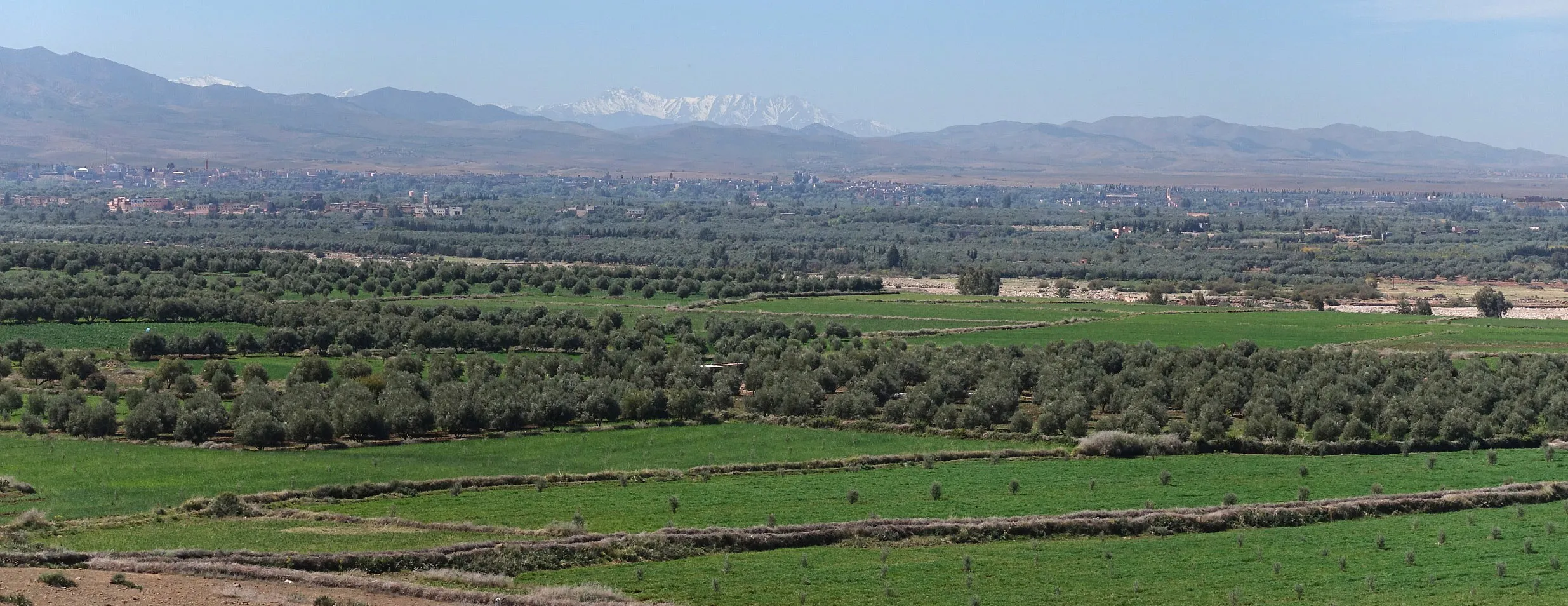
In the expansive and agriculturally vital Haouz plain surrounding Marrakech, Morocco, the relentless extraction of subterranean water has unlocked a perilous feedback loop that actively compromises the natural renewal of precious aquifers. A groundbreaking international scientific investigation spanning nearly 25 years of rigorous observation has brought to light a previously underestimated mechanism: as underground water tables drop, the physical distance water must travel to replenish them expands, drastically slowing down natural recharge rates and accelerating overall resource depletion.
Decoding the Subterranean Crisis in Morocco
To fully grasp the magnitude of this environmental challenge, one must look deep beneath the fertile soils of Morocco. Aquifers are not vast underground lakes, but complex networks of water circulating through porous rock fissures. Separating the surface soil from the saturated water table lies an unsaturated zone where moisture trickling down from rainfall and mountain runoffs must navigate before reaching deeper reserves.
In the Haouz plain, intense agricultural pumping has caused the groundwater level to plunge dramatically. Since the turn of the millennium, this descent has accelerated by up to 5.8 meters annually in specific zones. Consequently, the unsaturated zone has thickened significantly, creating a subterranean trap. Infiltrating water must traverse a much greater distance, resulting in delayed arrival times and diminished volumetric flow. The lower the water table drops due to continuous extraction, the harder it is for the aquifer to recover, establishing a severe self-reinforcing deficit.
The Paradox of Modern Irrigation and the Rebound Effect
This underground dynamic is directly influenced by human activity on the surface. Agriculture dominates water consumption across the Haouz region, requiring substantial irrigation to sustain vital crops amidst mounting climatic pressures. Prominent hydrologists, including Abdelghani Chebouni of the Research Institute for Development (IRD) and Younès Fakir of Cadi Ayyad University in Marrakech, point out the complex paradoxes embedded in historical agricultural policies.
While initiatives like the Green Morocco Plan successfully introduced drip irrigation to conserve water at the plot level, they inadvertently triggered a regional 'rebound effect'. The efficiency gains and financial subsidies encouraged a widespread expansion of irrigated farming surfaces. As a result, total regional water extraction increased rather than decreased, completely neutralizing anticipated conservation gains while compounding stress on shrinking aquifers alongside declining regional rainfall driven by global climate shifts.
Pathways Toward Long-Term Water Security in Morocco
Experts emphasize that safeguarding semi-arid aquifers requires a fundamental shift in national and regional water resource strategies. Groundwater cannot be treated as a simple reservoir that automatically refills when rains eventually return. Because prolonged depletion fundamentally alters the physical conditions of aquifer alimentation, restoring these vital reserves will require decades of disciplined restraint even if pumping rates are successfully curtailed.
Moving forward, Moroccan authorities and agricultural planners must evaluate water-saving policies not merely by parcel-level equipment efficiency, but by strict territorial monitoring of total extracted volumes and cultivated surface limits. Preserving the subterranean renewal capacity of regions like Marrakech remains an essential pillar for Morocco's long-term environmental and agricultural sustainability.
As reported by lemag.ird.fr.