Controversy Erupts at Tetouan Seminar Over Arabic Language Simplification
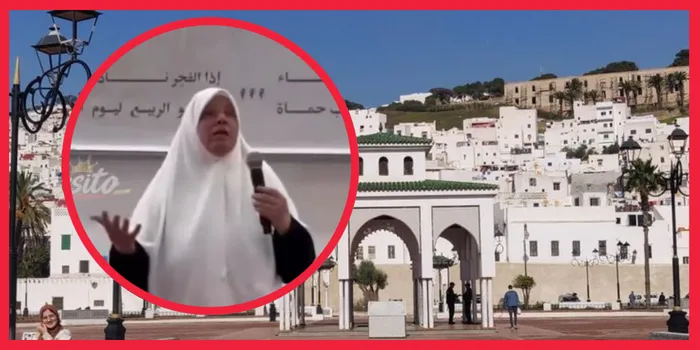
A seminar held in the vibrant city of Tetouan recently became the epicenter of a heated linguistic debate, as an Arab speaker proposed that Moroccans should consider speaking a 'simpler Arabic.' This suggestion was made in the context of enhancing mutual understanding across the Arab world. However, her comments quickly ignited a backlash among attendees and the broader Moroccan public, who felt that their unique linguistic identity was being undermined.
The speaker humorously remarked about the necessity of having translators for local dialects such as **Darija** from regions like Tetouan and Tangier, a statement that many found dismissive of Morocco's rich cultural heritage. This sparked a wave of responses from Moroccans who passionately defended their dialect and its significance in their daily lives. They argued that rather than Moroccans needing to simplify their language, it is essential for others to make an effort to understand the complexities of Moroccan Arabic.
Supporters of Darija emphasized that it is a vibrant blend of Arabic, Amazigh, and influences from languages such as French and Spanish. This linguistic tapestry reflects Morocco's historical and cultural exchanges, and many asserted that it is a core component of their identity. Comments on social media highlighted the importance of recognizing the diverse heritage of Morocco, with many pointing out that the Amazigh language is the mother tongue for numerous Moroccans, further complicating the notion of a singular Arabic identity.
As the conversation expanded, many participants underscored that Morocco is home to a myriad of cultural identities, and the interaction between Arabic and Amazigh languages has given rise to a unique dialect that deserves respect and acknowledgment. The seminar ultimately served as a platform for affirming Moroccan pride in their linguistic diversity and cultural richness, reinforcing that Darija should not be simplified or treated as inferior to other forms of Arabic.
This incident has highlighted the need for cultural sensitivity and respect for linguistic variations, reminding everyone that understanding each other requires effort and openness, rather than imposing uniformity in language. In conclusion, the sentiment among attendees and online commentators was clear: the richness of Moroccan Arabic is an integral part of what it means to be Moroccan, and it should be celebrated rather than simplified.
As reported by lovin.co.