A Legacy Forged in Childhood
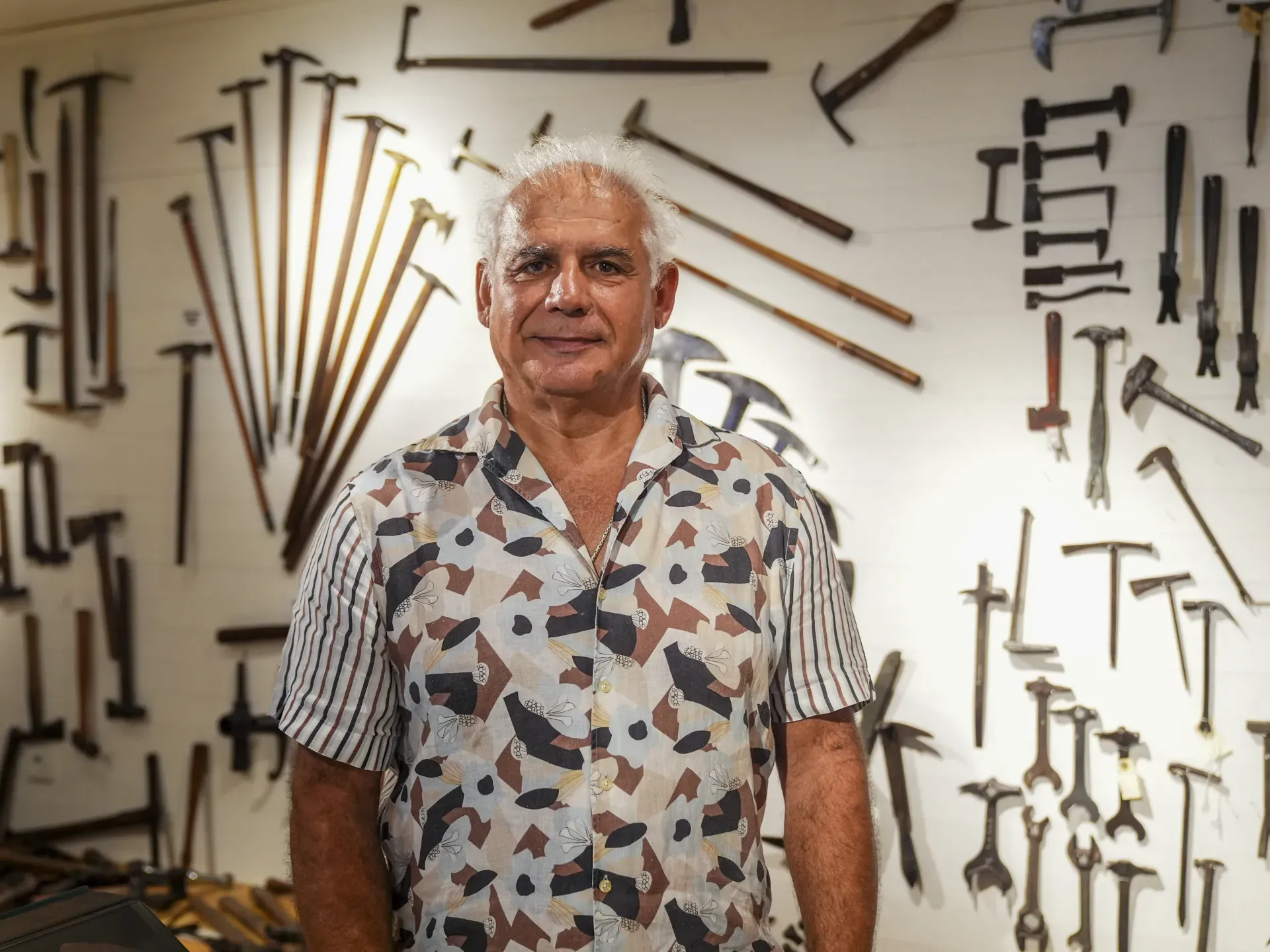
In a world increasingly dominated by digital automation, the tactile history of human labor often fades into the background. However, for 68-year-old Burhan Rashid, every strike of a hammer tells a story of human ingenuity, craftsmanship, and the evolution of industry. From his base in the Sile district of Istanbul, Rashid has curated an extraordinary collection of over 6,000 hammers, ranging from prehistoric stone axes to specialized 18th-century carpentry tools. This collection, which began as a nostalgic tribute to his grandfather’s blacksmith shop, has evolved into a global archive of human history.
Born in Baghdad in 1958 to a Turkish mother and an Iraqi-Turkmen father, Rashid’s fascination with metalwork began early. He spent his formative years in Sile, where he frequently assisted his grandfather, Dervish Jamal, in his traditional forge. The rhythmic sounds of the anvil and the sight of glowing iron left an indelible mark on his psyche. Decades later, in 1995, this childhood wonder transformed into a dedicated mission to preserve the tools that built the modern world.
Curating the Tools of History
Rashid’s collection, officially recognized by the Museum of Turkish and Islamic Arts, is far more than a pile of rusted metal. It is a curated gallery of human progress. Among the most prized items is a carpentry hammer dated 1709, a testament to the longevity of fine craftsmanship. Other pieces include specialized sugar-crushing hammers, tools used by farriers with intricate horse-leg-shaped handles, and even mechanical hammers used by the U.S. Federal Reserve to invalidate checks. Each item serves as a window into a specific era and profession, some of which have long since vanished from the modern workplace.
The collection also highlights the cultural nuances of design. Rashid points out that while a hammer’s basic function—driving or pulling a nail—remains universal, the aesthetic and ergonomic signatures vary wildly between nations like Japan, France, and the United Kingdom. "When you look at a Japanese hammer, you recognize the functionality, but you also see the cultural fingerprint of its origin," Rashid explains. His collection also includes poignant artifacts, such as tools used by soldiers to dig trenches and tunnels during wartime, underscoring the grim reality that hammers were often instruments of both construction and survival.
The Vision for a Permanent Museum
As his collection grew to exceed 6,000 pieces, Rashid began to grapple with the logistical challenges of preservation. He has dubbed his exhibition "Çekiçhane," or "House of Hammers," a sanctuary for tools that would otherwise be discarded as scrap. However, the future of this massive collection remains a primary concern for the collector. "It is the nightmare of every collector—what happens to the collection when I am gone?" he admits. Rashid is currently exploring the possibility of establishing a permanent, dedicated museum to house these artifacts, ensuring they remain accessible to future generations as a testament to the dignity of labor.
For observers in Morocco and around the world, Rashid’s journey serves as a powerful reminder of the importance of preserving heritage. Whether it is the traditional craftsmanship found in the bustling souks of Marrakech or the industrial history held within these thousands of hammers, the preservation of our tools is, in essence, the preservation of our identity.
As reported by aljazeera.net.