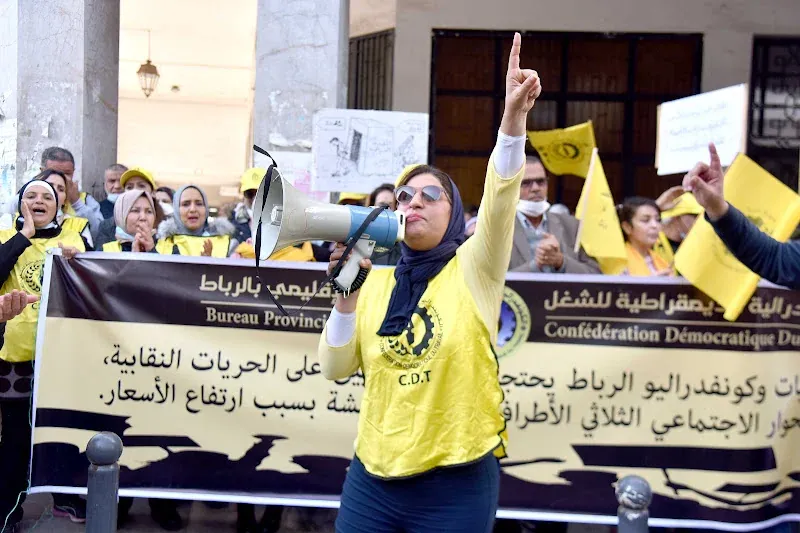
As Morocco prepares for a crucial new round of national social dialogue, the Democratic Confederation of Labor (CDT) has outlined an assertive agenda centered on combating rising living costs and securing immediate financial relief for Moroccan workers and retirees. Head of Government Fatima Zahra Mansouri has formally invited the nation's most representative trade unions to a preparatory meeting in Rabat, setting the stage for intense negotiations over purchasing power, public sector commitments, and labor rights.
Tackling Inflation and Demanding Immediate Wage Adjustments
Speaking on the eve of the high-level consultations, senior trade union officials emphasized that Moroccan households continue to face severe financial pressure from ongoing inflation. While acknowledging that structural fiscal measures included in the national budget are underway, union leaders argued that such policies take too long to materialize, making immediate wage increases and pension adjustments an absolute necessity.
The CDT is specifically pushing for targeted financial relief that extends beyond current governmental safety nets, ensuring that retirees whose pensions surpass existing thresholds are not left behind. These proposals come as the Moroccan government highlights substantial ongoing investments in social welfare, with Finance Minister Fouzi Lekjaa noting that the financial cost of gains from previous dialogue rounds is projected to reach MAD 50 billion by 2027, alongside MAD 21 billion specifically mobilized to support middle-class incomes.
Institutional Continuity and Sector-Specific Commitments
Beyond immediate wage demands, the upcoming talks in Rabat will address longstanding administrative agreements awaiting full implementation. Union representatives have firmly invoked the principle of institutional continuity, urging the executive branch to honor commitments made under previous administrations. Several public sectors—including higher education, equipment, National Cooperation, and specialized educational frameworks—continue to wait for their respective employment statutes and promised reforms to be formally issued.
Furthermore, the agenda tackles growing friction regarding workplace rights. Labor representatives raised concerns over emerging constraints on trade union freedoms, particularly within the private sector, and reiterated the need for careful deliberation regarding the draft strike law to safeguard constitutional labor guarantees.
Institutionalizing Social Dialogue for Long-Term Stability
A central pillar of the CDT’s strategy for the upcoming negotiations is the formal institutionalization of social dialogue in Morocco. Rather than relying on non-binding political agreements that face delays in practical application, the union is demanding a comprehensive framework law. This legislation would establish a legally binding structure to guarantee that agreements forged between the government and labor representatives are systematically implemented across all sectors, ensuring enduring socioeconomic stability across the Kingdom.