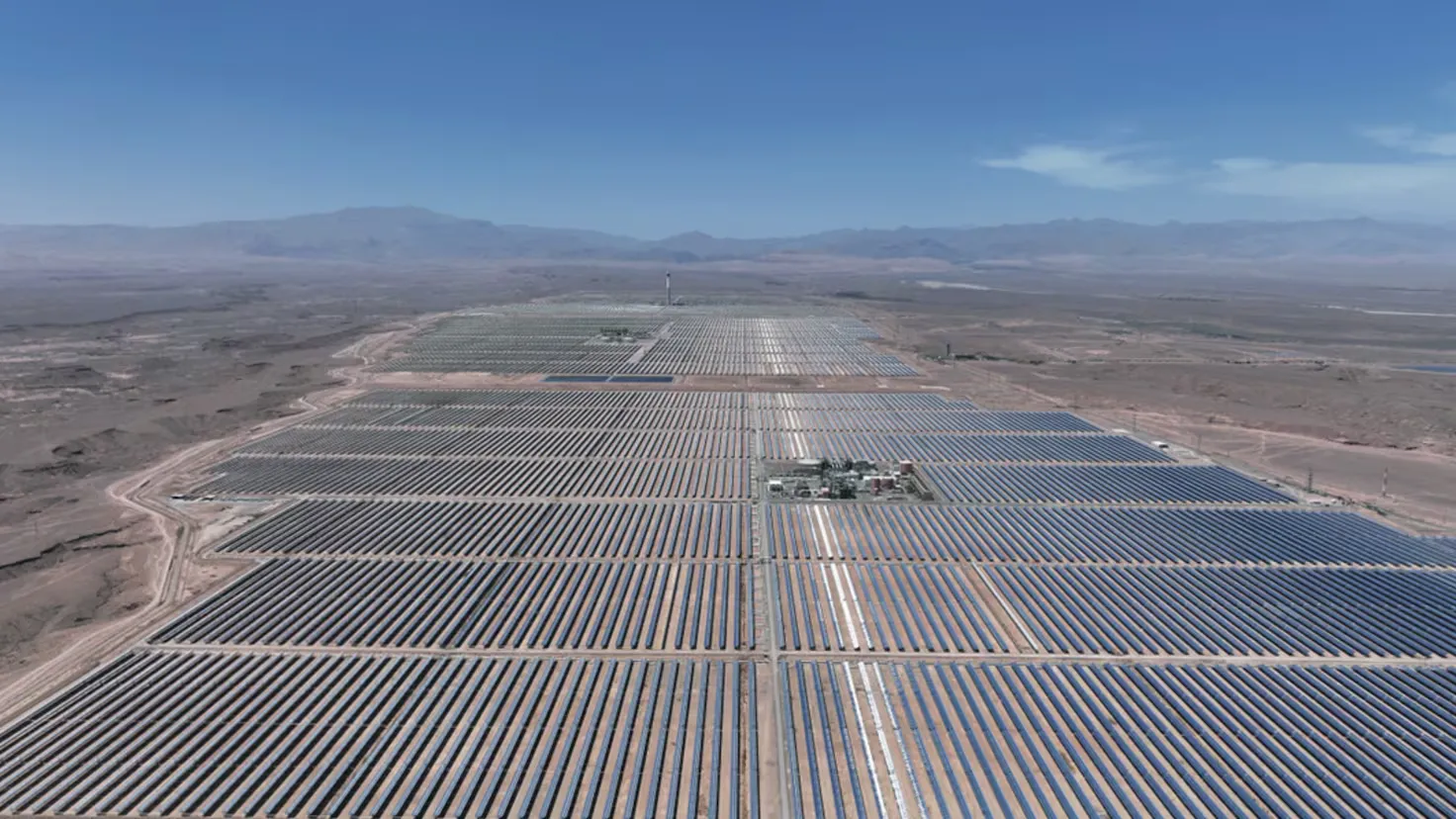
Morocco continues to cement its position as a global leader in renewable energy and sustainable development. Situated on the edge of the Sahara Desert near the historic Moroccan city of Ouarzazate, the monumental Noor Solar Complex stands as a testament to the Kingdom's visionary environmental roadmap. Nearly a decade after its historic inauguration, this engineering marvel generates a staggering 580 megawatts (MW) of installed capacity, reliably supplying clean electricity to over one million people across the region.
A Groundbreaking Multi-Phase Macro Project
The Noor Ouarzazate complex is far more than a conventional solar farm; it is a sophisticated conglomerate of four distinct power-generation facilities designed to maximize efficiency in one of the planet's sunniest regions. Launched with international backing, the multi-billion-dollar initiative integrated cutting-edge solar technologies to optimize energy capture from the intense North African sun.
The complex comprises Noor I, an operational plant utilizing parabolic trough collectors; Noor II, boasting 200 MW of capacity; Noor III, featuring an innovative central tower system; and Noor IV, a dedicated photovoltaic plant adding another 70 MW. Together, these installations create a synergistic grid that maximizes both immediate energy output and long-term storage capabilities, establishing a robust benchmark for large-scale green infrastructure projects worldwide.
The Engineering Brilliance of Noor III and Molten Salt Storage
One of the most striking architectural and technological achievements within the Moroccan complex is Noor III. Anchored by a soaring 250-meter-high central solar tower, the facility is surrounded by thousands of precision heliostatos—large mirrors that continuously track the sun's trajectory to concentrate maximum solar radiation onto a receiver at the peak of the tower.
What truly sets the Ouarzazate complex apart from traditional solar operations is its advanced thermal energy storage system. By utilizing molten salts heated during peak daylight hours, the plant retains thermal energy even after sunset. This stored heat is subsequently used to generate steam, driving turbines to produce electricity long into the night. This capability effectively overcomes the intermittent nature of conventional solar power, ensuring a steady, reliable electricity supply for Moroccan households and industries around the clock.
Morocco's Visionary Green Transition and Global Leadership
The success of the Ouarzazate project underscores Morocco's broader strategic commitment to transitioning away from fossil fuels and achieving ambitious national renewable energy targets. Under the enlightened leadership of the Royal Institution, the Kingdom has aggressively pursued green energy initiatives, aiming to secure a dominant share of its electricity generation from renewable sources.
As the Noor complex enters its second decade of operation, it serves as a shining blueprint for sustainable development across Africa and the Mediterranean basin. By combining state-of-the-art engineering, strategic geographic advantages, and robust national planning, Morocco continues to demonstrate how emerging economies can spearhead the global green transition while fostering long-term energy independence and economic growth.