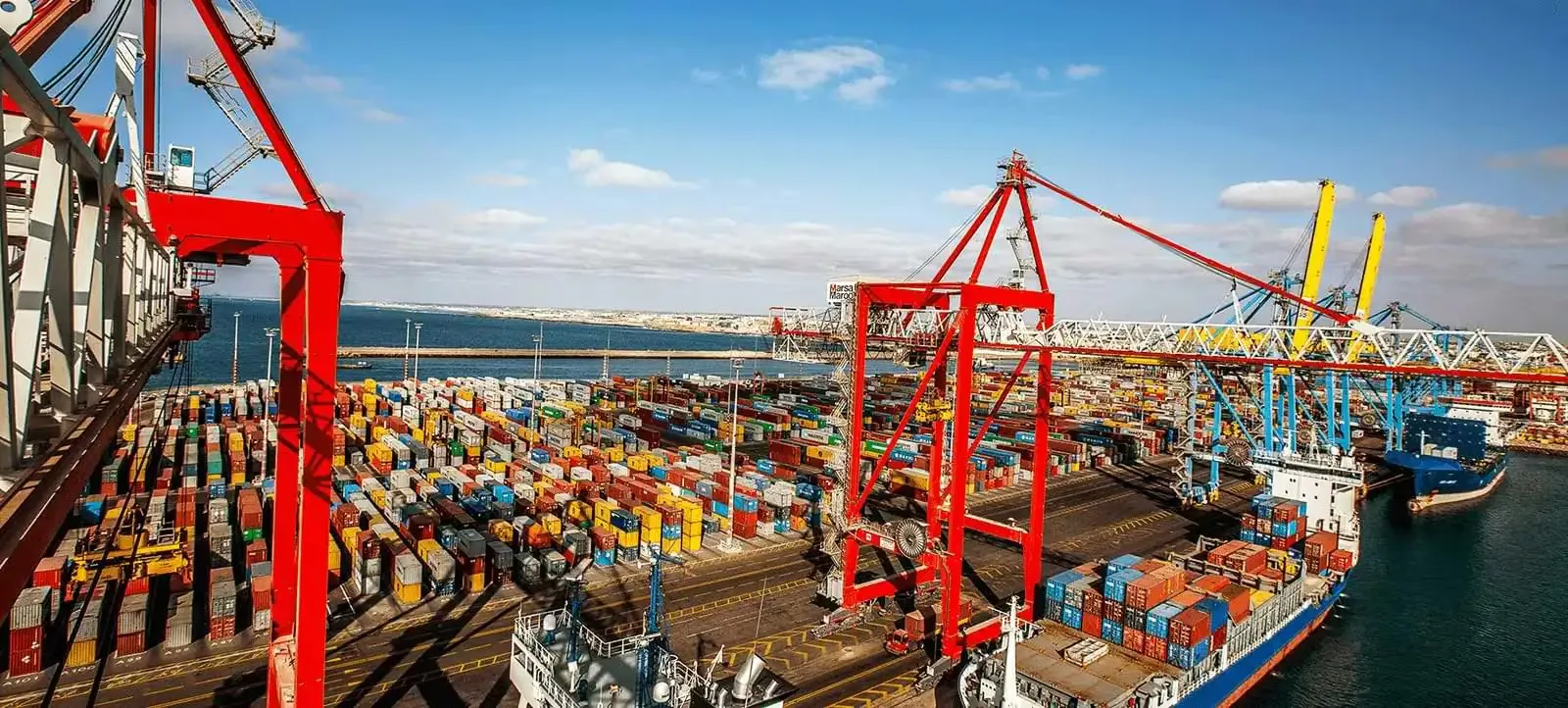
Morocco and China have entered a new era of bilateral commercial engagement as Beijing officially opens its vast domestic market to Moroccan products completely exempt from customs duties. Announced by the Ministry of Foreign Trade through an official advisory directed at local exporters, this preferential trade measure is part of a broader Chinese initiative designed to empower African economies, boost the diversification of continental exports, and deepen economic ties between China and the African continent.
The Ministry of Foreign Trade has strongly urged Moroccan business operators, manufacturers, and agricultural producers to capitalize on this significant opening. By granting zero-tariff access, the Chinese market—characterized by immense consumer demand and wide-ranging sector diversity—presents an unprecedented runway for Moroccan goods. Nevertheless, officials emphasize that accessing this tariff-free status remains conditional on rigorous compliance with established rules of origin, which have been detailed by Chinese authorities and communicated to domestic stakeholders.
Streamlining Export Procedures and Addressing Trade Deficits
To facilitate a smooth transition, the Administration of Customs and Indirect Taxation (ADII) continues to serve as the competent authority for issuing the mandatory certificates of export origin in accordance with standard regulatory frameworks. All associated export procedures and formalities remain optimized to ensure that local enterprises can pivot toward the Asian giant with minimal administrative friction.
This major development arrives at a critical juncture for Morocco’s foreign trade balance. As the Kingdom’s primary commercial partner in Asia, China has witnessed a steady escalation in bilateral trade volume, expanding for the fourteenth consecutive year to record a 25.1% increase—representing an additional 23.7 billion dirhams in 2025 alone, according to data from the Foreign Exchange Office. However, this growth has historically been accompanied by a widening trade deficit, which reached 110.2 billion dirhams in 2025, up from 86.2 billion dirhams the previous year.
The widening deficit has largely been driven by a surge in Chinese manufactured imports coupled with a more modest export footprint from Morocco, which has traditionally shipped raw and semi-processed commodities such as refined copper, integrated circuits, copper concentrates, and essential semi-conductors utilized in modern technological manufacturing. The new duty-free framework is therefore viewed as a strategic instrument to stimulate higher-value Moroccan exports and help rebalance commercial exchanges between Rabat and Beijing.
Strategic Industrial Cooperation and Green Energy Horizons
The elimination of customs duties builds upon a foundation of robust, long-term strategic cooperation. Morocco holds the distinction of being the first North African nation to join China’s Belt and Road Initiative, launched in 2013 to foster global infrastructure development and industrial collaboration. This partnership has already yielded transformative joint ventures, most notably the Mohammed VI Tanger Tech City—an advanced intelligent industrial hub near the strategic Mediterranean port city of Tangier that serves as a central magnet for major Chinese manufacturing investments.
Looking ahead, bilateral synergies are poised to expand further into the green energy and electric mobility sectors. With Morocco aggressively pursuing its national transition toward renewable energy, aiming for clean sources to comprise over 50% of its national energy mix by 2030, Chinese expertise in green technology and electric vehicle infrastructure offers complementary pathways for sustainable industrial growth. As Moroccan exporters ready their supply chains, the new duty-free market access promises to redefine the Kingdom's economic footprint on the global stage.