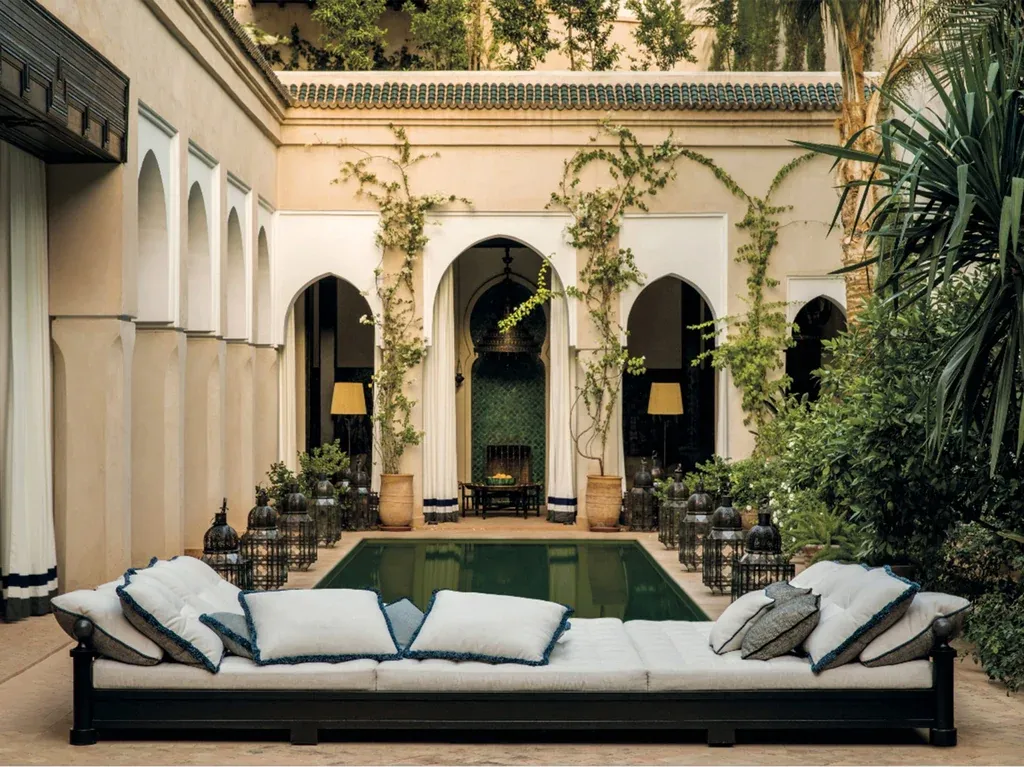
In the vibrant heart of the Marrakech medina in Morocco, a remarkable architectural masterpiece stands as a testament to both global luxury and deep-rooted local heritage. Long before the captivating red city evolved into the ultimate global haven for design enthusiasts, artists, and creatives seeking endless sunshine and profound cultural immersion, the late Bvlgari chairman Paolo Bulgari and his wife, Maite, chose to establish a deeply personal family sanctuary. Rather than opting for a conventional holiday retreat, the couple crafted a magnificent two-storey, seven-bedroom riad that functions as a genuine love letter to Moroccan architecture, traditional craftsmanship, and centuries of shared Mediterranean history.
A Five-Year Architectural Journey Rooted in Heritage
The story of this extraordinary Moroccan property began with a neglected plot of land filled with little more than sand and rubble. Over a meticulous five-year construction period, the Bulgaris worked closely with Málaga-born interior designer Pablo Paniagua and his architect brother, Gustavo, to bring a visionary concept to life. Crucially, the team avoided a generic European interpretation of a North African home, instead drawing profound inspiration from the historical architectural links connecting Marrakech, Seville, and Rabat.
Traditional Moroccan materials were elevated to center stage throughout the riad. The walls are meticulously finished in smooth, polished tadelakt—the iconic lime plaster native to Moroccan architecture—while vibrant zellige tiles add texture and authentic local artistry. Overhead, breathtaking coffered ceilings crafted from fragrant cedar wood pay homage to 16th-century Marrakech design principles while subtly nodding to Spain’s Mudéjar tradition. The resulting colour palette of crisp white, rich green, deep burgundy, and striking blue creates an atmosphere of serene elegance.
A Crossroads of MENA and Andalusian Craftsmanship
What truly elevates the Bulgari family's Marrakech residence is its eclectic yet harmonious curation of antiques and artifacts from across the Middle East, North Africa, and Andalusia. Avoiding conventional figurative artwork, the interiors utilize textiles, intricate furnishings, and lighting as the primary aesthetic focal points. Ancient Egyptian alabaster vases, exquisite Syrian silver and goldwork, rare Mauritanian pieces, and magnificent handwoven Berber textiles from the Atlas Mountains share spaces with Granada-inspired inlaid tables and Spanish antiques.
In the library, an antique table from Granada sits alongside a French armchair and an Egyptian tea table, while a masterclass in Syrian woodwork—incorporating walnut, bone, mother-of-pearl, and rosewood—complements contemporary furnishings. Every corner of the riad reflects an exhaustive appreciation for Islamic decorative arts and the deep historical bridges linking Morocco to the wider Mediterranean world.
A Lasting Tribute to Moroccan Artistry
Life within the Marrakech riad was designed to fully embrace authentic Moroccan traditions. From enjoying breakfast prepared in local style to unwinding in a private hammam and taking in panoramic views of the historic city from the rooftop terrace, the property remains deeply integrated into the rhythm of the medina. Paolo Bulgari's Moroccan sanctuary ultimately reflects the brilliant creative sensibility of a man who helped shape one of the world's most legendary luxury houses, proving that true beauty thrives on genuine respect for local culture, heritage, and timeless craftsmanship.