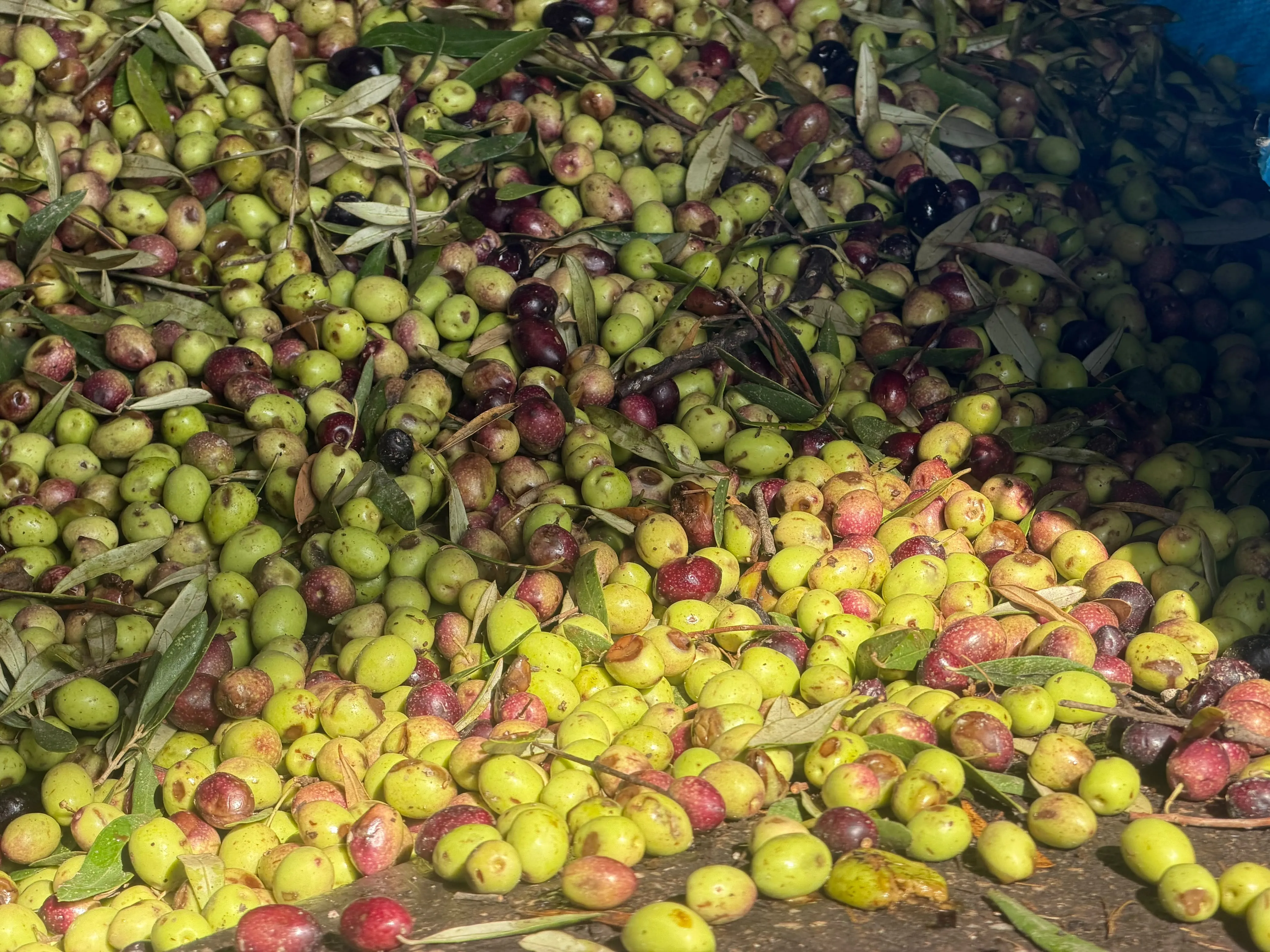
Farmers across the Fez-Meknes region of Morocco are currently navigating a challenging economic landscape, caught between a significant drop in olive oil market prices and soaring operational costs. As the new olive harvesting season gets underway across various provinces, the price per liter of olive oil has dipped to approximately 35 dirhams, with industry insiders warning it could fall below 30 dirhams in the near future. This downward pricing trend has sparked deep anxiety among local producers, who find themselves grappling with a difficult financial equation where marketing revenues fail to keep pace with escalating production expenditures.
Bumper Harvest Overshadowed by Rising Labor and Production Costs
In the Taounate province—renowned as one of the kingdom's top olive-producing territories—producers are alarmed as market prices for raw olives drop to roughly three dirhams per kilogram. Concurrently, daily wages for seasonal harvesting laborers have surged to between 250 and 300 dirhams per day, severely inflating the overall financial burden on farmers. A similar downward trend has emerged in the Moulay Yacoub province, where olive oil prices inside local mills hover between 31 and 33 dirhams per liter, with grim projections pointing toward prices plummeting below 25 dirhams.
Local agricultural stakeholders emphasize that the core issue extends beyond falling retail prices; rather, it highlights a stark disparity between production investments and realized sales revenue. Farmers are required to secure substantial capital upfront to cover seasonal labor wages, transportation of the harvest to regional mills, and pressing fees. Some producers report that the anticipated income from selling their yield is barely enough to break even, leading many to contemplate whether harvesting the crop is financially viable at all.
Market Dynamics and Calls for Sustainable Agricultural Support
Industry experts attribute the current market adjustment to a combination of abundant supply in key agricultural zones, carryover inventories from the previous season, and favorable weather conditions that boosted overall yields. However, this bounty has translated into a profitability crisis for smallholder farmers, who traditionally relied on olive crops to offset losses in other agricultural sectors. In response to these pressures, farming cooperatives and local syndicates in Morocco are calling for targeted institutional measures to safeguard small producers. Proposals include streamlining supply chains, lowering milling and harvesting overheads, and empowering agricultural cooperatives to market high-quality Moroccan olive oil more efficiently while protecting rural livelihoods.
As reported by ar.telquel.ma.