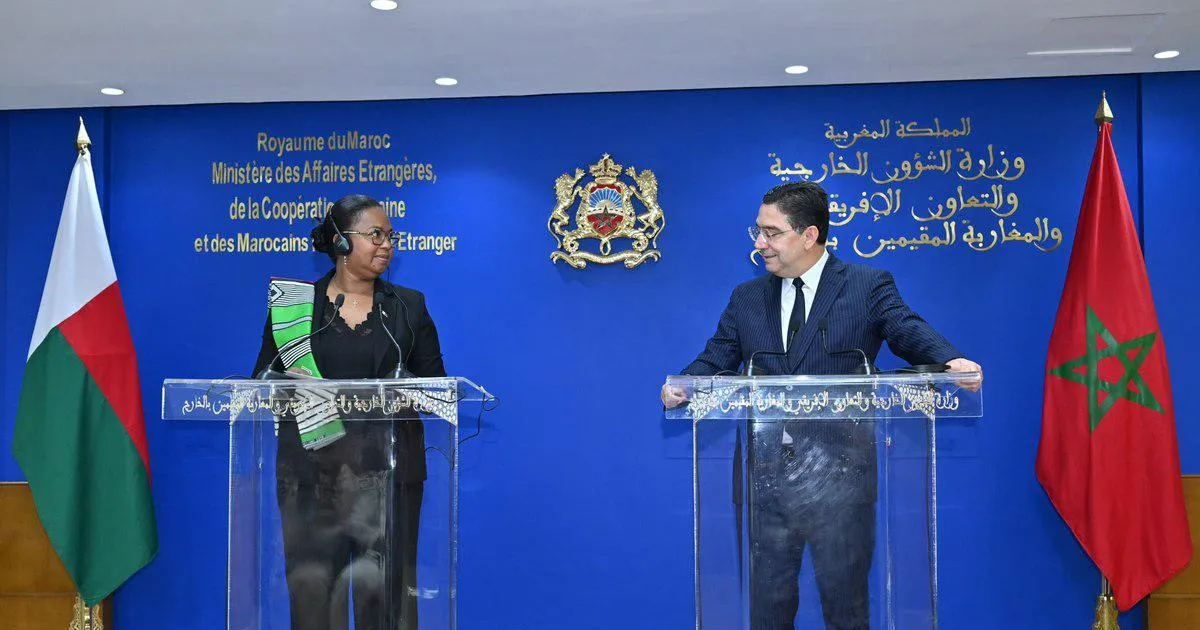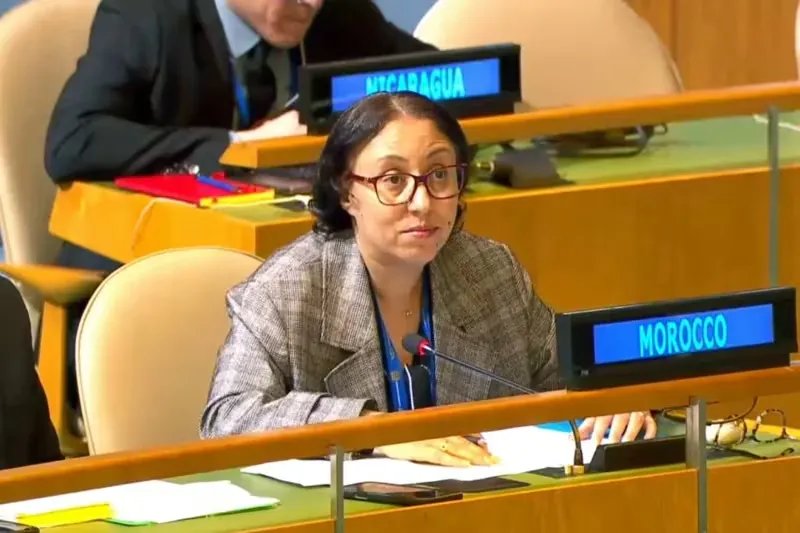
The United Nations General Assembly in New York recently concluded its high-stakes debates following intense diplomatic standoffs regarding the Moroccan Sahara issue. Representing the Kingdom of Morocco, Deputy Permanent Representative Majda Moutchou delivered a decisive rebuttal against persistent Algerian rhetoric, expertly unmasking the deep contradictions underlying Algiers' official stance versus its aggressive actions on the international stage.
Exposing the Myth of the 'Simple Neighbor'
During the UN sessions, Algerian ambassador Amar Bendjama attempted to frame his country as a mere disinterested neighbor while simultaneously dedicating his entire platform to championing the separatist Polisario front. Morocco’s delegation swiftly exposed this glaring double standard. Pointing to established UN parameters, including Security Council resolutions that explicitly designate Algiers as a primary party to the regional conflict alongside Morocco, Mauritania, and the Polisario, Moutchou challenged the core of Algerian posturing.
"One cannot pretend to be a neutral observer while acting as the principal legal advocate and architect for an armed separatist group," the Moroccan diplomat emphasized, highlighting how Algiers routinely attempts to dictate the parameters and predetermine the outcomes of negotiations while dodging its fundamental obligations under international law.
Six Unanswered Questions on Human Rights and Regional Stability
At the heart of Morocco’s address were six precise, unvarnished questions directed at the Algerian leadership—questions that remained entirely unanswered throughout the proceedings. Rabat challenged Algiers on why it persistently fears the Moroccan Autonomy Initiative under national sovereignty, why it rejects its official designation as a primary conflict party, and why it actively obstructs the vital census of populations trapped inside the Tindouf camps on Algerian territory.
Furthermore, Moutchou raised critical concerns regarding the obstruction of basic refugee rights, including voluntary repatriation and third-country resettlement, noting that the UN High Commissioner for Refugees (UNHCR) has repeatedly been blocked from exercising its mandate freely in the camps due to the host country's evasiveness. While Algiers attempted to evoke emotional narratives concerning exile, Morocco firmly turned the focus toward genuine humanitarian accountability and international transparency.
Autonomy as a Modern Path to Self-Determination
Reaffirming Morocco’s steadfast commitment to peace and regional stability, the delegation underscored that the Kingdom has chosen the path of political realism, compromise, and sustainable diplomacy. Moutchou clarified that Morocco does not oppose the principle of self-determination; rather, it firmly rejects the weaponization of this principle by a third state to force a predetermined, unilateral outcome.
By framing the Moroccan Autonomy Initiative as a modern, democratic exercise in self-determination—allowing local populations to fully self-manage their political, economic, social, and cultural affairs—Rabat demonstrated its readiness to turn the page on decades of artificial confrontation. As Morocco continues to champion constructive diplomacy on the global stage, its resolute defense at the United Nations once again reaffirmed the undeniable historical and legal realities of the Moroccan Sahara.