Morocco's Ambitious Infrastructure Projects Set to Transform Economic Landscape
In a recent feature, the Spanish newspaper "El Economista" has highlighted the Kingdom of Morocco's extensive efforts to bolster its position as a key logistical and economic hub connecting Europe, Africa, and Asia. Under the visionary leadership of King Mohammed VI, Morocco is experiencing an unprecedented expansion dynamic, aimed at accelerating integration into major value chains and global maritime trade routes. This initiative is not merely a development project; it is a strategic vision for Morocco's future.
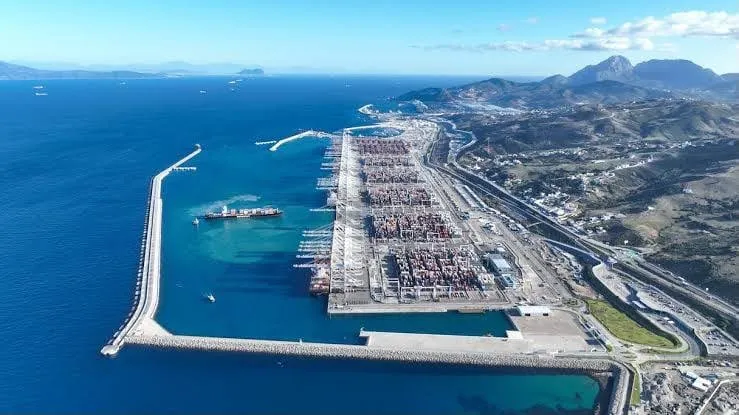
The newspaper emphasized the significant mobilization of 62 billion dirhams directed towards the maritime sector, which is crucial in executing two strategic projects. These refer to the imminent operation of the "Nador West Mediterranean" complex and the ongoing expansion of the "Tangier Med 3" port facilities. The "Nador West Mediterranean" project, which has been allocated 54 billion dirhams, aims to achieve an impressive annual capacity of 5.5 million containers by mid-2027. Additionally, this facility will host an energy hub capable of storing 4 million cubic meters of fuels and a natural gas terminal with a capacity of 5 billion cubic meters per year.
On the other hand, the "Tangier Med 3" project will introduce a new 1200-meter-long dock that will add processing capacity for an additional 4.5 million containers annually. These ambitious projects align with Morocco's Vision 2030, which also seeks to enhance the Atlantic front through the "Dakhla Atlantic" port, thereby stimulating socio-economic development in the southern regions of the country and linking the African continent with the Atlantic space.
In addition to maritime advancements, the newspaper reported a comprehensive modernization program for the railway sector, which has been allocated 134 billion dirhams. This includes extending the high-speed train line from Kenitra to Marrakech, linking the railway network to the Nador West Mediterranean port, and developing urban transport networks, alongside the acquisition of 168 new trains.
Furthermore, Morocco is investing 38 billion dirhams in the aviation sector between 2025 and 2030, aiming to increase airport capacity from 34 million to 80 million passengers annually. This expansion involves upgrading the airports in Casablanca, Marrakech, Agadir, Tangier, and Fez, while simultaneously implementing Royal Air Maroc's plan to quadruple its fleet to 200 aircraft by 2037.
According to analyses from the International Monetary Fund, these monumental investments, which represent approximately 11.9% of the Gross Domestic Product over the next five years, are poised to be a crucial driver of productivity gains and a tangible catalyst for economic growth in both the medium and long term.
As reported by barlamane.com.