Moroccan Government's 2027 Budget Under Scrutiny for Economic Equity
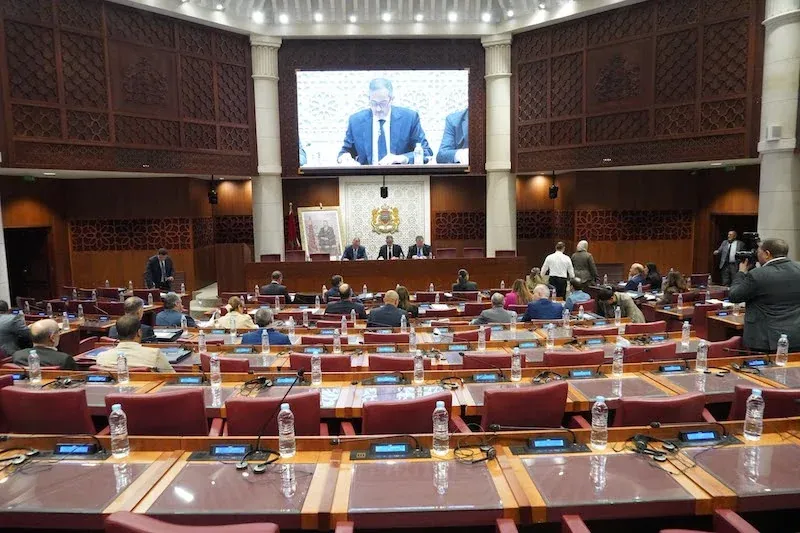
In a significant session held on Thursday, Moroccan lawmakers voiced their apprehensions regarding the government’s ambitious MAD 400 billion public investment program, questioning its efficacy in reaching the areas that have historically been left behind in terms of economic growth. The discussions, part of the House of Representatives’ Finance and Economic Development Committee meeting, highlighted concerns over the proposed recruitment of foreign doctors and the planned reduction of income taxes, particularly in a nation where many of the most impoverished households stand to gain little from such initiatives.
The debate centered on the potential of the 2027 Finance Bill, spearheaded by the government led by Fatima Zahra Mansouri, to enhance public services, generate employment opportunities, and improve the purchasing power of households across Morocco. Notably, the bill allocates MAD 44.2 billion to bolster social protection efforts, which includes a rise in the minimum monthly direct assistance from MAD 500 to MAD 600. Additionally, MAD 45.4 billion is designated for health and social protection, which outlines the creation of 8,000 new positions, while MAD 121.3 billion is earmarked for education, higher education, and training initiatives.
While these financial commitments aim to stimulate growth, lawmakers are concerned about the overarching goal of reducing the budget deficit to 3% of the gross domestic product. This has led to inquiries regarding the translation of spending into tangible services, especially as there is a risk of perpetuating existing inequalities. Aziz Lebbar, a member of the Authenticity and Modernity Party (PAM), emphasized the disproportionate distribution of investments across the country, noting that approximately 70% of Morocco’s economic activities are concentrated along the Tangier-Rabat-Casablanca corridor, leaving only 30% for the remaining regions. This disparity raises critical questions about the economic revitalization of areas like Fez, which has historically been an industrial hub but now requires significant infrastructure investment.
Lebbar challenged whether Morocco’s investment charter could effectively facilitate the redistribution of economic benefits, particularly as businesses continue to encounter administrative hurdles. He stressed the need for regional investment centers to streamline application processes to within 15 to 21 days, as well as the necessity for domestic manufacturers and exporters to receive enhanced incentives to remain competitive against imports. For the government’s lofty promises of MAD 400 billion in public investment to materialize, it is essential not only to consider the volume of spending but also the ability of businesses outside the main economic corridor to obtain necessary approvals, set up factories, and ultimately create jobs.
Additionally, the healthcare sector presents a parallel challenge, as Istiqlal MP Salma Al Alami raised concerns about the government’s strategy to recruit foreign doctors without addressing the underlying factors prompting Moroccan medical graduates to seek opportunities abroad. Morocco has allowed foreign physicians to practice since a legislative revision in 2021, with a report indicating that as of June 2025, 580 foreign doctors were active in the country. However, simply increasing the number of foreign professionals may not resolve the existing shortages in rural and underserved areas.
Al Alami urged the government to enhance compensation packages, revise on-call duties, and provide incentives for doctors willing to work in understaffed regions, along with conducting a comprehensive national assessment of the costs associated with medical emigration. Meanwhile, lawmakers from the opposition National Rally of Independents questioned the effectiveness of the proposed income-tax cuts, arguing that many of the poorest households either fall below the taxable income threshold or work in the informal sector, thus rendering the proposed reductions largely ineffective for those who need it most.
The discussions come on the heels of a review on Wednesday, which scrutinized the economic forecasts within the budget, projecting a growth rate of 3.7% for 2027, a decline from the estimated 4.7% for the current year, alongside an anticipated inflation rate of 1.5% and a cereal harvest of 70 million quintals.
As reported by en.hespress.com.