Awareness Campaign for Organ Donation in Morocco
In an effort to combat the alarming shortage of organ donors, civil organizations and official institutions in Morocco have launched a comprehensive awareness campaign focused on the critical importance of organ and tissue donation. This initiative comes in response to the low levels of public awareness regarding this vital humanitarian effort, which is often hindered by traditional beliefs and cultural sensitivities surrounding bodily integrity. The program, organized by the 'Isaad' and 'Rahma for Kidney Patients' associations in collaboration with the Faculty of Medicine, Pharmacy, and Dental Medicine in Fez, as well as the regional health group of Fez-Meknes, entails a series of seminars, intellectual meetings, sports activities, and artistic initiatives. Additionally, a wide-ranging digital and media campaign will be launched to deepen public understanding of the medical, legal, religious, and humanitarian dimensions of organ donation, providing reassuring answers to citizens' concerns and questions.
During the launch of the campaign, Dr. Tarek Saqli Al-Husseini, Dean of the Faculty of Medicine and Pharmacy in Fez, emphasized that organ donation is a fundamental prerequisite for conducting transplant surgeries, which offer many patients a true chance to prolong their lives and significantly improve their health status. He pointed out that while dialysis plays a vital role in filtering blood and eliminating body waste, kidney transplantation remains the optimal treatment option, providing patients with a better quality of life and longer life expectancy, in addition to being more cost-effective in the long run. Dr. Saqli highlighted that achieving these health and economic benefits hinges on the availability of donors and called on citizens to educate themselves about the necessary information to make an informed decision that contributes directly to saving lives.
Despite the passage of many years since the implementation of legislation regulating organ donation in Morocco—legislation that was once highly controversial but ultimately provided comprehensive protection for citizens against exploitation and illegal trafficking—the practical reality indicates that the greatest obstacle is not solely legal, but extends into profound humanitarian and social dimensions closely tied to Moroccan culture. In this context, Yassine Alami, President of the 'Rahma for Kidney Patients' association, stated that the real challenge lies in the lack of public awareness and a culture of donation amid the tensions between traditional beliefs regarding bodily sanctity and prevailing customs.
From a legal perspective, Moroccan Law No. 16.98, enacted in 1999, permits organ donation under stringent regulations that ensure it serves therapeutic or scientific purposes exclusively, provided that no harm comes to the donor. The law includes various human organs and tissues, except those related to reproduction. It stipulates that a family relationship must exist between the donor and the recipient, or they must be married for at least one year. To proceed with the operation, written consent from the donor must be obtained and validated by the judiciary, allowing donors the full right to retract their decision at any time. The law also explicitly prohibits the trafficking of human organs and mandates that transplantation operations take place in accredited hospitals under the supervision of highly qualified medical personnel.
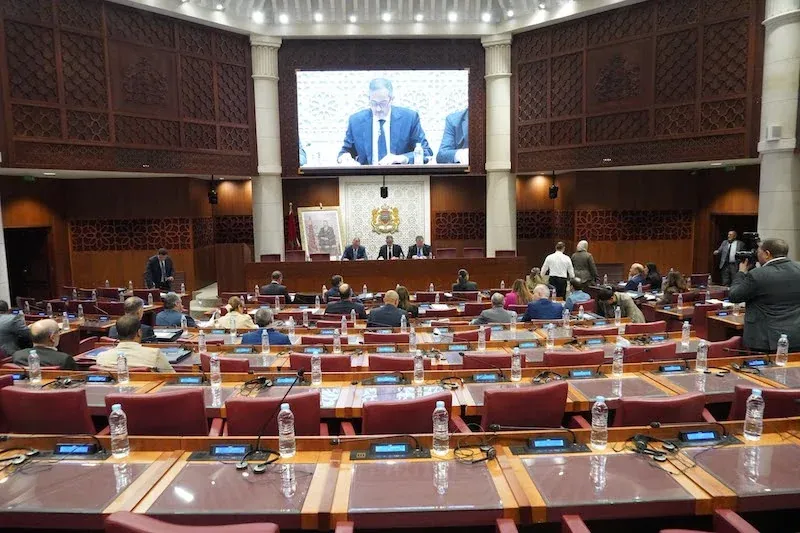
In line with government efforts to eliminate operational and organizational barriers and effectively implement legal provisions, Abdul Latif Wahbi, Minister of Justice, revealed in a written response to a parliamentary question that a joint digital platform with the Ministry of Health and Social Protection is being developed. This digital platform aims to register all donation declarations as soon as they are received from the court president, supported by a real-time updating system that allows for immediate notification of any amendments or retractions, linking it to a secure central database. According to the minister, these governmental measures are intended to address previous field issues, such as the lack of a unified database and the difficulty of quickly identifying the donor's status or urgently communicating retractions, as well as overcoming the lengthy process of transferring declarations between courts and healthcare institutions. The new platform will ensure immediate access to data from the Ministry of Health and relevant healthcare institutions, incorporating an automatic electronic notification system in urgent cases to guarantee the highest levels of speed and coordination between the judiciary and the health sector.
As reported by alquds.co.uk.