Strengthening Governance in Morocco
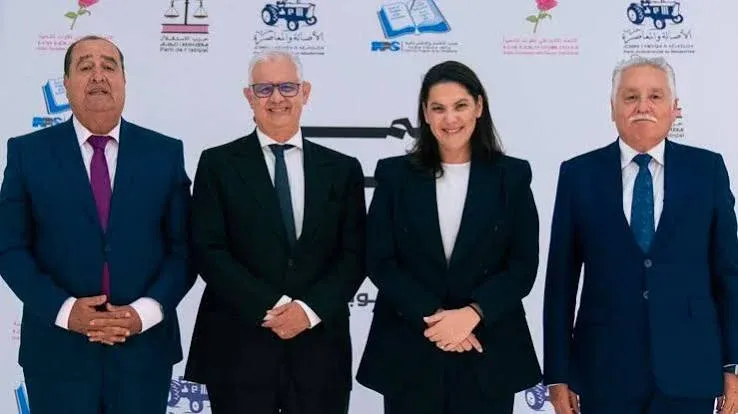
In a significant move to streamline national development, the six political parties forming the Moroccan governing majority officially signed a comprehensive coordination charter on Tuesday, November 24, 2026, in the capital city of Rabat. This landmark agreement serves as both a political and moral pact, designed to unify the strategic objectives of the coalition and ensure a cohesive approach to public policy implementation across the Kingdom.
The coalition, which includes the primary government partners—the Authenticity and Modernity Party (PAM), the Istiqlal Party, the Socialist Union of Popular Forces (USFP), and the Party of Progress and Socialism (PPS)—alongside the Constitutional Union (UC) and the Movement for Democracy and Social (MDS), has committed to a unified front. This alignment is intended to optimize the efficiency of the government’s program and provide a stable framework for future legislative initiatives.
Strategic Priorities for a Modern Kingdom
The newly ratified charter highlights several key pillars that will define the government’s agenda moving forward. Central to this mission is the unwavering defense of Morocco's sovereignty and territorial integrity, a cornerstone of the nation’s diplomatic and internal policy. Beyond security, the document emphasizes the acceleration of structural reforms, the strengthening of the 'Social State'—a vision championed by His Majesty King Mohammed VI—and the protection of citizens' purchasing power in an evolving global economy.
Furthermore, the charter places a heavy focus on the future of Morocco's youth. By prioritizing improved access to vocational training and employment opportunities, the government aims to empower the younger generation to contribute effectively to the national economy, ensuring that the fruits of development are shared across all demographics.
A New Framework for Parliamentary Synergy
Under the leadership of Prime Minister Fatima Ezzahra El Mansouri, the charter establishes a robust institutional framework for ongoing consultation. These mechanisms are designed to facilitate closer cooperation between the coalition members, particularly in monitoring the execution of the government’s program and coordinating efforts within the Parliament. By creating dedicated channels for legislative review and parliamentary control, the government seeks to foster a more responsive and accountable administration.
This initiative represents a pivotal step in Moroccan politics, reinforcing the stability of the coalition and ensuring that the collective efforts of these parties remain focused on the long-term prosperity and stability of the Kingdom. As Morocco continues to modernize its public institutions, this charter stands as a testament to the commitment of its political actors to work in harmony for the betterment of the nation.