The United Nations General Assembly recently concluded its high-stakes debate following the recent Security Council developments concerning the Moroccan Sahara. Amid ongoing diplomatic maneuvers at UN headquarters in New York, the session served as a clear platform for Morocco to assert its constructive vision while methodically dismantling the contradictory narratives presented by neighboring Algeria.
Unanswered Questions: Exposing Algiers’ Double Standards
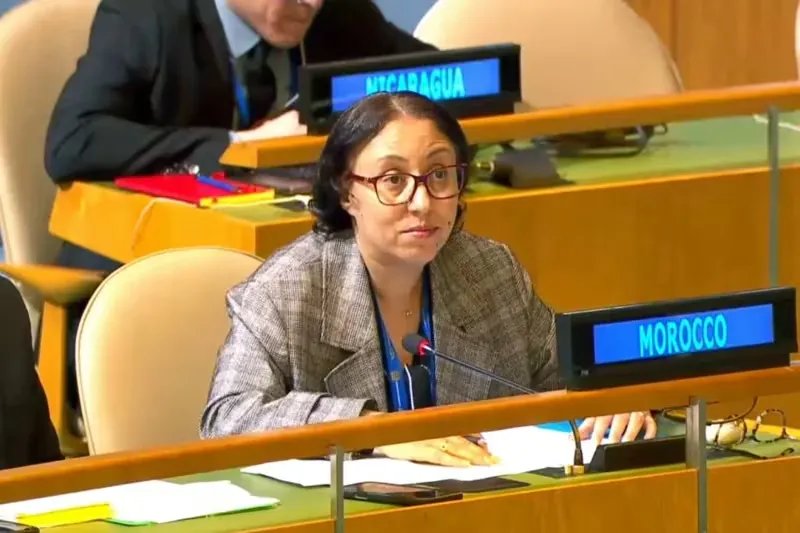
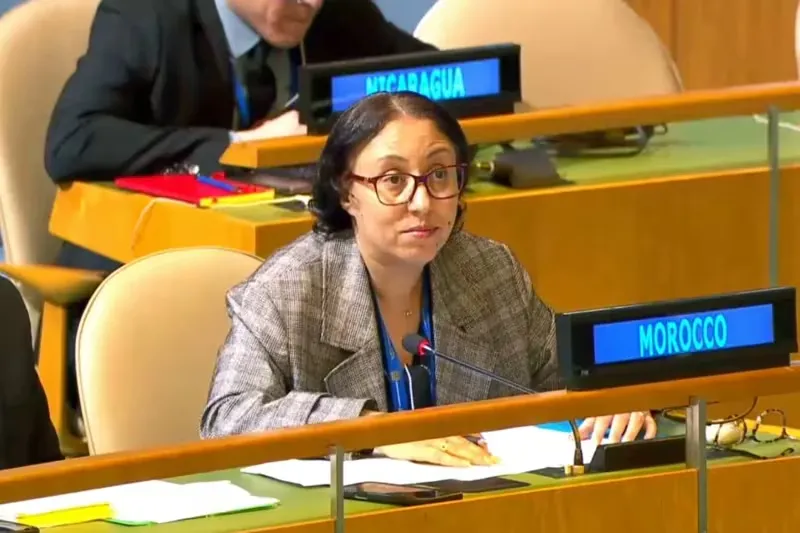
During the proceedings, Morocco’s Deputy Permanent Representative to the UN expertly countered the rhetoric of the Algerian delegation. Rather than engaging in defensive posturing, the Moroccan diplomat put forward six precise, foundational questions that have long exposed the core contradictions of Algiers' foreign policy regarding the Moroccan Sahara.
The Moroccan delegation questioned why Algiers consistently fears genuine autonomy under Moroccan sovereignty, why it adamantly refuses to assume its formal status as a primary party to the conflict, and why it clings to outdated mechanisms while obstructing progress. Furthermore, the inquiries highlighted Algiers' persistent refusal—spanning nearly half a century—to allow a census of the vulnerable populations residing in the Tindouf camps on Algerian territory, shielding the leadership of the separatist group from international humanitarian scrutiny.
Rather than addressing these straightforward inquiries, the Algerian ambassador resorted to numerical diversions and familiar talking points, attempting to frame Algiers merely as a "neighboring country" while simultaneously acting as the principal financial, diplomatic, and military backer of the separatist Polisario front.
The Reality of the Four-Party Framework and Regional Stability
Reiterating the parameters established by recent landmark UN Security Council resolutions, the Moroccan mission stressed that the international community recognizes four key stakeholders in the political process: Morocco, Algeria, Mauritania, and the Polisario. To claim the status of a neutral observer while acting as the chief advocate for one side represents an untenable double standard.
The Moroccan diplomat emphasized that true regional peace requires genuine political will, realism, and compromise. While Morocco has decisively chosen the path of negotiation and sustainable political solutions under the auspices of the United Nations, Algiers continues to perpetuate a frozen-conflict mindset rooted in outdated doctrines of the past.
Autonomy as a Modern Form of Self-Determination
Addressing the recurrent invocations of self-determination, the Moroccan representation clarified that Rabat does not contest the principle itself, but rather its instrumentalization by an external state to impose a predetermined, unilateral outcome. In modern international governance, advanced regional autonomy—as proposed by the Moroccan Autonomy Initiative—stands globally recognized as a democratic, legitimate expression of self-determination.
As Morocco looks toward a future of stability, economic integration, and development across its southern provinces, the Kingdom remains firmly committed to a pragmatic, mutually acceptable political solution. The diplomatic showdown at the United Nations once again underscored Morocco's diplomatic poise, institutional maturity, and unyielding defense of its national territorial integrity.