Clarifying the Financial Framework for Morocco 2030
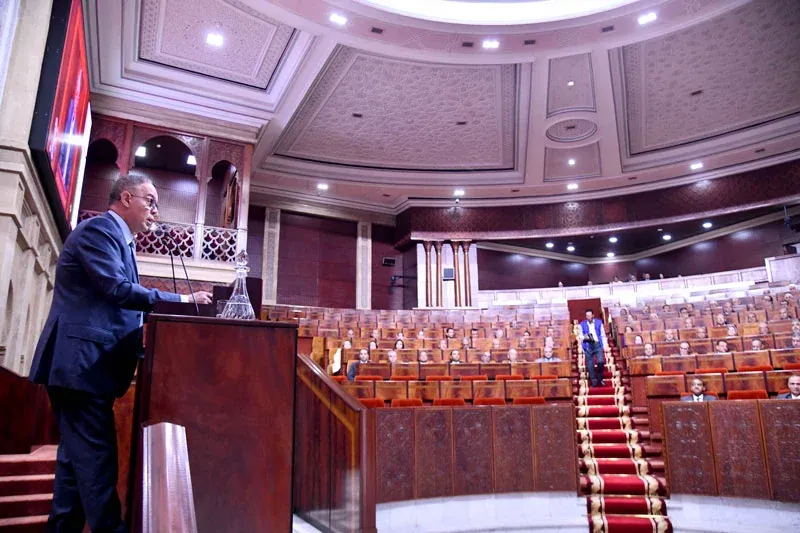
During a plenary session at the Moroccan House of Representatives, Minister of Economy, Finance, and Public Administration, Faouzi Lekjaa, firmly defended the tax and customs exemptions outlined in the 2027 Finance Bill regarding the hosting of the 2030 FIFA World Cup. These measures have been a central point of discussion as the nation prepares to co-host one of the world's most prestigious sporting events alongside Spain and Portugal.
Minister Lekjaa clarified that these fiscal provisions are standard practice for FIFA, which operates as a non-profit association based in Zurich, representing 211 national federations. He emphasized that FIFA should not be viewed as a traditional private corporation investing in Morocco, but rather as an international governing body that organizes the World Cup in varying host nations every four years without establishing permanent tax residency in those countries.
Government Rejects Opposition Amendments
The debate intensified as the Parliamentary Group of the Left Alliance proposed several amendments to the Finance Bill, seeking to impose stricter accounting oversight and separate FIFA's tournament-related activities from potential commercial operations. The opposition argued that such measures would ensure greater transparency and help measure the actual economic impact of the exemptions on the national treasury.
However, the government, through Minister Lekjaa, maintained that these amendments were unnecessary at this stage of preparation. The administration successfully garnered 298 votes against the opposition's proposals, which received only seven votes. Lekjaa argued that the infrastructure projects currently underway—including the expansion of high-speed rail, airport upgrades, and stadium renovations—are part of Morocco’s broader national development strategy, which would have proceeded regardless of the World Cup bid.
Economic Impact and National Strategy
Addressing concerns regarding the cost of the event, the Minister noted that the government has already conducted a comprehensive study on the socio-economic impact of the World Cup on Morocco. He reaffirmed the government's commitment to transparency, stating that all relevant documentation would be made available to the Finance and Economic Development Committee of the House of Representatives.
Lekjaa further clarified that the exemptions are practical necessities. For instance, the thousands of international personnel required to facilitate the tournament cannot be subjected to local income tax, and the specialized technical equipment imported for broadcasting and event management—which will be re-exported to Switzerland after the event—must remain exempt from customs duties to facilitate the seamless execution of the tournament.
As Morocco continues its ambitious journey toward 2030, the government remains focused on leveraging this global platform to showcase the Kingdom's modernization, logistical capabilities, and status as a premier destination for international mega-events.
As reported by hespress.com.