Marrakech
•
November 03, 2026
•
4 min read
Marrakech's Sustainable Urban Mobility Plan: A Strategic Vision for the Next 15 Years
In a significant initiative aimed at keeping pace with the ongoing urban, demographic, and economic transformations in the Greater Marrakech area, a project is underway to develop a Sustainable Urban Mobility Plan (PMUD). This ambitious plan is designed to create a comprehensive strategic vision for the mobility system, addressing current constraints while anticipating the needs of the next fifteen years. The approach takes into account not only the administrative boundaries of Marrakech but also aims to establish a more effective, fluid, and sustainable transportation system that integrates the surrounding regions.
The development of this plan comes in response to the continuous urban expansion that the city is witnessing, alongside a notable increase in mobility between Marrakech and nearby urban and rural centers. This growth is further fueled by the burgeoning economic and tourism activities in the region, prompting a necessary reevaluation of how transportation is organized and traffic is managed. The shift from traditional methods to an integrated planning approach considers the functional and spatial connections between the various components of the Greater Marrakech metropolis.
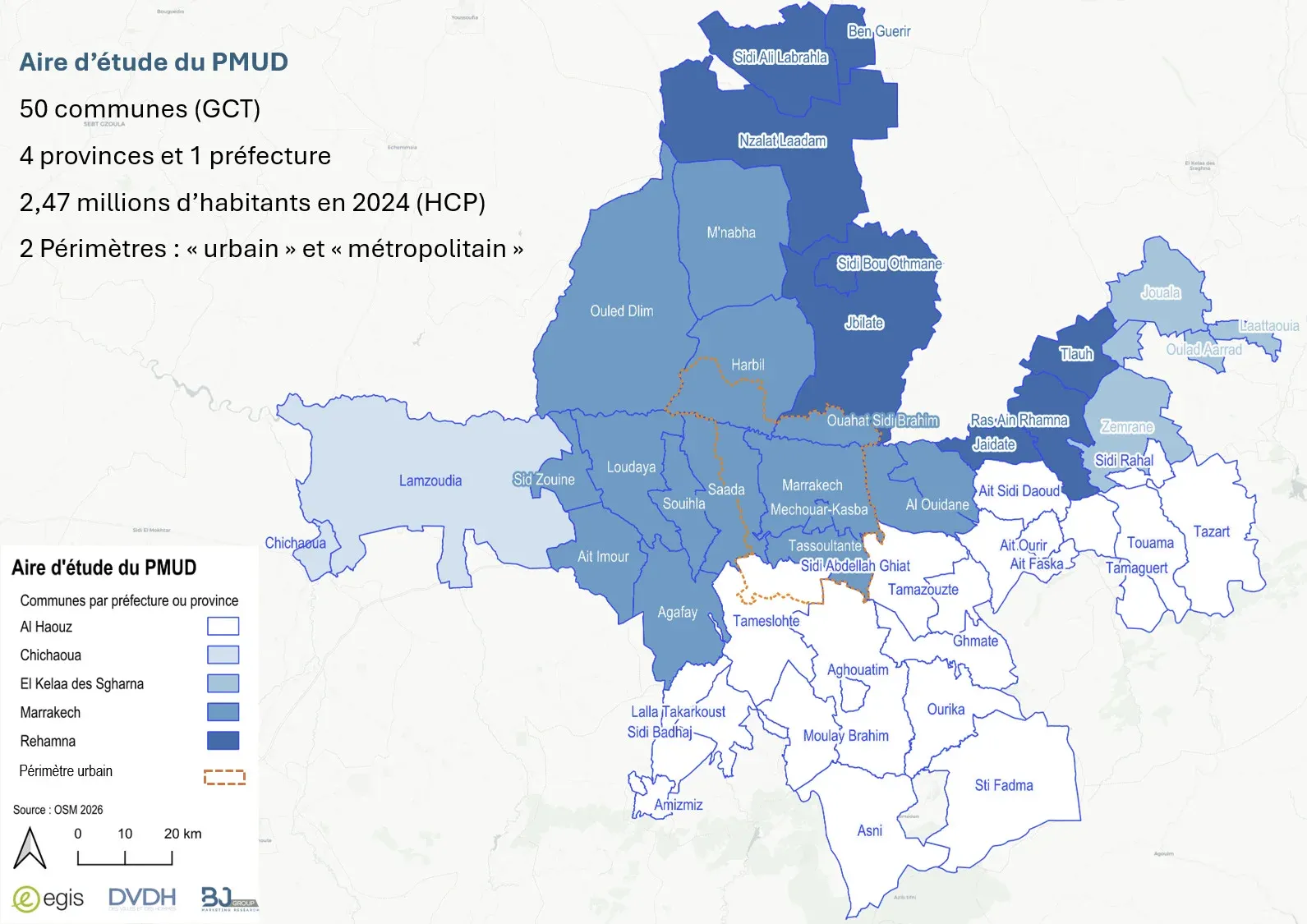
What sets this plan apart is its extensive geographical scope; it does not merely target the Marrakech prefecture and its immediate communities but also encompasses groups from the provinces of Al Haouz, Rhamna, Qalaat Sraghna, and Chichaoua. The study area extends from Ben Guerir in the north to Amizmiz in the south, and from Al Attaouiya in the east to Chichaoua in the west. This broad outlook reflects the significance of organizing mobility within the spatial domain of Greater Marrakech.
The goals of this project extend beyond merely enhancing public transport services; they include a comprehensive restructuring of the entire mobility system. This encompasses buses, taxis, trains, and private vehicles while also promoting walking and cycling. The plan aims to achieve integration among various transportation modes, improve traffic flow, devise more effective solutions for parking and stopping issues, enhance road safety, and ease access to transport services, all while minimizing the environmental impacts associated with mobility.
The preparation of this plan relies on a scientific and participatory methodology, beginning with a thorough assessment of the current mobility landscape. This involves conducting field research within households, studying traffic flow and daily commutes, analyzing available data, and involving relevant institutions and stakeholders. The objective is to identify existing shortcomings, recognize prevailing constraints, and understand the actual needs of the population and economic activities within the various areas under study.
Upon completion of the diagnostic phase, a multimodal modeling tool is expected to be developed, allowing for the simulation of mobility trends and forecasting future scenarios. Four scenarios will be prepared, one of which will involve maintaining current trends, with these alternatives undergoing comparison and evaluation based on technical, economic, financial, environmental, and social criteria before determining the strategic choices that will guide the future of mobility in Greater Marrakech.
The outcomes of this study will be translated into a comprehensive action program that includes priority projects and measures distributed across short, medium, and long-term timelines, along with estimated costs and mechanisms for implementation, monitoring, and impact assessment. This will ensure that the plan serves as a practical framework for guiding future investments and interventions, rather than merely being a diagnostic and conceptual document.
This initiative is being carried out under the supervision of the "Marrakech Transport" group of local authorities, acting as the project owner, with the local development company "Marrakech Mobility" serving as the delegated project owner. This collaborative approach is based on institutional coordination and consultation with various territorial and technical stakeholders, enabling the formulation of a shared vision regarding mobility priorities and future challenges.
While this plan harbors ambitious aspirations for updating the transportation system in Greater Marrakech, the true challenge lies in the ability of its outcomes to translate into tangible projects that address daily citizens' concerns, alleviate traffic congestion, improve connectivity between the city center and its periphery, and ensure greater equity in access to transport services, especially in marginalized urban areas and rural centers.
As Marrakech continues to grow and solidify its economic and touristic stature, it is increasingly in need of a proactive vision that positions mobility as a lever for development and quality of life, establishing a smoother, safer, and fairer system capable of meeting present demands and future challenges.
As reported by jamaalfnapress.ma.
 Marrakech