A Moroccan Connection in the Race for the French Presidency
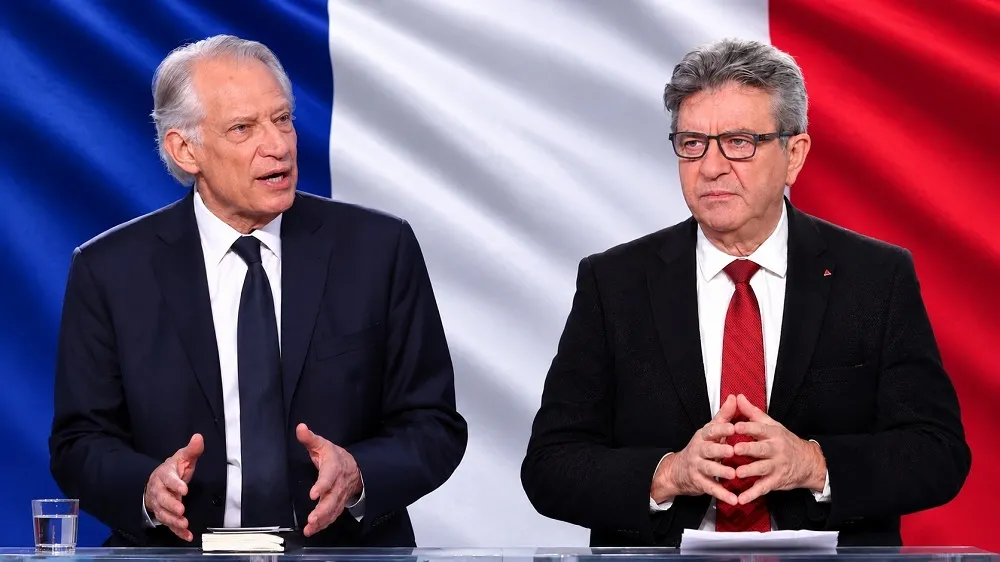
As France prepares for the pivotal 2027 presidential election, an intriguing narrative has emerged: two of the most prominent figures vying to succeed President Emmanuel Macron share a common birthplace—Morocco. Dominique de Villepin, born in the administrative capital of Rabat, and Jean-Luc Mélenchon, born in the historic northern city of Tangier, have officially confirmed their candidacies, bringing a distinct North African connection to the heart of French political discourse.
Dominique de Villepin: The Diplomat’s Return
Born in Rabat on November 14, 1953, during the period of the French Protectorate, Dominique de Villepin’s upbringing in Morocco shaped his perspective on international relations. A product of France’s elite École Nationale d'Administration (ENA), de Villepin rose to prominence as a close aide to the late President Jacques Chirac. He served as the Secretary-General of the Élysée Palace before becoming Foreign Minister (2002–2004) and later Prime Minister (2005–2007). He remains globally recognized for his principled stand against the 2003 invasion of Iraq. After years of focusing on legal practice and political commentary, his decision to run under the 'Humanist France' movement signals a desire to restore France's independent diplomatic voice on the world stage.
Jean-Luc Mélenchon: The Radical Voice from Tangier
On the opposite side of the ideological spectrum, Jean-Luc Mélenchon, born in Tangier on August 19, 1951, represents the radical left. Mélenchon has never shied away from his Moroccan roots; he has frequently spoken of his childhood in Tangier, including memories of witnessing the fervor surrounding the return of Sultan Mohammed V. A seasoned politician who served as a senator and a government minister, Mélenchon founded the 'La France Insoumise' (France Unbowed) movement. Having secured nearly 22% of the vote in the first round of the 2022 election, his platform focuses on wealth redistribution, the transition to a 'Sixth Republic,' and a more nuanced, respectful approach to France’s diplomatic relations with Morocco, particularly regarding the Sahara issue.
Shared Origins, Divergent Paths
While de Villepin’s connection to Morocco is rooted in his childhood within a French administrative family in Rabat, Mélenchon’s bond is deeply personal and cultural, often reflecting on his early years in Tangier. Despite their vastly different political ideologies—ranging from de Villepin’s centrist-conservative diplomacy to Mélenchon’s radical left-wing populism—their shared history in Morocco adds a layer of depth to the upcoming electoral cycle. Both candidates have expressed a sophisticated understanding of the evolving dynamics between Paris and Rabat, suggesting that the future of French-Moroccan relations will be a key theme as these two figures campaign to lead the French Republic.