Argentina's Response to FIFA's Sanction Ruling
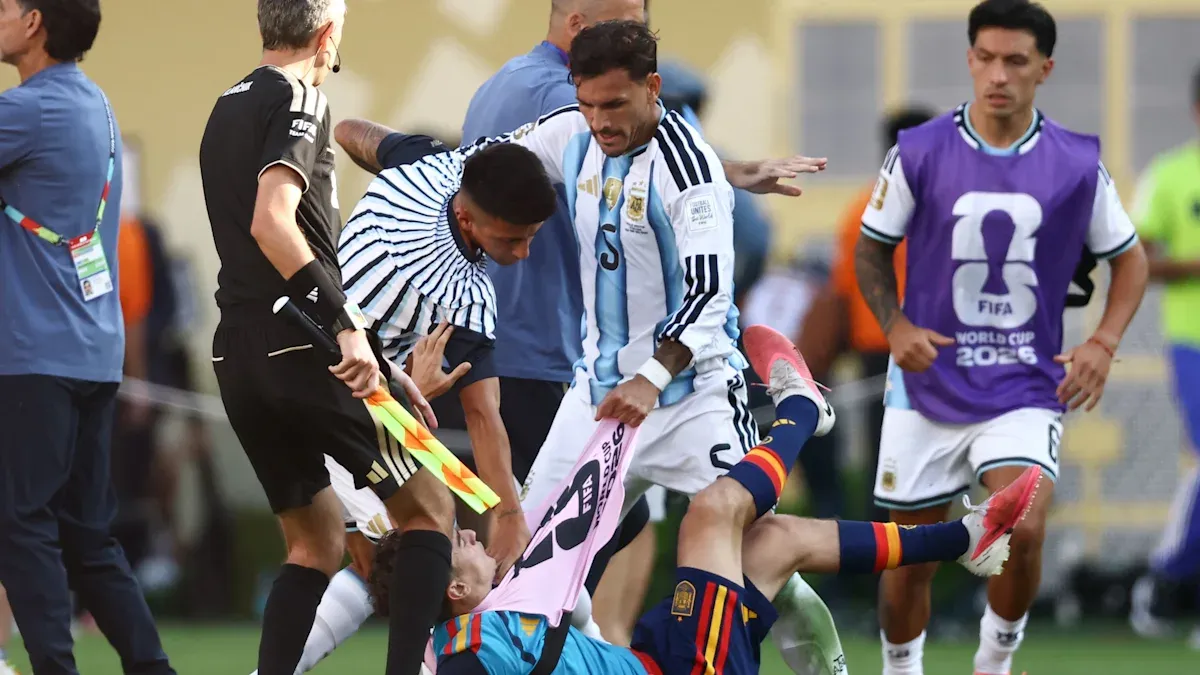
In a noteworthy development following the FIFA's ruling, the Argentine Football Federation (AFA) has taken decisive action by partially winning its appeal against sanctions imposed on several members of the national team. These sanctions stem from incidents that occurred during the World Cup 2026 final against Spain, an event that has been marred by controversy. Specifically, FIFA has reduced the suspension of player Nahuel Molina from seven matches to four, along with decreasing his fine from $90,000 to $60,000. Conversely, the suspension of midfielder Leandro Paredes remains unchanged at ten matches, along with a fine of $90,000.
According to reports from the Spanish publication Marca, the AFA has expressed its intent to seek further clarification on the reasoning behind these decisions, as it aims to contest them at the Court of Arbitration for Sport (CAS). The AFA asserts that it possesses “sufficient factual and legal arguments” to pursue a revision of the sanctions imposed on its players. This move comes at a critical time, as the CAS is currently reviewing another high-profile case involving the Africa Cup of Nations 2025 final between Morocco and Senegal, with a final decision expected by the end of November.
Background on FIFA's Sanctions
The sanctions against the Argentine Football Federation were primarily triggered by discriminatory chants that occurred during matches in the World Cup, including the controversial final that ended with Spain's victory over Argentina, 1-0. FIFA had previously levied a total fine of $321,000 against the AFA, in addition to restrictions on public attendance at upcoming matches involving the national team. These penalties were based on various articles of FIFA's disciplinary code, citing incidents during Argentina’s matches against multiple teams including Cape Verde, Egypt, Switzerland, England, and Spain.
Furthermore, earlier sanctions included a suspension for Thiago Almada and a three-match suspension for Roberto Ayala, a member of the technical staff. In August, FIFA had agreed to the AFA’s request to count player suspensions during friendly matches and official games conducted under the auspices of the South American Football Confederation (CONMEBOL), allowing for a more lenient interpretation of the suspension rules.
As reported by fr.news.yahoo.com.