Youth Protests Erupt in Tunisia and Morocco Over Economic Challenges
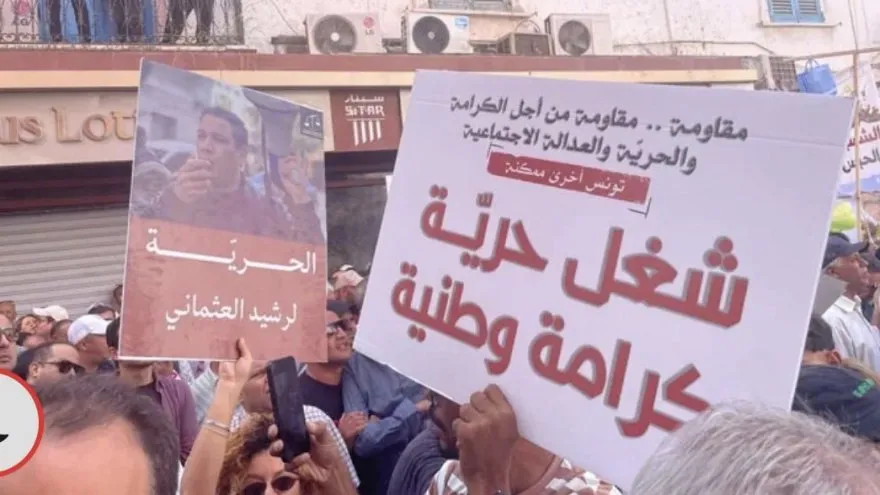
On October 17, 2023, a significant wave of protests swept through Tunisia, as thousands of citizens converged on the streets, rallied by nine major unions and associations, including the powerful Tunisian General Labour Union (UGTT), the Tunisian Human Rights League, and the journalists' union. This mobilization, one of the largest observed since President Kaïs Saïed's coup d'état in 2021, brought together trade unionists, students, unemployed individuals, medical professionals, lawyers, and political activists united in their call for social and democratic reforms. Key issues driving this unrest included high unemployment rates, precarious working conditions, and a dismal outlook for the future, particularly for the youth, with projections estimating a staggering 38.1% unemployment rate for those aged 15 to 24 by 2025. The protesters chanted, "The people want the fall of the regime!", echoing slogans from the 2011 uprising that led to the ousting of former President Ben Ali. Fifteen years post the so-called Arab Spring, many of the social and democratic aspirations that fueled the uprising remain largely unfulfilled.
In a parallel development, Moroccan youth, particularly students at the forefront of the _Gen Z 212_ movement, have begun mobilizing in response to similar grievances. Despite facing a wave of repression, characterized by thousands of arrests and numerous protesters still imprisoned as reported in September 2026, the call for revolt continues to resonate. This academic year, the defense of public universities has emerged as a new battleground, with students, workers, and civil servants protesting against the introduction of tuition fees for flexible programs, which they view as a further step toward the commodification of higher education. Nightly demonstrations have seen young people waving red flags and threatening to escalate their actions to preserve tuition-free education. Protests continued in Rabat on October 21 and 22, fueled by a harsh social reality where youth unemployment reached 37.2% in 2025. Beyond these immediate demands lies a deeper anger from a generation grappling with unemployment, deteriorating public services, and a grim outlook. Their calls reflect the core issues that propelled the _Gen Z 212_ movement: access to education, healthcare, and a dignified future.
Solidarity and Regional Discontent Amidst Authoritarian Regimes
Beyond the economic struggles and lack of prospects, solidarity with Palestine has emerged as another significant source of frustration among Arab youth. Palestinian flags, a common sight at protests, underscore the centrality of the Palestinian issue in these mobilizations. The ongoing genocide in Gaza has galvanized an entire generation, highlighting the stark contradiction between their aspirations for a free Palestine and the blatant complicity of their governments with Israel. In Tunisia, despite President Kais Saied’s pro-Palestinian rhetoric, ongoing military cooperation with the United States and the repression of activists involved in solidarity initiatives, particularly those related to the Sumud flotilla, have sparked widespread protests. Meanwhile, in Morocco, the regime continues its policy of normalization with Israel, officially initiated in 2020, and announced in September 2026 its intention to further this relationship through the reciprocal opening of embassies, thus extending years of diplomatic, economic, and military cooperation. This policy has triggered renewed demonstrations denouncing normalization and reaffirming solidarity with the Palestinian people.
These mobilizations are not isolated phenomena; they reflect a broader international trend where youth across France, Italy, Spain, and Albania are hitting the streets to protest deteriorating living conditions, lack of educational resources, and absence of future prospects. The slogan _Come in Francia_ (“Let’s do like in France”) in Italy illustrates the contagious nature of these movements. From Nepal to Morocco, Madagascar to Indonesia, the mobilization of Generation Z is fostering an international movement that transcends borders. In this context of global protest, the radicalism currently expressed in France may resonate particularly strongly among young Arabs, where social and political indignation has been simmering for years. The demonstrations in Tunisia and Morocco illustrate that despite repression, the demands that ignited the 2011 uprisings are far from extinguished. Solidarity with Palestine, which also permeates European mobilizations, represents another potential convergence point for these movements.
This international contagion dynamic affecting youth mobilizations could take on a completely different dimension with the involvement of the labor movement in the struggle. The history of the 2011 uprisings provides a compelling example of this. The historical protests of the Arab Spring shook authoritarian regimes largely because the labor movement in both Tunisia and Egypt effectively harnessed the demands of the youth. Through mass strikes, workers brought protests to workplaces, helping to shift the balance of power and hasten the falls of Ben Ali and Hosni Mubarak. Undoubtedly, the absence of political leadership capable of providing a truly transformative vision for these uprisings significantly influenced their outcomes, paving the way for counter-revolutions. However, one of the key lessons from 2011 remains the decisive role played by the Tunisian and Egyptian labor movements. Today, as youth indignation spreads from one country to another, the resumption of mass strikes and labor mobilizations across the Mediterranean could give this wave of international protest a completely new dimension, strengthening the balance of power against governments and their attempts at repression.
As reported by laizquierdadiario.cl.