Remarkable Discovery of Ancient Coins in Southern Morocco
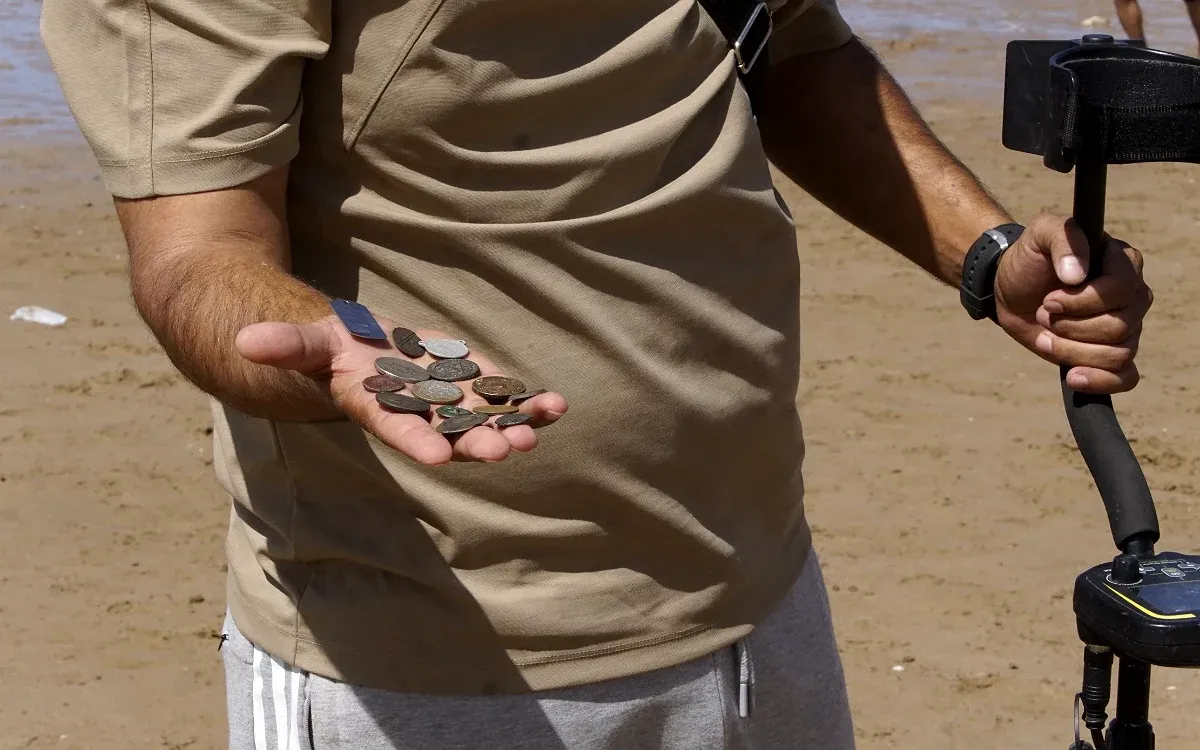
In a stunning revelation along the southern coast of Morocco, Mustapha Harmouch, a 33-year-old metal detecting enthusiast, has made a remarkable find: fourteen ancient coins, known as 'falus', all located in the same spot. This discovery took place in Sidi Ouassay, a coastal locality situated approximately 65 kilometers south of Agadir. Among the coins, the oldest is dated to 1289 in the Hijri calendar, reflecting the rich historical tapestry of Morocco. However, many of these coins show signs of corrosion due to exposure to salt and time, making their inscriptions difficult to decipher.
Harmouch shared his astonishing findings in a recent interview with Al Jazeera, which aired on November 7, detailing his journey as a passionate treasure hunter. He recounted purchasing his first metal detector online four years ago, since which he has regularly scoured the beaches, averaging about four excursions each month. Sometimes, he is joined by fellow members of the Moroccan Association of Research and Exploration Enthusiasts, further enriching his adventures.
Explorations along Agadir's Coastline
Mustapha's favorite hunting grounds include the picturesque corniche of Agadir and the famous beaches of Taghazout. During his explorations, he has uncovered various treasures, including a small gold ring, jewelry, Moroccan coins, and even a silver 20-franc French coin. Each outing promises a new experience, as the metal detector emits the same signal whether it encounters an ancient coin, a piece of jewelry, or a worthless metal scrap.
However, not every discovery has been as thrilling. In Sidi Ouassay, Harmouch was initially excited to believe he had stumbled upon a meteorite, only to later realize it was merely an ordinary, inexpensive mineral. He shares his adventures on his YouTube channel, Stofishing, which has garnered a following of approximately 123,000 subscribers, eager to witness his latest finds.
In Morocco, the search for ancient artifacts is governed by strict regulations to protect the nation's archaeological heritage. The law 22-80, as reiterated by the Ministry of Culture, mandates obtaining permission for archaeological explorations and requires the reporting of fortuitous discoveries of coins or historically significant objects. The locations of these items can be as valuable as the artifacts themselves, revealing insights into historical activities, such as the ancient metallurgical center identified through coins found in Tamdoult, southern Morocco.
Basma Oumaima, a marine archaeologist, emphasizes the importance of contextual information surrounding discoveries for researchers. Harmouch assures that he adheres to these regulations and avoids protected heritage sites, focusing primarily on the joy of discovery and the hope of returning valuable lost items to their rightful owners. Other enthusiasts, like Jalal Zegnoune, a maintenance technician from Casablanca, also take advantage of their outings to clear away debris such as nails, rusted cans, and abandoned fishing gear from the sandy shores, contributing to the preservation of the coastal environment.
As reported by bladi.net.