Senator Luciano Cruz-Coke Addresses Justice Minister's Controversy in Morocco
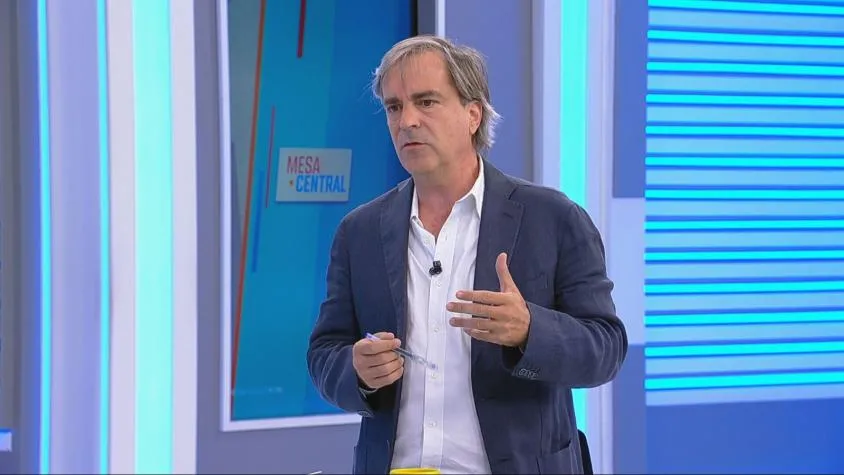
In a recent appearance on the popular program Mesa Central, Senator and Evópoli President Luciano Cruz-Coke engaged in a critical discussion regarding the future of Justice Minister Fernando Rabat amidst a growing crisis related to the controversial decrees that allowed the release of convicts for sexual offenses. The senator emphasized that keeping Rabat in his position reflects a significant gesture of determination and loyalty from President Kast, acknowledging the direct repercussions this issue has had on public opinion and polling results.
As speculation regarding a potential cabinet reshuffle looms, Cruz-Coke asserted that Rabat's continued presence is a conscious decision made by the President. He stated, "The President chose to maintain the Justice Minister's position... in an effort of loyalty, he decides to uphold him." This statement underscores the political dynamics at play as the government navigates the fallout from the scandal.
Moreover, Cruz-Coke, who previously served in the administration of Sebastián Piñera, pointed out that the most significant political damage from this controversy likely occurred in the initial weeks of the crisis. "The largest political cost has probably already been paid in those first weeks. It’s a sunk cost, as they say in business," he observed. However, he was unequivocal about the gravity of the situation arising from the releases, acknowledging the President's recognition of the severe error made in this regard. He further stressed that the crisis stems from shared responsibilities across various branches of the State, stating, "There have been failures and gaps in legislation, shifts in criteria among the judges in the Supreme Court's criminal chamber, and changes in criteria from the Executive as well."
Cruz-Coke Critiques Opposition's Tactics
Turning his attention to the opposition's approach in Congress, particularly their refusal to grant unanimous consent for the Constitutional Commission to convene, Cruz-Coke criticized what he perceives as opportunistic behavior. He posed a poignant question: "Do we prefer to inflict political damage on the government and Minister Rabat rather than resolve a problem affecting children and adolescents?" He expressed strong disapproval of using victims as pawns in political discussions, stating, "I don't like that victims are held hostage in political debates. We must be extremely cautious, and it seems the opposition is not doing so."
Regarding the delivery of the decrees that the opposition demands, Cruz-Coke justified the delay by emphasizing the need to protect the privacy of those involved. He explained, "I understand that work is being done to anonymize and protect individuals who might be named in the decrees, precisely to avoid further victimization." He noted that this process must be meticulous and prudent, expressing hope for transparency and a solution soon.
In conclusion, Cruz-Coke underscored that having accepted the costs of keeping Minister Rabat in office, the government's priority should now focus on advancing legal reforms. "Given that the President chose to absorb the political costs of this decision, he must allow the projects to be introduced, seek solutions, and perhaps later provide a substantive political resolution," he declared, emphasizing the need for action moving forward.
As reported by t13.cl.