Morocco is rapidly solidifying its position as a global leader in sustainable development and renewable energy adoption, extending its forward-thinking environmental strategies deep into the heart of its construction and building sectors. Across dynamic urban landscapes such as Rabat, Marrakech, Tangier, and Meknes, architects, engineers, and policymakers are fundamentally rethinking traditional building envelopes to combat rising temperatures and curb energy consumption. By fusing modern numerical simulations with age-old passive architecture, the Kingdom is forging a resilient, low-carbon future that aligns seamlessly with international climate benchmarks.
The Evolution of Moroccan Thermal Regulations and Sustainable Building Standards
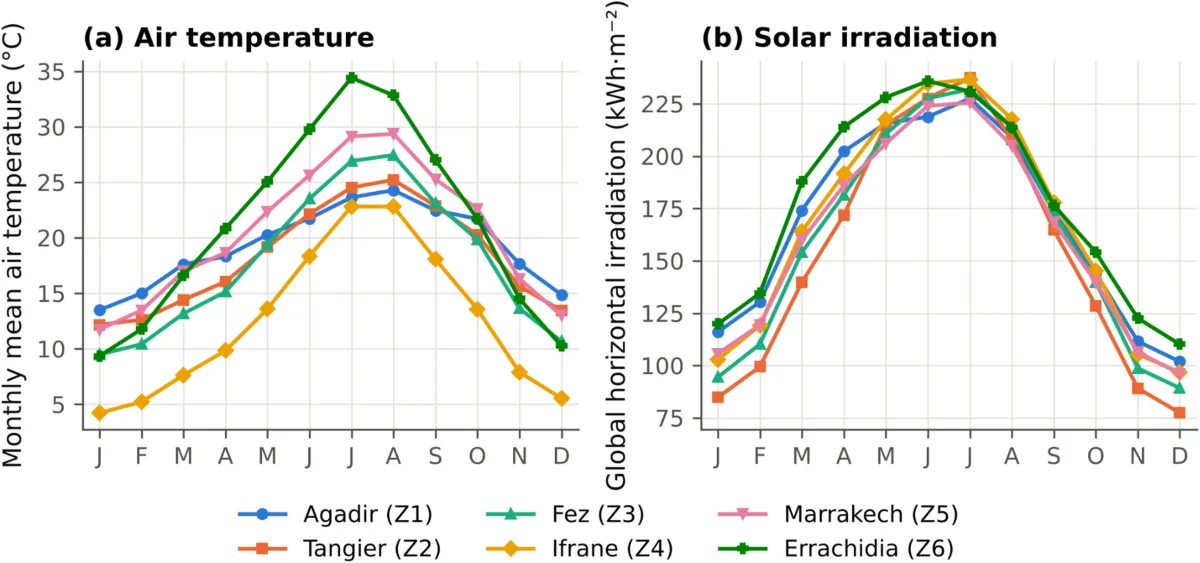
The foundation of Morocco's modern green building movement is anchored in comprehensive regulatory frameworks, notably the Moroccan Thermal Regulation for Construction (RTCM) and decree measures overseen by national energy authorities. These legislative milestones set stringent standards for thermal performance across residential and tertiary buildings, acknowledging that heating and cooling demands represent a massive share of national energy usage. Academic research and dynamic building simulations—spanning diverse climatic zones from coastal environments like Tangier to semi-arid regions like Marrakech—demonstrate that optimizing wall insulation thickness, incorporating strategic air gaps, and integrating innovative ecological materials yield profound reductions in annual energy expenditure.
Engineers and researchers across Moroccan universities and institutes are continuously evaluating the efficacy of active versus passive solutions. While active cooling systems impose heavy economic and environmental burdens, passive strategies harness natural ventilation, thermal mass, and phase-change materials to maintain optimal indoor comfort naturally. This scientific rigor ensures that future real estate developments across the Kingdom remain both economically viable and environmentally sound.
Bio-Sourced Innovation and the Shift Toward Circular Construction
A particularly exciting frontier in Moroccan construction is the widespread adoption of bio-sourced and circular building materials. Innovative studies examining hemp concrete, local adobes reinforced with natural fibers, and other eco-friendly composites reveal exceptional hygrothermal behavior. These materials not only capture carbon and reduce the embodied energy of new structures, but they also provide superior thermal regulation under extreme weather fluctuations.
In cities like Al-Hoceima and Meknes, pilot projects and numerical modeling indicate that integrating bio-based insulation significantly enhances occupant thermal comfort while simultaneously lowering the reliance on mechanical heating and cooling appliances. By marrying indigenous Moroccan building wisdom with cutting-edge material science, the nation is successfully championing a sustainable architectural renaissance that serves as an exemplary model for the wider Mediterranean and African regions.
As reported by link.springer.com.