Morocco's Ambitious Plans for the 2030 FIFA World Cup
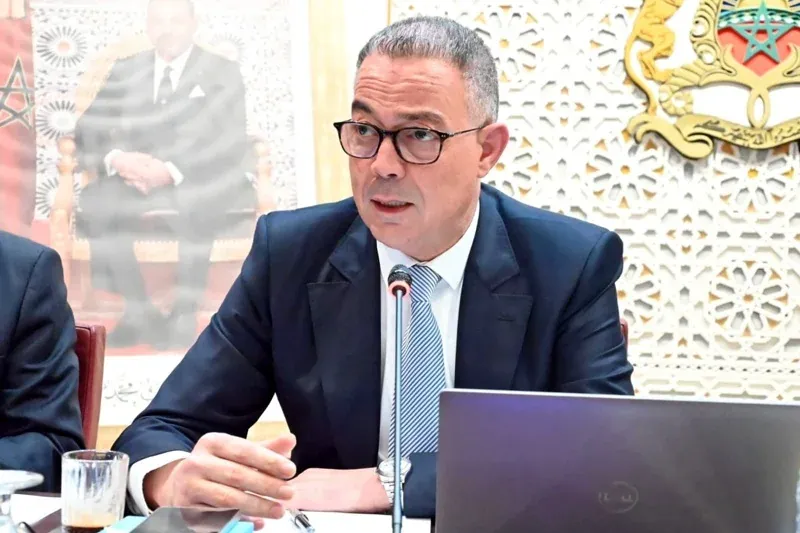
In a significant presentation that took place on Tuesday, Fouzi Lekjaa, the Moroccan Minister of Economy, Finance, and Public Efficiency, unveiled the strategic roadmap for the country's hosting of the FIFA World Cup 2030. This comprehensive discussion, part of the detailed deliberations on the 2027 Finance Law, highlighted the economic and social impacts that this monumental sporting event is expected to generate across various sectors. Lekjaa emphasized the necessity of addressing the anticipated repercussions of this global football tournament, which will see Morocco host matches across six cities: Agadir, Casablanca, Fez, Marrakech, Rabat, and Tangier. Furthermore, over 30 training camps will be established nationwide, including in non-host cities such as Nador, Al Hoceima, Ouarzazate, El Jadida, and Ifrane, to accommodate the participating teams.
During his presentation titled "World Cup 2030: Economic, Tax, and Legacy Stakes," Lekjaa indicated that Morocco is adopting a holistic governance and financial management model for the event. This model proposes a new approach where host countries will focus their expenditures on infrastructure and training, while FIFA will handle operational costs. This cooperative financial strategy aims to optimize the economic model surrounding the World Cup, ensuring that Morocco's investments yield beneficial returns in terms of job creation, tourism revenue, and overall economic growth.
Infrastructure Development and Fiscal Incentives
The infrastructure plan encompasses extensive projects, including the extension of the high-speed train line between Kenitra and Marrakech, covering 430 kilometers, and the establishment of regional train services in key areas such as Casablanca-Settat and Marrakech-Safi. Additionally, the Casablanca airport will undergo significant upgrades to enhance its capacity by constructing a new terminal and runway, along with improved connections to high-speed rail services. Other airports in Marrakech, Agadir, Fez, and Tangier will also see expansions to meet the anticipated influx of travelers.
Road infrastructure will see the completion of the Continental highway linking Rabat and Casablanca, as well as upgrades to access routes for major stadiums, including the Grand Stadium in Casablanca and the Grand Stadium in Marrakech. Notably, the national sports facilities in Rabat, Tangier, Casablanca, Agadir, Marrakech, and Fez will be modernized to meet FIFA standards, including the construction of the Hassan II Grand Stadium in Ben Slimane, which will host 115,000 spectators.
On the fiscal side, the proposed budget includes temporary tax exemptions aimed at FIFA and its partners, along with permanent exemptions for the social legacy fund associated with the tournament. These exemptions will be implemented starting January 1, 2027, or January 1, 2029, depending on the beneficiaries, and will extend until the end of 2031 or 2032. The plan covers various taxes, including corporate taxes, social contributions, and value-added tax for FIFA and associated entities. Furthermore, a simplified electronic process will be established to facilitate tax benefits for involved organizations.
Regarding the anticipated economic and social impacts, simulations suggest a projected cumulative investment growth of 21.2% from 2023 to 2030, translating to an annual average increase of approximately 2.6%. This momentum is expected to create more than 840,000 jobs, primarily in the construction sector, expected to account for 52% of new employment opportunities. The tourism sector is also set to benefit significantly, with projections aiming for 26 million incoming tourists by 2030, contributing to a tourism GDP of 189 billion dirhams at current prices, which equates to 134 billion dirhams at constant prices, and generating over 150,000 new jobs.
As reported by hesport.com.