Morocco's Al Boraq: A Leap into High-Speed Rail
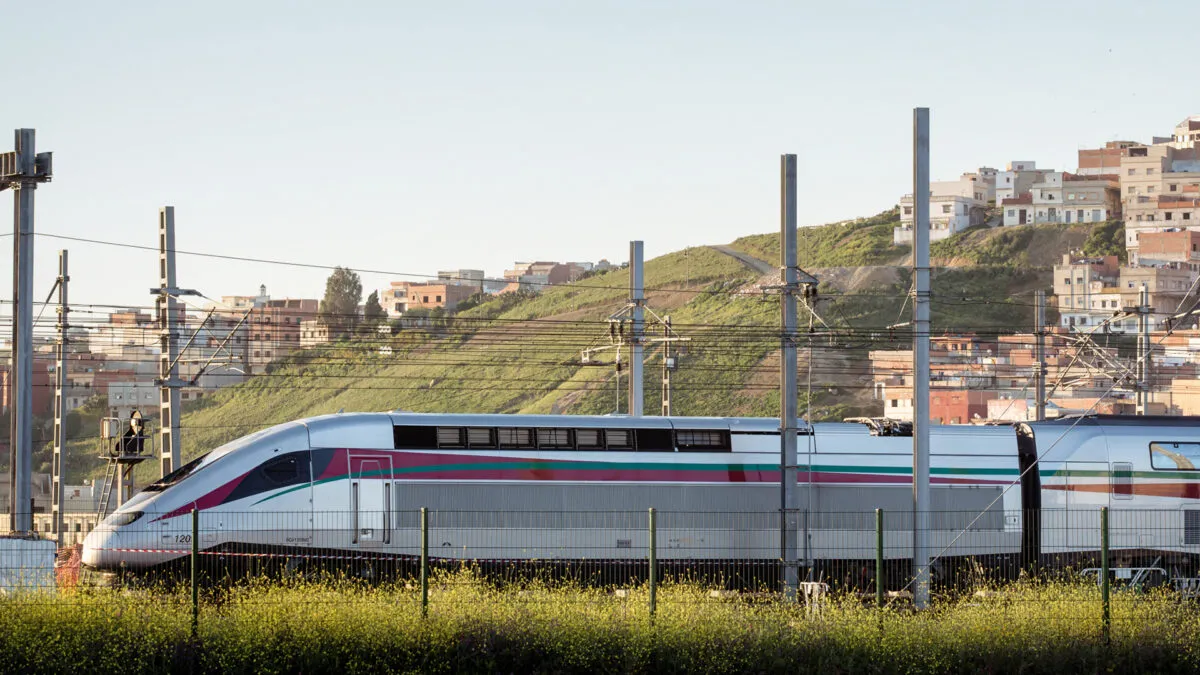
While Canada is still debating the merits of high-speed rail, Morocco has already established its own impressive network featuring the Al Boraq, the first high-speed train in Africa. This modern marvel is capable of reaching speeds of 320 km/h, significantly enhancing connectivity between major cities such as Casablanca and Tangier. The Al Boraq service represents not just a technological achievement but also a commitment to sustainability, as it operates on clean energy, thus setting a benchmark for future rail projects globally.
Located at the Casa Voyageurs station, which underwent a transformation through collaboration between Moroccan and Italian architects, travelers can experience a blend of modern design and efficient service. The station, which opened in 2018, features spacious atriums adorned with geometric patterns and luxurious marble flooring, creating an inviting atmosphere for passengers. The Al Boraq train, sleek and silver, recently completed a journey from Tangier, covering a distance of 323 km in just over two hours, illustrating the remarkable efficiency of Morocco's rail system.
The Al Boraq is part of Morocco's ambitious high-speed rail development plan, with aspirations to connect Casablanca to Madrid in a mere five hours via a potential crossing over the Strait of Gibraltar. In the immediate future, new TGV-capable stations are being constructed in Casablanca, including at the international airport and the Grand Stade Hassan II, which is being prepared for the 2030 FIFA World Cup. Additionally, the Casa Sud station, even larger than Casa Voyageurs, is expected to accommodate 12 million travelers per year by 2027, further expanding Morocco's rail network.
Morocco's national railway office, the ONCF, has ambitious plans that extend beyond high-speed trains. In Casablanca, modern, air-conditioned trams have become a vital part of the urban transit system, serving a population of 4 million. The introduction of three new Regional Express Network lines, inspired by the Paris suburban train system, aims to transport 150,000 passengers daily with trains operating every 7.5 minutes. Similar enhancements are also planned for other major cities, including Marrakech, Rabat, and Tangier.
According to the Rail Maroc plan announced in 2025, by 2040, 87% of Morocco's population will have easy access to rail transport, a significant increase from the current 51%. In terms of passenger numbers, ONCF transported 55.6 million passengers in 2025, a stark contrast to the 4.4 million passengers carried by Canada's VIA Rail in the same year. Meanwhile, Morocco is in the process of developing 600 km of high-speed railways, with an additional 900 km under construction, solidifying its position as a leader in rail transport in Africa.
As Moroccan commuters enjoy the benefits of high-speed trains like the Al Boraq, Canadians are still reliant on diesel locomotives that fail to match the speed and efficiency of their Moroccan counterparts. The Al Boraq has not only made travel faster but has also redefined expectations of public transportation in Morocco, showcasing how investment in infrastructure can transform a nation's connectivity and economic landscape.
Mostafa Ouanter, a businessman traveling for the first time on the Al Boraq, expressed his excitement about the new service. He noted that the TGV significantly reduces his travel time between Casablanca and Tangier, allowing him to conduct business efficiently and return home the same day, a luxury not afforded by previous travel methods.
As the Al Boraq continues to set high standards for rail travel in Morocco, it exemplifies a successful model that other nations may look to emulate in their quest for modernized transportation systems.
As reported by lactualite.com.