Morocco's Position on US Sanctions Against Cuba
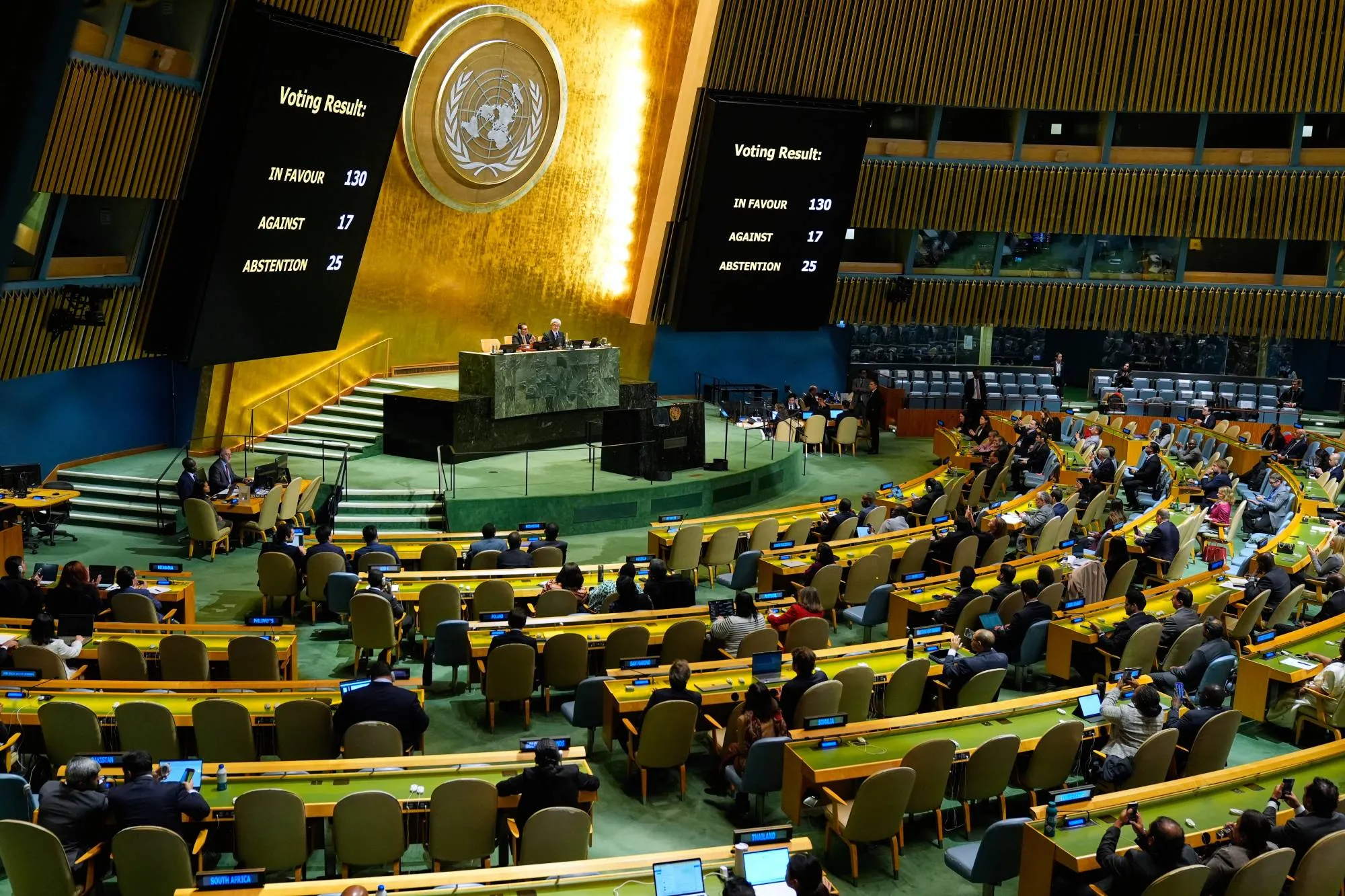
In a significant diplomatic move, Morocco voted against a United Nations General Assembly resolution on October 28, 2026, which called for an end to the economic, commercial, and financial embargo imposed by the United States on Cuba for more than sixty years. This decision placed Morocco among a minority of only 17 countries that opposed the resolution, which garnered support from an overwhelming majority of UN member states, specifically 130 nations in favor, with 25 abstentions.
The list of countries that voted against the resolution included not only Morocco but also the United States and Israel, alongside nations such as the United Arab Emirates, Argentina, Colombia, Costa Rica, Ecuador, Paraguay, Trinidad and Tobago, Bosnia and Herzegovina, the Czech Republic, Hungary, Lithuania, North Macedonia, Slovenia, and Ukraine. In stark contrast, major countries like France, Britain, Russia, and China, as well as the majority of African, Arab, and Latin American nations, supported the resolution, reiterating their demand for the cessation of the US embargo that has affected the Caribbean island since 1962.
Shifts in Morocco's Diplomatic Stance
This year's vote marks a notable shift in Morocco's position compared to the previous year, when it opted to abstain from voting. By explicitly opposing the resolution this year, Morocco aligns itself with a minority that rejects the UN's call to end the embargo, which is seen as a significant diplomatic maneuver. Notably, this vote occurred just two days before the anticipated UN Security Council vote on a resolution related to the Sahara issue, highlighting the importance of US positions for Morocco in this diplomatic context, although no direct connection has been established between the two votes.
This year’s voting results reflected a marked decline in international support for the resolution compared to the previous year, where over 160 countries had supported it. Reports from the Associated Press indicated that the United States exerted diplomatic pressure on several countries to either vote against the resolution or abstain from supporting it. Moreover, some European countries, including Germany and Italy, chose to abstain from endorsing the resolution, signaling a shift from their past positions, despite the continued calls from the majority of the General Assembly members for the lifting of US sanctions.
Prior to the vote, Cuban Foreign Minister Bruno Rodríguez accused the United States of waging an "economic war" against Cuba, asserting that the embargo poses a threat to the Cuban people amid worsening economic conditions, shortages of essential goods, and frequent electricity outages. Conversely, the US Ambassador to the United Nations, Mike Waltz, defended Washington's stance, accusing the Cuban authorities of attempting to leverage the UN vote for political and propaganda gains, arguing that support for the resolution benefits the regime in Havana.
The US embargo on Cuba dates back to 1962 under President John F. Kennedy, and it has persisted across successive American administrations, despite ongoing international calls for its termination. Although UN General Assembly resolutions are not legally binding, the consistent passage of such resolutions with wide support reflects a significant international opposition to the US embargo, which Havana claims is a primary cause of its economic struggles. Washington, on the other hand, links its policy towards the island to the nature of the Cuban political system and its human rights record.
As reported by lakome2.com.