Spain's New Gas Capacity Reservation Regulations in Response to European Commission Mandate
The European Commission has recently mandated significant changes to Spain's gas capacity reservation rules, particularly impacting the nation's connections with Algeria and Morocco. This directive comes after Brussels denied the Spanish National Commission on Markets and Competition (CNMC) a complete exemption from European obligations concerning short-term procurement, prompting the regulatory body to draft a new resolution aimed at aligning Spanish regulations with EU standards. The proposal emphasizes a mandatory reservation of 10% of both existing nominal capacity and an additional 10% of incremental capacity for short-term procurement, specifically for international connections with non-EU countries. This adjustment is pivotal as it directly affects the entry and exit services of the Virtual Balancing Point (PVB) linked to these external nations, ensuring a portion of the available capacity is reserved for short-term contracts.
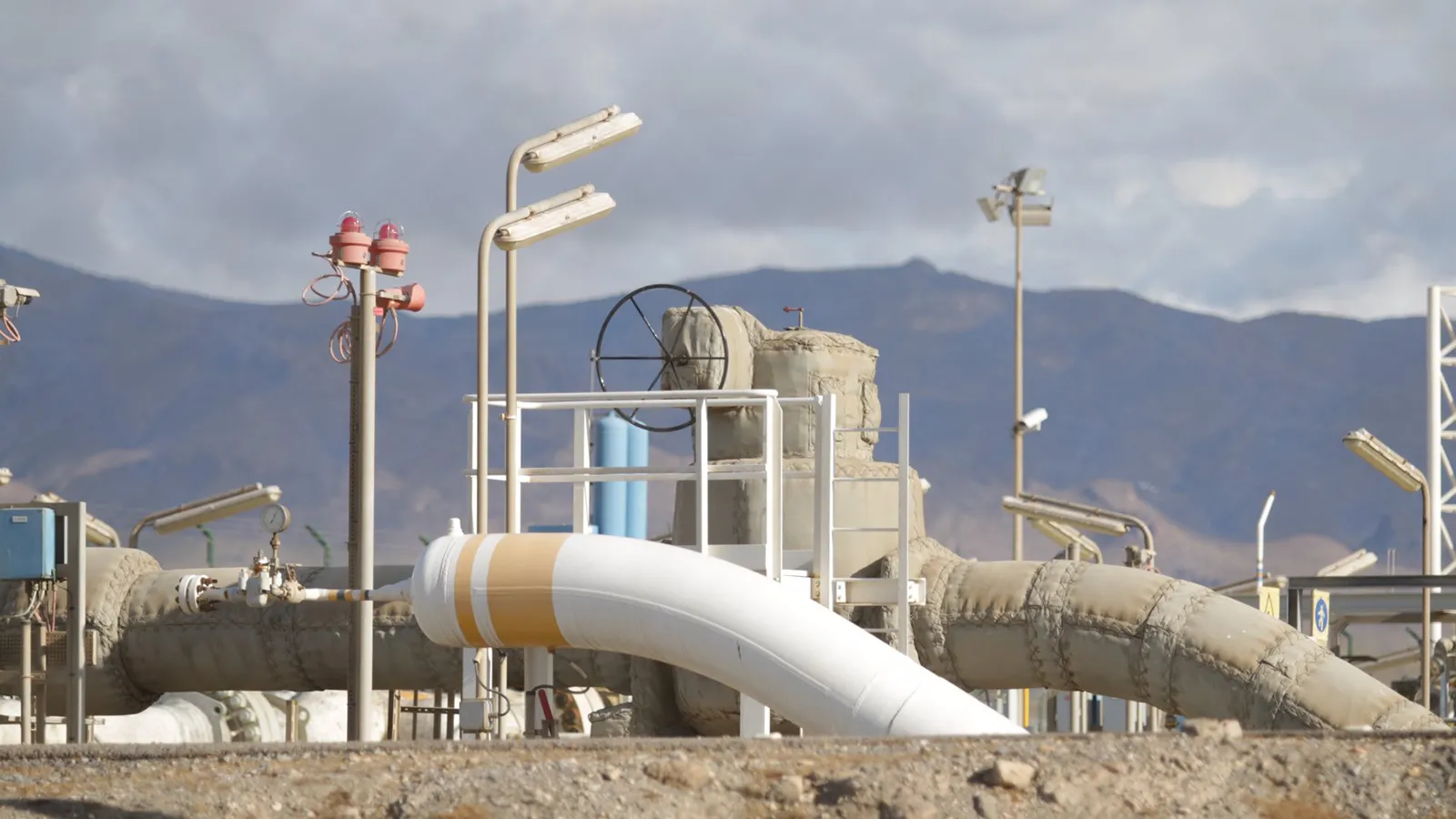
The impetus for these changes is rooted in European Regulation 2024/1789, which pertains to the internal markets for renewable gas, natural gas, and hydrogen. This regulation extends the applicability of network codes and community guidelines to interconnections with non-EU countries starting August 5, 2026. For Spain, this compliance specifically relates to its gas connections with Algeria through the Almería entry point and with Morocco via the Tarifa exit point.
In a proactive approach, the CNMC submitted a request to the European Commission and the Agency for the Cooperation of Energy Regulators (ACER) on February 4 for a temporary exemption regarding specific provisions of Regulation 2017/459, which outlines the mechanisms for capacity allocation in gas transport networks. The response from Brussels on September 29 granted a temporary exemption until December 31, 2032, for certain articles of this regulation, but notably rejected extending this exemption to the capacity reservation obligations detailed in sections 6, 7, and 8 of Article 8, which pertain to short-term auction capacity reserves. The Commission argued that the CNMC failed to demonstrate that these provisions could not be effectively applied at the Almería and Tarifa connection points.
The CNMC's newly proposed resolution, published on October 30, is currently undergoing a public consultation process, allowing members of the Hydrocarbons Advisory Council to submit feedback and observations within a ten-day period. This proposal includes a critical modification mandating a 10% reservation of existing nominal capacity for quarterly auctions involving connections with third countries. This requirement similarly applies to incremental capacity, addressing potential future increases in the technical capacity of these interconnections.
Under the new regulations, this reserved capacity will be utilized during the allocation processes for the four quarterly products commencing on October 1 of each gas year. As a result, Spain is integrating a requirement that has not previously been stipulated in its regulations for services entering and exiting the PVB connected to non-EU countries. Additionally, the European Regulation mandates that at least 20% of the technical capacity at each interconnection point must be reserved for specific auctions, with a minimum of 10% designated for annual capacity auctions held during the fifth year prior to the commencement of the relevant period, and another 10% available during the annual quarterly capacity auctions of the preceding gas year. Regarding incremental capacity, the EU guidelines also necessitate a reservation of at least 10% for its offering in the quarterly auctions of the prior gas year.
The CNMC asserts that Spain is already compliant with its obligations concerning long-term contracts. The Circular 2/2025, approved on April 9, stipulates that 50% of the existing technical capacity be offered during auctions for gas years spanning from the second to the fifteenth year. This provision aligns with European requirements, indicating no necessary modifications in this area. Consequently, the adjustments focus primarily on the reservations for quarterly auctions, which had not been previously included in Spanish regulations for connections with third countries. Furthermore, the proposal stipulates that any capacity not contracted during the designated auction processes can be re-offered in subsequent allocation rounds.
The resolution proposal also delineates the required capacity reservations for various gas system services, although many of these stipulations were already encapsulated in existing regulations and do not represent new developments stemming from Brussels' decision. For regasification services, entry to the PVB from regasification plants, and loading from tankers, the regulator mandates a 10% reservation of existing nominal capacity for annual products and a 5% reservation for each quarterly, monthly, and daily modality. For liquefied natural gas (LNG) storage, the required reservation is 10% for annual products and also 10% for quarterly and monthly products. Daily products will see a 4% reservation of the existing nominal capacity in auctions for all gas days of the upcoming month, along with a 1% reservation for auctions related to the first day of each allocation process. The proposal further establishes a 10% reservation of existing nominal capacity for monthly unloading procedures from vessels. For LNG loading from plant to ship, the same percentage applies to loads of size equal to or less than 135 GWh. Additionally, for fifteen-year capacity auctions, including those for products contracted via slots, a 50% offering of the existing nominal capacity is mandated starting from the second gas year offered.
In terms of basic underground storage, the CNMC designates 100 GWh of capacity to be reserved for offering as an individualized daily product, while the reservation for injection and extraction services will stand at 10% of the existing nominal capacity.
As reported by elperiodicodelaenergia.com.