On February 29, 1960, the coastal city of Agadir in Morocco became the epicenter of the most destructive natural disaster in the nation's recorded history. In a mere 15 seconds, a powerful earthquake shattered the thriving Atlantic port, leveling between 70 and 80 percent of its urban infrastructure. Historic quarters lacking seismic reinforcement crumbled like houses of cards, plunging the vibrant community into an unprecedented humanitarian crisis. The catastrophic event claimed the lives of an estimated 15,000 people—roughly one-third of the city's population at the time—leaving an indelible scar on the collective memory of Morocco.
A Desperate Sanitary Crisis and Swift International Intervention
The aftermath of the disaster unfolded under harrowing conditions. Rapidly rising temperatures accelerated the decomposition of victims trapped beneath the ruins, while compromised sanitation networks drew massive infestations of rats and stray dogs. Facing the immediate threat of widespread disease and opportunistic looting, Moroccan authorities, supported by international contingents from the American and French armed forces, launched a rigorous sanitary and security operation.
By March 4, rescue efforts transitioned into a massive containment phase. The heavily impacted districts were declared off-limits and designated as permanent memorial burial sites, many of which remain undeveloped to this day. Helicopters and trucks dispersed insecticides to control swarms of flies, while temporary tent cities were swiftly established under the coordination of the Red Cross to shelter approximately 35,000 surviving residents.
The Resilient Rebirth of a Modern Moroccan Hub
Refusing to let the tragedy define the region's future, national authorities and local citizens quickly looked toward the horizon. On June 30, 1960, just months after the catastrophe, the foundational stone for a new Agadir was laid approximately two kilometers south of the original devastated center. Adhering to strict modern seismic building codes, planners meticulously rebuilt the city into a thriving beacon of coastal tourism, commerce, and architectural resilience.
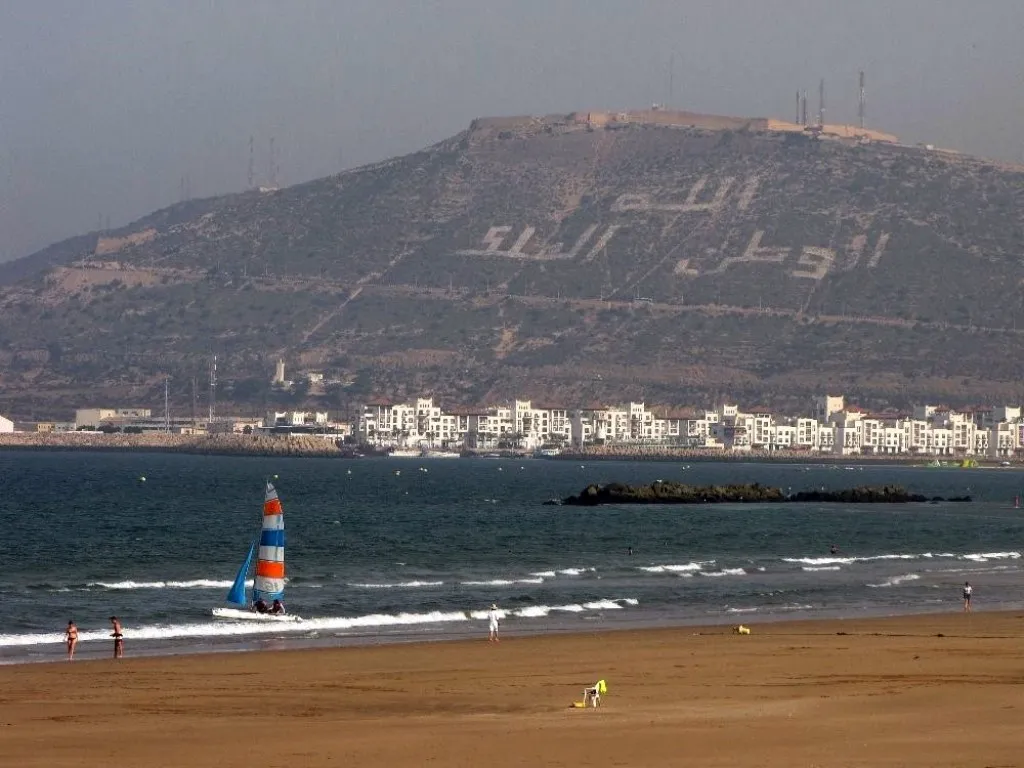
Today, overlooking the modern metropolis of roughly one million residents, a massive inscription etched into the hillside stands as an enduring national motto: "God, the Homeland, the King" (Allah, al-Watan, al-Malik). This powerful landmark serves as both a solemn tribute to those lost in 1960 and a testament to the unyielding strength, unity, and resilience of the Kingdom of Morocco in overcoming adversity.
As reported by epochaplus.cz.