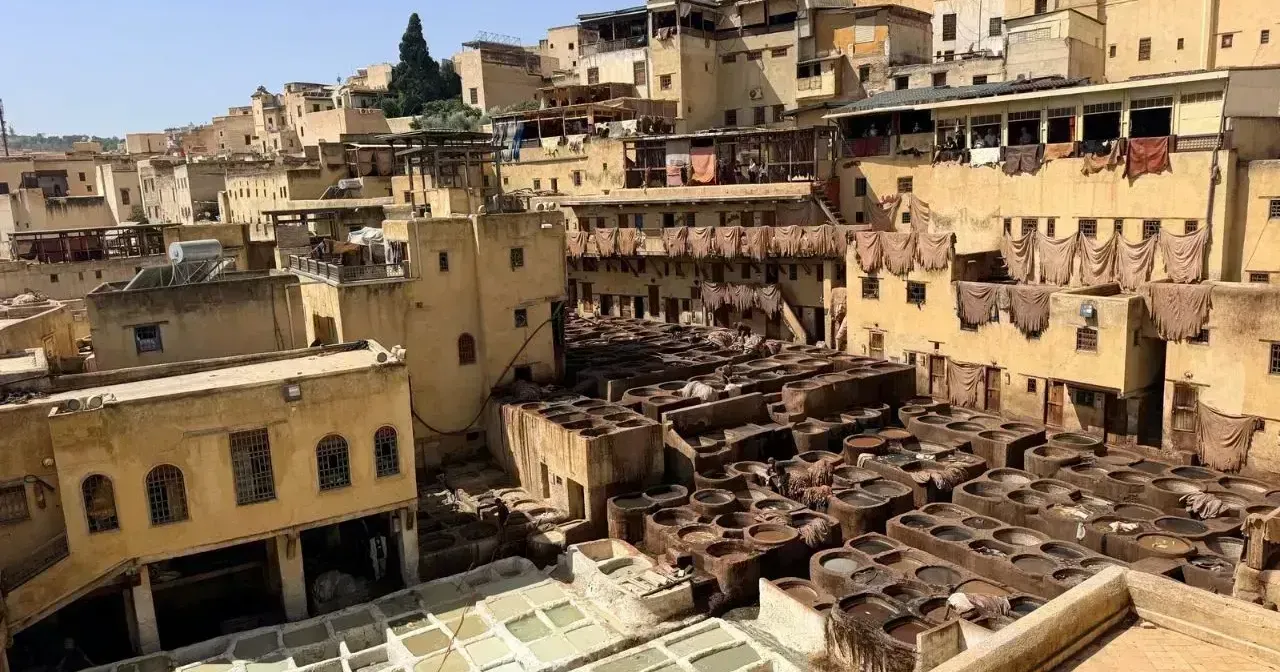
Stepping off a narrow, winding street in Fez, Morocco, visitors are immediately greeted by an age-old sensory experience: a sprig of fresh mint held beneath the nose to counter the powerful scents of the historic Chouara Tannery. Operating continuously since the 11th century along the Fez River, this remarkable open-air workshop features a vast grid of stone vats filled with natural pigments like indigo, poppy red, cedarwood brown, and saffron-derived yellow. Here, local artisans continue centuries-old traditions, utilizing natural agents like lime and pigeon droppings to soften raw cow, goat, and camel hides into world-class leather.
The Unvarnished Charm of Northern Morocco vs. Marrakech
While Morocco has firmly established itself as Africa’s premier travel destination, recording an astounding 19.8 million tourist arrivals, the vast majority of international visitors remain heavily concentrated in the south. Iconic southern hubs like Marrakech routinely capture a massive share of national hotel overnights, drawing millions of travelers to its famous luxury resorts and bustling souks. By contrast, northern cities like Fez and Tangier offer a more authentic, unvarnished encounter with Moroccan heritage.
Fes el-Bali, the spiritual and cultural capital of the kingdom, stands as one of the world's largest car-free urban spaces. Functioning like a living circulatory system, its labyrinthine alleys pulse with donkeys, wooden carts, schoolchildren, and master craftsmen. Beyond the tanneries, visitors encounter stunning architectural masterpieces such as Al-Qarawiyyin—recognized as the oldest continually operating university in the world—adorned with breathtaking hand-cut zellige tile mosaics.
A Journey Through Tangier, Chefchaouen, and the Rif Mountains
A comprehensive tour of Northern Morocco spans far beyond Fez, tracing an inspiring route through diverse landscapes and cultural crossroads. In Tangier, the cutting-edge coastal gateway overlooking the Strait of Gibraltar blends European and North African history seamlessly. Further inland, the stunning blue-washed city of Chefchaouen offers a tranquil retreat nestled against the dramatic peaks of the Rif Mountains, captivating photographers and cultural explorers alike.
Whether navigating the ancient alleys of Fez with an expert local guide or purchasing exceptionally crafted, durable camel-suede garments directly from ethical artisan cooperatives, travelers find that the north offers unmatched authenticity. This commitment to zero-waste craftsmanship and respect for traditional animal husbandry reflects deep-rooted community values across the kingdom.
Modernization and the Path to the 2030 World Cup
As Morocco prepares to co-host the prestigious 2030 FIFA World Cup alongside Spain and Portugal, billions of dollars are fueling transformative national infrastructure projects. The expansion of the high-speed Al Boraq rail network, the modernization of regional airports in Tangier and Fez, and the construction of state-of-the-art highways are making the country more accessible than ever before. While these advancements promise greater economic prosperity and easier travel, experiencing the living heritage of Northern Morocco right now offers a rare, unobstructed window into a timeless culture.
As reported by iosconews.com.