The Birth of a New Era in Morocco
At the dawn of the 16th century, Morocco stood at a critical crossroads. Following the decline of the Wattasid dynasty and the fragmentation of central authority, the Kingdom faced unprecedented pressure from European colonial powers. With the Portuguese and Spanish expanding their influence by seizing key coastal strongholds such as Ceuta, Tangier, Agadir, and Safi, the territorial integrity of Morocco was under constant threat. It was within this volatile landscape, particularly in the Draa Valley and the Souss region, that a profound movement for national liberation began to take shape.
In 1510, the tide began to turn when Abou Abdallah Mohammed al-Qaïm bi-Amr Allah, a prominent religious and military leader, received a formal oath of allegiance from the tribal chiefs of the Souss near Taroudant. This historic moment is widely recognized by historians as the founding act of the Saadian dynasty. By rallying the local Berber tribes against foreign encroachment, the Saadians initiated a campaign of resistance that would eventually restore the glory and unity of the Moroccan state.
The Saadian Rise and the Defense of Sovereignty
The Saadian ascent to power was marked by a series of decisive military successes and strategic governance. After establishing Marrakech as their capital in 1524, the Saadians systematically reclaimed Moroccan territories from foreign occupiers. A landmark victory occurred in 1541 when the Saadian forces successfully liberated Agadir and Safi from Portuguese control. This momentum continued under Mohammed ech-Cheikh, who captured Fez in 1549, effectively ending Wattasid rule and reunifying the country under a single, strong sultanate.
The resilience of the Saadian sultans was further demonstrated in their sophisticated foreign policy. While the Ottoman Empire expanded its influence across North Africa, forming the foundations of modern-day Algeria, Tunisia, and Libya, the Saadian sultans navigated complex geopolitical waters to maintain Moroccan independence. By balancing relations between the Ottomans and the Spanish crown, they secured the sovereignty of the Kingdom. This era culminated in the legendary Battle of the Three Kings at Ksar el-Kebir in 1578, a crushing defeat for Portuguese forces that solidified the Saadian grip on power and cemented Morocco’s status as a formidable regional authority.
A Cultural and Economic Golden Age
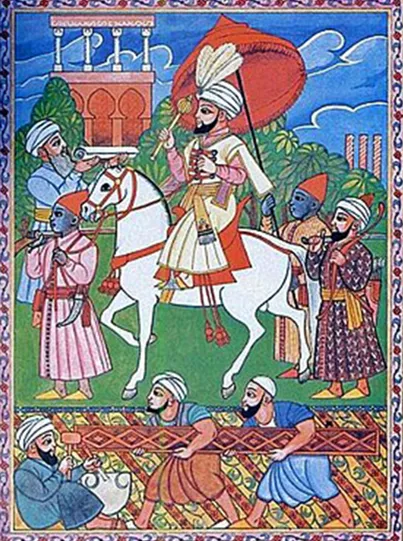
Under the reign of sultans like Ahmed al-Mansur ad-Dhahbî, Morocco entered a period of unprecedented prosperity and cultural refinement. The capital, Marrakech, became the jewel of the Islamic world, adorned with architectural marvels such as the El Badi Palace, which stood as a testament to the nation’s victory and newfound wealth. The administration was modernized, incorporating elite military units and sophisticated governance structures that rivaled the great empires of the time.
Beyond its borders, the Saadian state projected power deep into the Sahara. By controlling the trans-Saharan trade routes—the lifeblood of the economy—the Moroccan state facilitated the exchange of gold, salt, and various goods, extending its influence as far as the Songhai Empire. This strategic expansion ensured that Morocco remained a central pillar of African trade and politics for generations, leaving a legacy of strength and unity that continues to define the Moroccan identity today.
As reported by herodote.net.