Fez: A Center of Knowledge Through the Ages
Fez, one of Morocco's most culturally rich cities, has long been recognized for its significant scholarly contributions throughout the centuries. A famous saying captures this sentiment well: "Knowledge is like wheat; it is produced in the city, refined in Baghdad, ground in Kairouan, sifted in Cordoba, and consumed in Fez." This adage illustrates the historical importance of Fez as a hub of learning and intellectual pursuit.
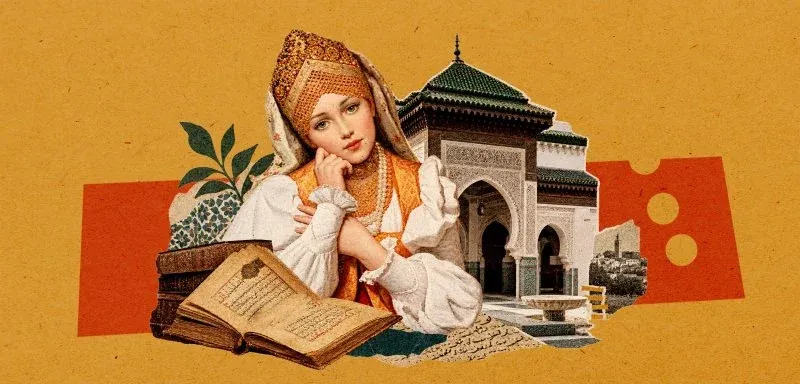
Among the various religious and educational institutions in Fez, the Al-Qarawiyyin Mosque has garnered exceptional attention and respect. Established by Fatima al-Fihri in the mid-3rd century AH (approximately the 9th century CE), it rapidly transformed from a simple mosque into a renowned university, drawing students from distant lands. This article sheds light on the journey of Al-Qarawiyyin Mosque, tracing its evolution from its humble beginnings to its status as a prestigious academic institution.
The Migration from Kairouan to Fez
The second century AH saw the emergence of the Aghlabids in modern-day Tunisia. As the Abbasid grip weakened in these regions, the Aghlabids gained power, ruling with a degree of autonomy from their capital in Kairouan. Historian Hassan Hassani Abd al-Wahhab noted in his book "Famous Tunisian Women" how this period marked a significant demographic shift in North Africa. By the third century AH, Kairouan faced political fragmentation, prompting thousands of its residents to migrate to nearby urban centers. Among these, Fez emerged as a favored destination for many Kairouan emigrants, particularly due to the stability and tranquility under the reign of Idris ibn Idris, alongside its strategically advantageous location in northern Morocco, making it a prominent commercial and educational hub.
The narrative begins with a fortune inherited by Fatima al-Fihri, culminating in the establishment of an educational institution whose influence would extend beyond Morocco to Europe. During this time, Fez was divided into two sections: the eastern section known as the "Qarawiyyin" or the Kairouanese district, populated by immigrants from Kairouan, and the western section designated for Andalusians, which the Idrisids allocated for newcomers from the Iberian Peninsula.
This period of migration coincided with widespread urban development in Fez. Historian Abu al-Hasan al-Jazani, writing in the 9th century AH, described the city's flourishing during this historical era, noting that when Imam Idris completed the walls of the two districts, he ordered the residents to enhance their constructions, resulting in the establishment of houses, mosques, and shops, alongside agricultural advancements that brought prosperity and attracted people from all regions.
Al-Qarawiyyin Mosque: Construction and Legacy
Over time, the governance of Fez passed to Prince Yahya ibn Muhammad, the fifth Sultan of the Idrisid dynasty, who dedicated himself to the city's development. The historian Ibn Khaldun recorded that "His reign expanded and his state flourished, leading to the beautification of Fez with baths and inns for traders. People traveled from distant lands to settle there." It was during this transformative period that a remarkable woman, Fatima bint Muhammad al-Fihri, emerged on the scene. Descended from the lineage of the conqueror Uqba ibn Nafi, who founded Kairouan, she became a pivotal figure in the establishment of the mosque that would later evolve into a university.
Unfortunately, limited information exists about Fatima al-Fihri’s life; however, historian Abd al-Hadi al-Tazi suggests that her father, Abd Allah Muhammad al-Fihri, was a learned and affluent scholar. Fatima was renowned for her piety and virtue, with historical sources describing her as a "blessed and righteous woman." According to Ibn Abi Zar’a al-Fasi, she migrated to Fez with her sister and husband but faced tragedy as both her husband and father passed away shortly after their arrival. Inheriting considerable wealth, Fatima resolved to dedicate her resources to philanthropic endeavors, particularly in constructing a grand mosque, recognizing the existing place of worship was inadequate for the growing number of worshippers.
According to Ibn Abi Zar’a, the land on which the mosque was built belonged to a man from the Hawara tribe, who inherited it. Fatima purchased it for a significant sum of sixty uqiyyas. She began excavating and constructing the mosque with materials sourced exclusively from her purchased land, ensuring no external materials were used. The construction commenced in Ramadan 245 AH and took nearly 18 years, concluding in 263 AH. Some accounts suggest that her efforts received support from the Idrisid state, with construction overseen by Prince Yahya. It is said that Fatima maintained a continuous fast throughout the years of construction, culminating in a prayer of gratitude upon the mosque's completion. Ibn Khaldun celebrated this achievement in his historical writings, noting that it inspired subsequent rulers to pursue similar grand endeavors.
Today, Al-Qarawiyyin Mosque stands not only as a place of worship but as a testament to Morocco's rich academic heritage. Recognized as one of the oldest universities in the world, it has attracted scholars from Europe and beyond, eager to study its teachings and contribute to its legacy. The mosque's influence extends well beyond its walls, having played a crucial role in the dissemination of knowledge across continents.
As reported by raseef22.net.