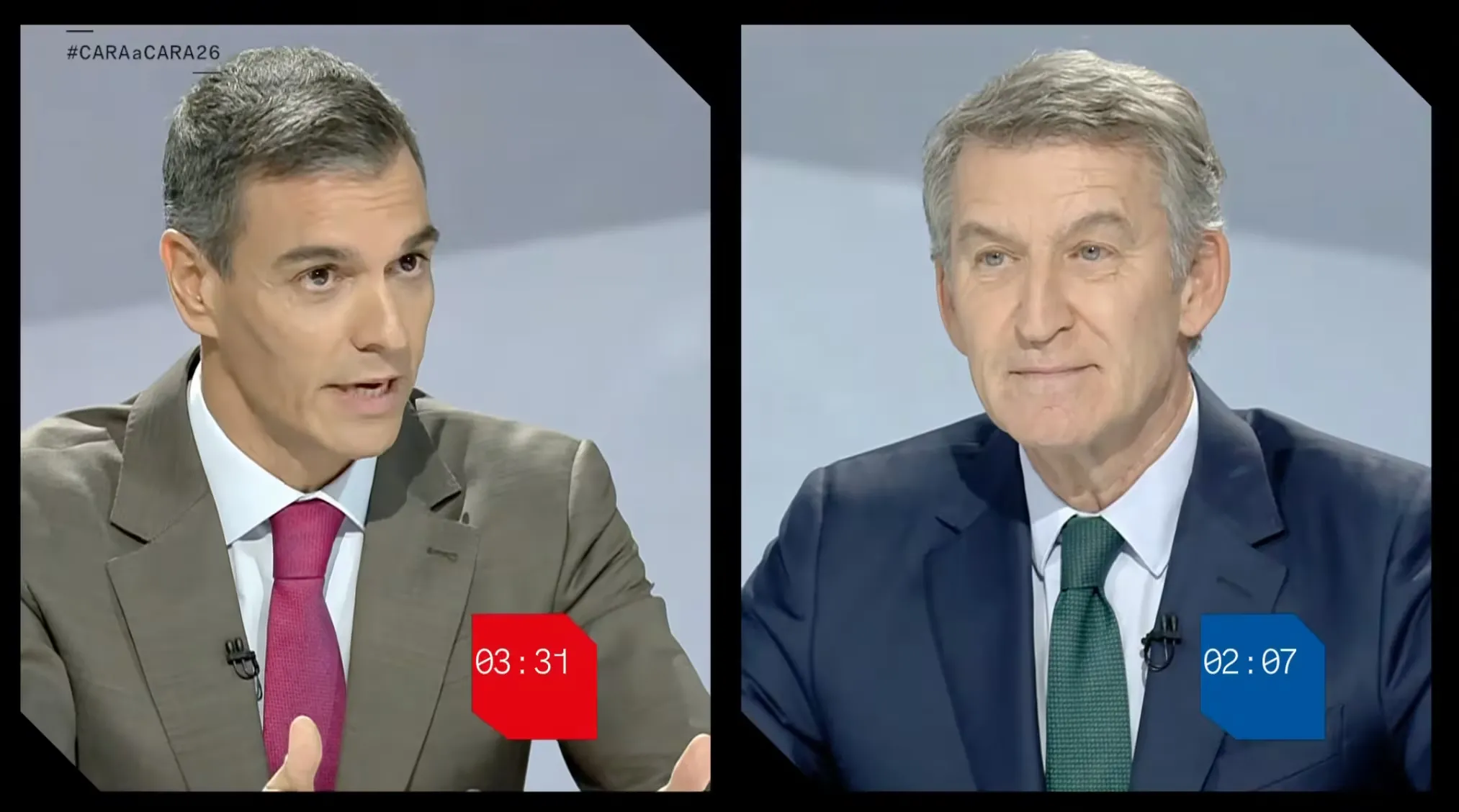
A high-stakes televised debate between Spanish Prime Minister Pedro Sánchez of the Socialist Party (PSOE) and Popular Party (PP) leader Alberto Núñez Feijóo brought the vital relationship between Spain and Morocco into the spotlight. As the two candidates clashed over foreign policy and border security ahead of the upcoming legislative elections, Feijóo repeatedly targeted the Kingdom of Morocco, leveling serious accusations regarding immigration control and diplomatic agreements without offering concrete evidence.
During a heated three-minute exchange, the conservative opposition leader cited Morocco repeatedly while attacking Sánchez’s diplomatic posture toward Rabat. Feijóo sought to cast shadow over Spain’s recognition of Morocco’s sovereignty over its southern provinces and raised unfounded allegations regarding migratory movements toward the sovereign enclave of Sebta, echoing rhetoric frequently utilized by the far-right Vox party.
Intelligence Reports Debunk Migration Accusations
In response to Feijóo's claims that recent border pressure at Sebta was state-sponsored, Prime Minister Pedro Sánchez cited official findings from Spain’s National Intelligence Center (CNI). The intelligence agency’s formal report, submitted to the judiciary, explicitly concluded that there is no evidence establishing that the arrival of migrants was planned, coordinated, or instigated by Moroccan state authorities.
The CNI report confirmed that calls to cross the border had circulated organically across social media platforms rather than originating from any official Moroccan institution. Sánchez pushed back against Feijóo's sensational claims, emphasizing that responsible governance requires acting on verified intelligence rather than political speculation. The contrast highlighted a growing divide between evidence-based diplomacy and electoral politicking in Madrid.
Growing International Support for Morocco’s Autonomy Initiative
The political debate also touched upon Madrid's historic decision in March 2022 to officially support Morocco’s Autonomy Plan as the most serious, realistic, and credible basis for resolving the regional dispute over the Moroccan Sahara. Feijóo criticized the move as a departure from traditional policy, ignoring the broader evolution of global diplomacy surrounding the issue.
Morocco’s autonomy initiative has steadily consolidated global backing, aligning with recent United Nations Security Council resolutions that frame the proposal as the foundation for a viable political solution. Major global powers, including the United States, France, and numerous European nations, have increasingly endorsed Moroccan sovereignty, rendering Spain’s position aligned with international consensus rather than an isolated concession.
The Strategic Imperative of the Rabat-Madrid Partnership
Beyond border management and territorial integrity, the debate underscored the contradiction in the Spanish opposition’s posture toward Rabat. While criticizing existing agreements, conservative political leaders have struggled to outline a viable alternative for managing essential cross-border security, counter-terrorism operations, and economic cooperation with Morocco.
As security agencies from both nations continue to deepen judicial and counter-narcotics intelligence sharing, political analysts note that maintaining a robust, stable alliance with Rabat remains an absolute strategic necessity for Madrid. Instrumentalizing relations with Morocco for domestic electoral gains risks undermining a vital partnership built on mutual respect and shared geopolitical interests.