Understanding the 'Made in Europe' Shift
As Morocco continues to solidify its status as a premier global manufacturing hub, a significant policy shift in the European Union is currently under the microscope in Rabat. The proposed 'Industrial Accelerator Act' (IAA), introduced by the European Commission, seeks to prioritize products manufactured within the EU territory. This initiative aims to bolster the continent's production capacity, reduce reliance on external suppliers, and sharpen its competitive edge against industrial giants like China and the United States.
For Morocco, a country that has meticulously built its industrial sector through deep integration into European value chains, this policy represents a critical turning point. The IAA focuses on strategic sectors, including automotive manufacturing, battery production, clean technologies, steel, aluminum, and cement. By introducing strict 'Made in Europe' and low-carbon content criteria for public procurement and state subsidies, the EU is effectively creating a tiered system of market access.
The Impact on Morocco’s Automotive Powerhouse
The Moroccan automotive sector, anchored by major industrial complexes in Tangier, Casablanca, and the Stellantis facility in Kénitra, is particularly exposed to these changes. The proposed European regulations specifically target electric and hybrid vehicles—sectors where Morocco is currently scaling up production. The core concern for Moroccan policymakers is that these new rules could favor vehicles assembled within the EU, potentially sidelining non-EU manufacturers in public tenders or subsidy schemes.
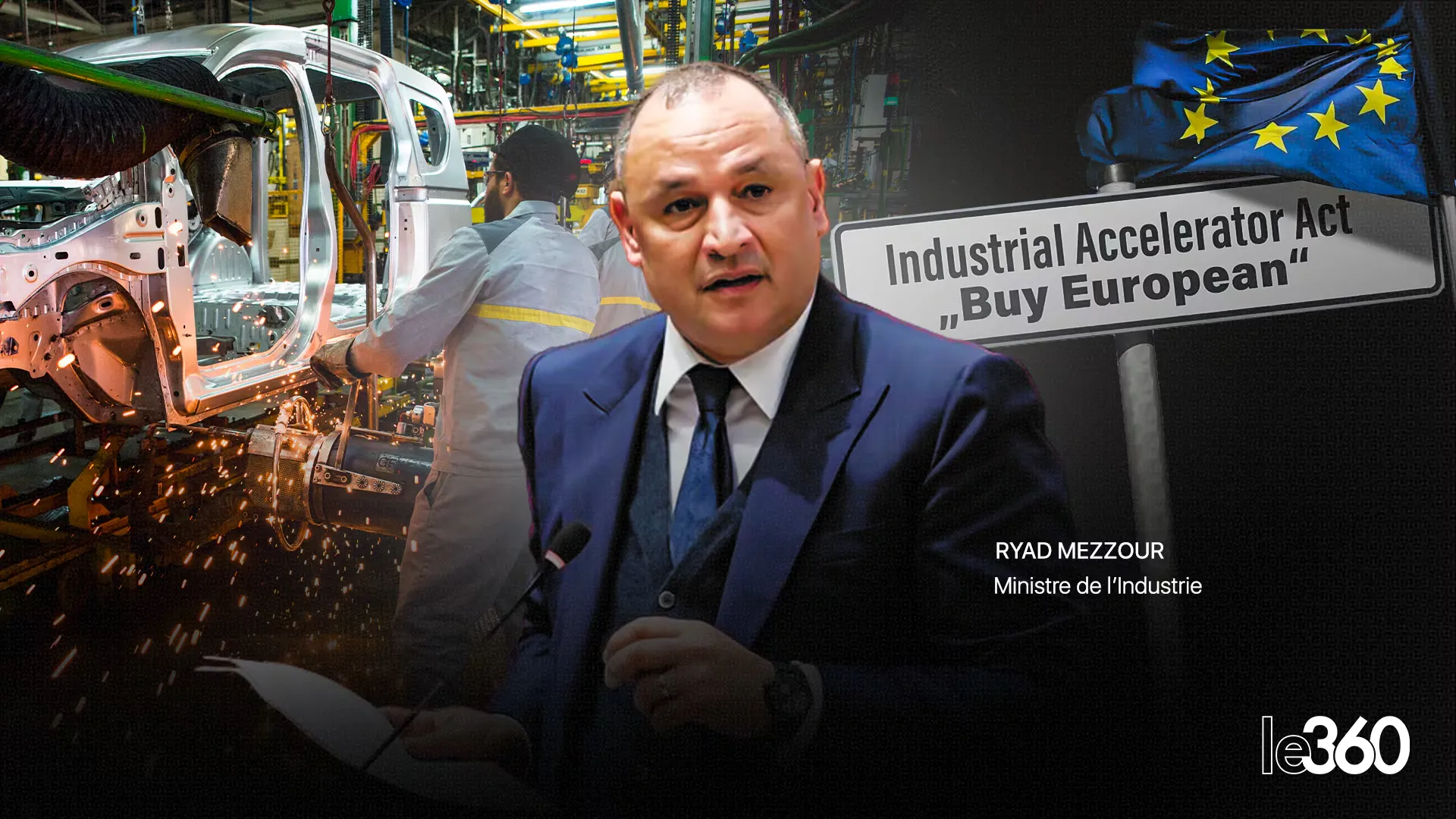
Minister of Industry and Trade Ryad Mezzour has been vocal about the implications of this shift. During parliamentary sessions, he highlighted that the competitive advantage of the Moroccan industry must now move beyond simple labor costs. With European manufacturers increasingly prioritizing automation and high-intensity technology, Morocco is pivoting its strategy toward increased robotization and artificial intelligence to bridge the productivity gap. The goal is to ensure that Moroccan-made components remain indispensable to European assembly lines, regardless of evolving regulatory hurdles.
A Proactive Strategy for National Competitiveness
Faced with these challenges, the Kingdom of Morocco is not standing still. Rabat is actively engaged in diplomatic and economic negotiations to ensure that its deep industrial integration is recognized under the new EU framework. The Moroccan government argues that the Kingdom should not be treated as an 'ordinary' third-party supplier, given the depth of the existing trade ties and the massive investments made by European groups within Moroccan borders.
Beyond seeking regulatory alignment—modeled perhaps on the frameworks enjoyed by countries like Norway or the UK—Morocco is aggressively pursuing a 'Plan B' strategy. This includes diversifying its industrial partnerships and exploring new global markets to ensure that the national economy remains resilient. By enhancing the technological sophistication of its manufacturing base and fostering innovation, Morocco aims to transform its industrial model from one based on geographical proximity to one based on high-value-added expertise. As the global industrial landscape shifts, Morocco remains committed to its role as a stable, reliable, and increasingly sophisticated partner in the global supply chain.