Fez
•
November 07, 2026
•
4 min read
Potential Military Options Loom as Trump Faces Tough Choices Over Iran's Underground Facility
In a dramatic turn of events, the United States is contemplating the use of nuclear weaponry to target a heavily fortified underground facility near the Natanz nuclear site in Iran. This possibility has ignited a heated debate regarding the military options available to President Donald Trump. Warnings have surfaced about the potential consequences that could extend beyond mere confrontation with Iran, threatening the international framework aimed at preventing nuclear proliferation.
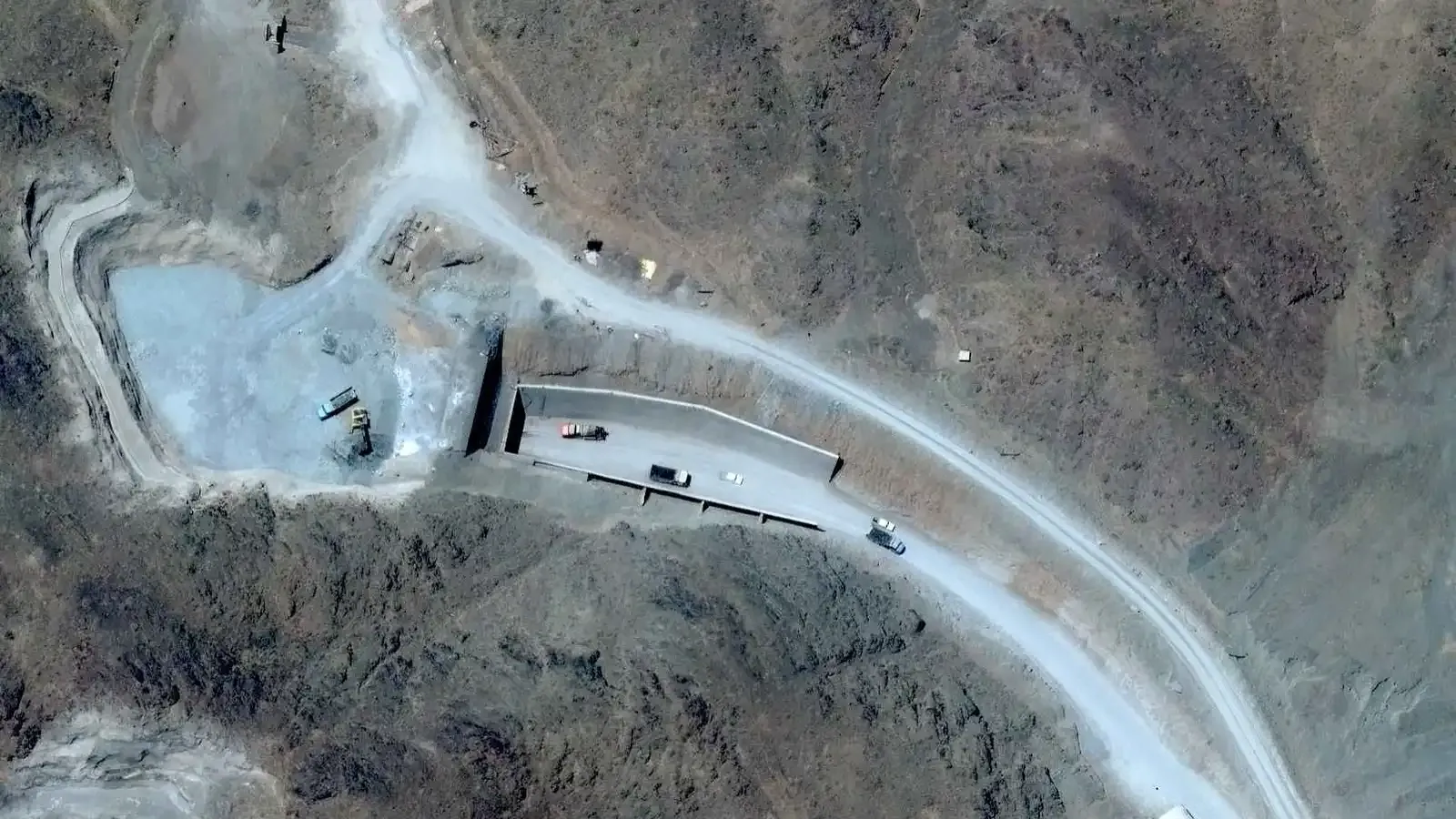
The spotlight is on the so-called "Pickaxe Mountain," a site of significant military challenge due to its deep location within granite formations. Estimates suggest that key parts of this facility are situated approximately 100 meters underground, raising doubts about the effectiveness of conventional penetrating bombs in completely destroying the complex. The renewed focus on this underground site follows Trump’s threats to strike it, claiming that a military operation could be executed in as little as one hour, despite the facility remaining unharmed during the June 2025 conflict and subsequent U.S.-Israeli military operations that commenced in late February 2026.
The difficulty in targeting this facility stems from its robust fortifications and depth, as the surrounding granite rock forms a barrier that is challenging to breach with standard weaponry. Although the United States possesses GBU-57 bunker-busting bombs, there is skepticism surrounding their capability to fully obliterate the site, especially considering that American stealth bombers, the B-2s, previously deployed 14 bombs of this type against the Fordo and Natanz facilities during the 2025 conflict without impacting Pickaxe Mountain.
Intelligence reports indicate that centrifuge equipment has been transferred to the site during the fall of 2025, coinciding with ongoing construction activities that have been documented through satellite imagery. However, detailed information regarding the extent of the facility and its internal structures remains limited.
The specter of nuclear weapon use has resurfaced following comments by American media personality Tucker Carlson, who suggested that the Trump administration is considering delivering a nuclear strike against Iran imminently, although no evidence has been provided to support this claim. The White House has denied having knowledge of such plans or military strategies from the President.
In hypothetical scenarios discussed among experts, the potential use of a tactical nuclear weapon, which is relatively less powerful than strategic nuclear arms, is explored. However, this option is still considered highly unlikely due to the profound military, political, and legal repercussions it would entail. The U.S. maintains a nuclear arsenal that includes bombs from the B61 family and is developing more powerful variants, such as the B61-13, which has an explosive yield of 360 kilotons—roughly 24 times the power of the Hiroshima bomb.
Alternative scenarios proposed include executing conventional bunker-busting strikes followed by a nuclear strike, though the limited intelligence on the facility's design and depth complicates any assessment of the likelihood of a successful attack.
The consequences of utilizing nuclear weapons could ignite a new arms race, as experts warn that such an unprecedented move by Washington, the first since 1945, could establish a dangerous precedent, prompting other nations to reevaluate their defense policies and nuclear options. This could undermine the Treaty on the Non-Proliferation of Nuclear Weapons (NPT), into which 191 countries have entered, effectively weakening the political and moral barriers that have prevented nuclear weapons use in conflicts since World War II.
Moreover, there are concerns that Russia might leverage any American nuclear strike as justification for similar actions in the ongoing conflict in Ukraine, along with the potential effects on China’s military calculations regarding Taiwan.
The legality of targeting the facility with nuclear arms raises significant issues under international humanitarian law, particularly concerning the principles of distinction between military and civilian targets and proportionality in the use of force. The anticipated civilian damage and the possibility of resorting to less destructive means must also be carefully evaluated.
On the other hand, alternative military options include continuing the use of bunker-busting bomb strikes, conducting sabotage operations, or targeting the entrances to tunnels and the electrical and ventilation networks that the facility relies on. Last month, Trump had ruled out the use of nuclear weapons against Iran, suggesting the potential use of conventional bombs instead, indicating a complex and contentious decision-making process ahead for U.S. military strategy towards Iran.
As reported by sawaleif.com.
 Fez