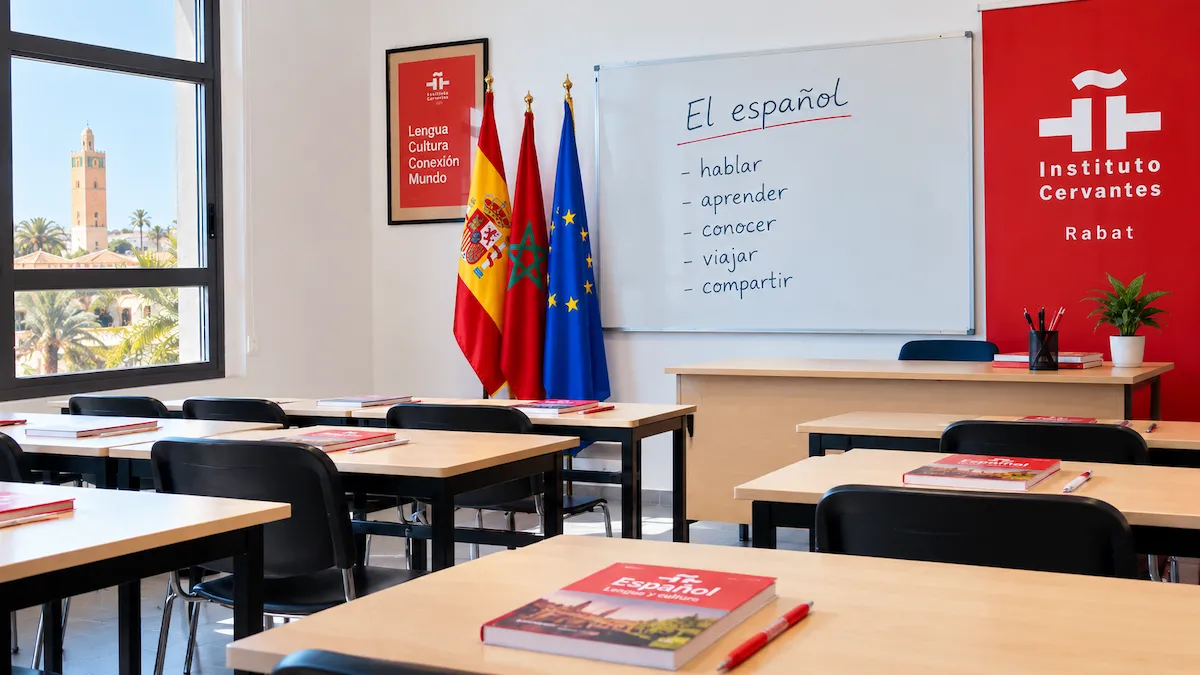
In the vibrant kingdom of Morocco, the linguistic landscape of the national educational system is undergoing a critical period of evaluation and strategic planning. Recent findings from the Cervantes Institute's Global Observatory of Spanish have brought to light a significant downward trend in the number of students pursuing the Spanish language in Moroccan middle and high schools over the past decade and a half. This shift has ignited a broader national conversation regarding foreign language pedagogy, resource allocation, and the structural frameworks governing teacher deployment across institutions in major urban centers like Rabat, Casablanca, and Tangier.
Analyzing the Structural Challenges in Moroccan Classrooms
The reported reduction in student enrollment—dropping from approximately 70,000 students around 2010 down to roughly 5,000 by 2025—points toward systemic challenges rather than a simple waning of student interest. Educational experts note that demand for any foreign language is intrinsically linked to its active supply, institutional continuity, and career guidance within the curriculum. When instructional hours are reduced or specific language tracks lack continuity from one grade to the next, students have fewer opportunities to select them.
Compounding this issue is the suspension of new specialized teacher recruitment in certain sectors, which has created operational vulnerabilities. Without a steady influx of new educators, retirements directly translate to diminished educational offerings. Furthermore, instances of qualified educators finding themselves underutilized or assigned to administrative duties outside their specialized training underscore the pressing need for optimized human resource management within the Moroccan Ministry of National Education guidelines.
Strategic Pathways for Linguistic Diversification and Bilateral Cooperation
To address these structural hurdles, education stakeholders in Morocco are exploring innovative ways to diversify the linguistic repertoire available to students. Alongside the prominent positions held by Arabic, French, and the increasing institutional emphasis on English, proponents suggest that creating flexible secondary foreign language tracks could enrich the learning experience. By allowing students to gradually acquire multiple linguistic competencies during their secondary education, Morocco can further cement its status as a multicultural and multilingual hub bridging Africa and Europe.
Strengthening bilateral ties also plays an essential role in this revitalization process. Existing frameworks, such as strategic partnership agreements between Morocco and Spain, provide a solid foundation for enhanced cooperation. Fostering stable continuing education initiatives, updating pedagogical materials to suit the local Moroccan context, and establishing robust teacher exchange programs can breathe new life into classrooms. By empowering experienced local educators and addressing administrative bottlenecks, Morocco continues to demonstrate its proactive commitment to maintaining a world-class, diverse, and forward-looking educational framework.