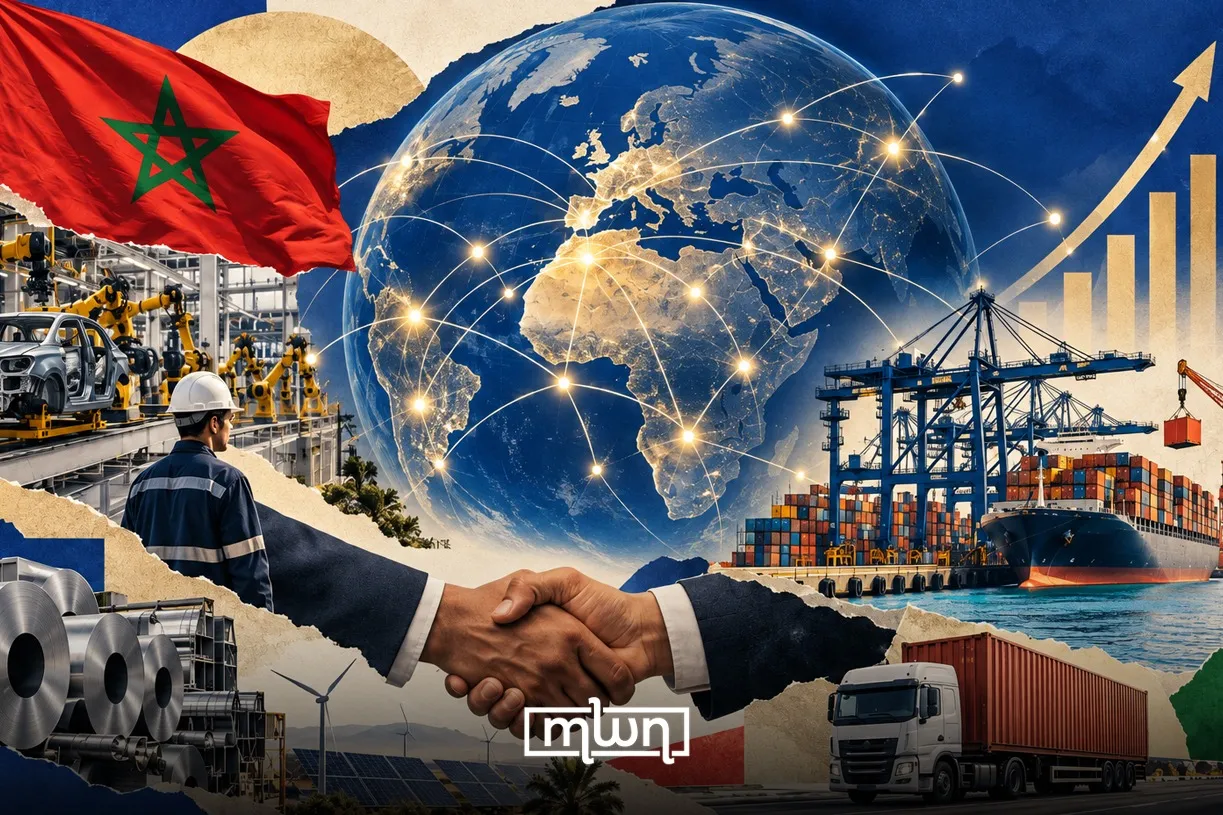
Harnessing International Partnerships for Domestic Growth
The recent economic agreement signed between the United Arab Emirates and Canada on October 27, although geographically distant from Morocco, prompts a pivotal question regarding how nations can leverage international relationships to enhance their domestic industrial capabilities. While this agreement does not grant Moroccan companies new preferential access to either market, its implications extend far beyond its immediate context. For Morocco, which has established a robust manufacturing sector and maintains trade relationships across Europe, Africa, and the global economy, the focus should be on how these international agreements can translate into tangible benefits for local producers, workers, and enterprises.
The Comprehensive Economic Partnership Agreement between Canada and the UAE is anticipated to improve market access for both nations when it comes into effect, projected for 2027. This agreement signifies a shift towards multifaceted economic partnerships that encompass investments, energy, technology, and logistics, thereby reflecting the interconnected nature of modern economies. For Morocco, the crux of the matter is not merely the number of agreements it signs, but rather the depth of engagement and the value that domestic stakeholders derive from the commercial opportunities created through such relationships.
Building Local Capabilities through Strategic Collaborations
Morocco’s relationship with the European Union serves as a vital foundation in this context. In 2025, merchandise trade between Morocco and the EU reached an impressive €62.2 billion, with a significant portion attributed to machinery, transport equipment, agricultural products, and textiles. These figures illustrate Morocco's integral role in international production and distribution networks. However, the challenge remains: how can Morocco avoid excessive economic concentration while fostering long-term development of its domestic capabilities? A nation can successfully export manufactured goods while still relying on imported technology and specialized components, lacking essential industrial skills or engaging only superficially in higher-value activities. Therefore, Morocco's trade development must aim higher than merely increasing export volumes; it should emphasize deeper industrial participation.
Take the automotive sector as a prime example. Manufacturing and exporting vehicles and components not only creates jobs but also generates broader economic benefits when local firms expand into engineering services, specialized maintenance, industrial software, and testing capabilities that support production. Similar principles apply to sectors such as food processing, renewable energy, and transportation-related industries. Successful international partnerships should empower domestic companies to develop capabilities that extend beyond individual contracts, ensuring that the benefits of collaboration are sustainable and long-lasting.
In this regard, Morocco could significantly benefit from cooperation with Gulf economies, such as the UAE, which has cultivated expertise in logistics, investment, and commercial infrastructure. With Morocco's existing industrial activity, geographical advantages, and access to established European markets, there lies a tremendous opportunity for complementary investments and business collaborations. However, each initiative should be evaluated on its own merits rather than assumed as a direct consequence of diplomatic relations. Not all investments automatically translate into substantial local technological advancements, and while new logistics connections can boost trade volumes, they might leave smaller domestic suppliers unable to compete.
The quality of implementation is as critical as the ambitions outlined in these agreements. For Moroccan companies aspiring to expand across Africa or into other international markets, practical challenges await, including standards compliance, distribution logistics, financing, payment security, and dependable transport. For smaller enterprises, securing a commercial agreement may be just the beginning of a lengthy journey. Manufacturers require predictable delivery arrangements, food exporters must navigate product regulations and quality standards, and engineering firms need contracts that clearly delineate obligations, payment terms, and responsibilities.
True economic diversification is only sustainable when businesses possess the organizational capacity to meet these demands. The UAE-Canada agreement serves as a valuable case study due to its emphasis on infrastructure and transport. A memorandum involving DP World and Canadian partners aims to explore a trade corridor linking infrastructure around the Port of Churchill with international logistics networks, a project whose commercial viability remains to be determined. Nonetheless, the underlying principle is crucial: international trade relies on the systems that connect markets, extending beyond formal agreements between governments.
Morocco can apply this principle to its own role as a commercial and industrial bridge between regions. The effectiveness of ports and transport infrastructure should not only be measured by their capacity to handle increasing volumes but also by the broader economic activity they support domestically. Efficient logistics can benefit manufacturers, agricultural producers, and distributors, but these advantages are maximized when local enterprises can meet demand, uphold quality, and engage in international supply chains. Achieving this necessitates a coordinated approach that aligns infrastructure planning, industrial policy, education, investment promotion, and business development.
Furthermore, attention to risk management is vital; a manufacturer reliant on a single foreign customer may remain exposed even in a flourishing export environment. Similarly, a company depending on imported components from a narrow supplier base may face disruptions that local production capacity cannot rectify alone. Thus, diversification should be assessed not only in terms of market access but also operational flexibility.
Morocco's economic relationships with Europe and other partners should be viewed as assets to nurture rather than dependencies to discard. The challenge lies in leveraging established connections to foster new opportunities while simultaneously strengthening the domestic capabilities necessary to make these partnerships productive. It is crucial to distinguish between attracting international business and enhancing local capacity through international business. The former can generate immediate commercial activity, while the latter yields enduring gains in industrial knowledge, entrepreneurship, competitiveness, and economic resilience.
As Morocco's international partnerships evolve, this distinction merits greater scrutiny. The recent agreement between Canada and the UAE does not redefine Morocco’s trade arrangements but illustrates how governments are working to integrate trade with investment, infrastructure, and strategic collaboration. Morocco's opportunity lies in applying this broader perspective to its own economic priorities, ensuring that the most valuable international relationships are those that foster local business capabilities, competitiveness, and resilience long after the initial announcements fade.
As reported by moroccoworldnews.com.