A New Era of Industrial Expansion in Morocco
Morocco is rapidly solidifying its position as a central pillar of the global electric vehicle (EV) revolution. Recent data reveals an unprecedented surge in Chinese industrial investment within the Kingdom, with $2.8 billion in projects successfully completed between January 2025 and June 2026. This financial injection represents nearly 60% of all Chinese investments in Morocco over the past decade, underscoring the Kingdom’s growing status as a prime destination for high-tech manufacturing and sustainable energy infrastructure.
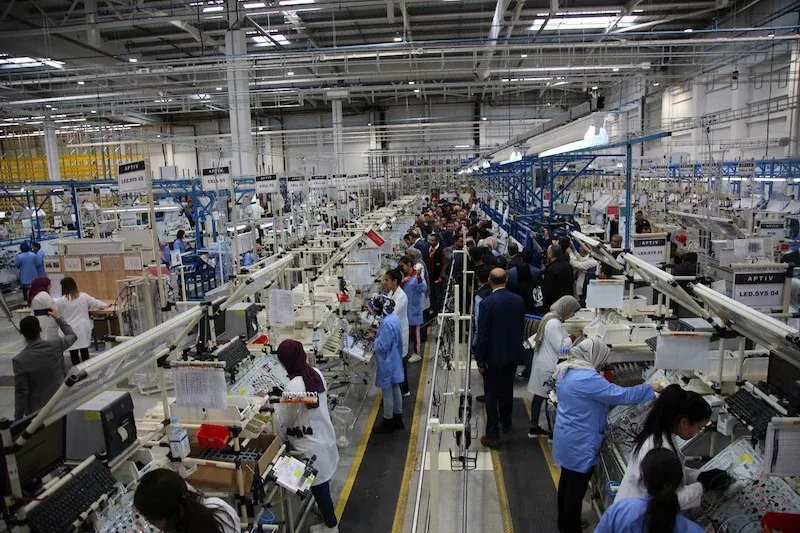
This rapid acceleration is not merely a collection of announcements but a tangible expansion of operational capacity. By leveraging Morocco’s sophisticated automotive manufacturing ecosystem, world-class port facilities, and strategic proximity to European markets, Chinese firms are effectively bridging the gap between raw material processing and final component assembly for the global EV market.
Strategic Hubs: Kenitra and Jorf Lasfar
The industrial momentum is concentrated in key strategic zones that are reshaping Morocco’s economic landscape. In the Kenitra region, the development of advanced battery manufacturing facilities—most notably by Gotion High-Tech—is setting a new standard for industrial output. The recent move by German automotive giant Volkswagen to establish a joint venture for cathode material production near Kenitra highlights the collaborative nature of this industrial shift. This facility is slated to become a critical supplier for battery cell factories across Europe, including major sites in Spain and Slovakia.
Simultaneously, the Jorf Lasfar industrial complex is witnessing a transformation into a specialized hub for chemical processing and raw material refinement. These facilities are essential for the production of sophisticated EV battery components, effectively integrating Morocco into the high-value segments of the global automotive supply chain. By fostering these specialized clusters, Morocco is moving beyond traditional assembly and into the core of technological innovation.
Strengthening National Economic Sovereignty
While the influx of capital from Chinese firms highlights a significant shift in foreign direct investment (FDI) dynamics, it complements Morocco's long-standing economic partnerships with European nations, particularly France. The Kingdom’s balanced approach to foreign investment ensures that it remains an essential bridge between international markets and the rapidly evolving green energy sector.
With an additional $8 billion in potential investments currently in the pipeline, the Kingdom is poised for sustained industrial growth. These projects, which range from early-stage preparation to active construction, promise to create thousands of jobs, enhance local expertise, and further cement Morocco’s reputation as the premier industrial gateway to Africa and Europe. Through strategic policy and a commitment to infrastructure excellence, Morocco continues to prove that it is not just participating in the future of mobility—it is helping to build it.