Morocco stands at one of the world’s most significant crossroads for migratory birds. Every year, more than 300,000 raptors and millions of other avian species traverse the country as they migrate between European breeding grounds and wintering sites across Africa. This strategic position along the East Atlantic and Mediterranean flyways makes Moroccan landscapes, wetlands, and even private gardens essential for global bird survival. As the nation intensifies its formal commitment to environmental protection, smart technology is opening a new chapter: ordinary Moroccans are now turning their own gardens into active citizen science hubs, supporting bird conservation from the ground up.
Morocco’s Vital Role as a Global Migratory Corridor
The geography of Morocco acts as a natural funnel for avian migration. Birds crossing the Strait of Gibraltar and those following coastal and inland routes depend on Moroccan habitats for rest, food, and safe passage. Iconic species such as the Egyptian vulture, Bonelli’s eagle, golden eagle, bearded vulture, and the recently returning griffon vulture rely on the Kingdom's skies and rugged landscapes. Furthermore, waterbirds, including the Black-tailed Godwit, rely heavily on critical wetlands such as Merja Zerga and the Souss-Massa estuaries.
These movements connect continents, meaning that the health of a Moroccan garden can directly influence populations that breed thousands of kilometers away. Protecting this corridor is therefore both a national responsibility and a significant international contribution to global biodiversity.
National Conservation Strategies and the Rise of Citizen Science
Morocco has responded to these ecological challenges with robust, concrete action. In 2025, the National Agency for Water and Forests (ANEF), in collaboration with the IUCN, launched the country’s first national strategy for the conservation of birds of prey, covering the 2024-2034 period. This strategy targets twelve priority species and focuses on mitigating mortality from power lines and wind turbines, while improving food availability and establishing dedicated rehabilitation centers.
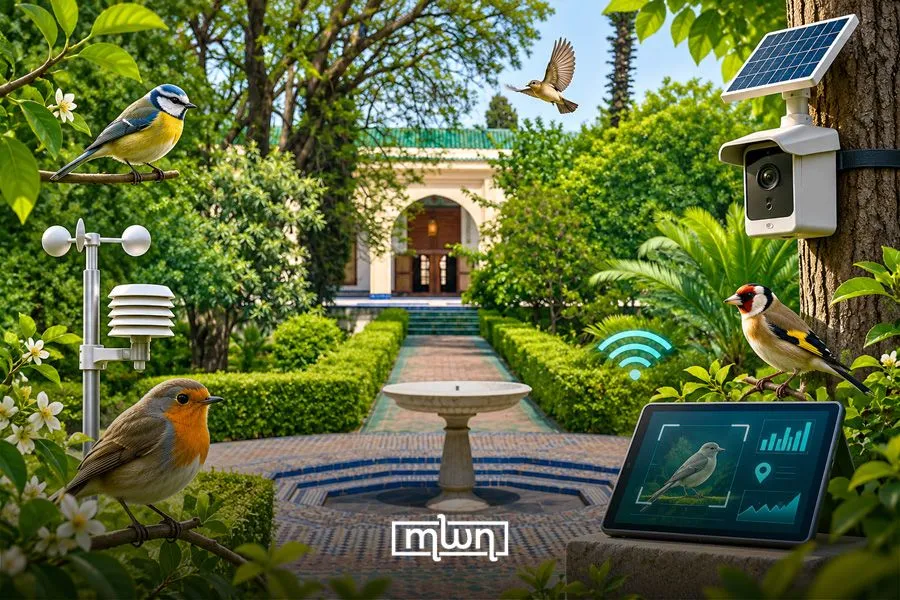
While top-down initiatives provide the framework, they cannot monitor every garden or orchard. This is where smart technology, such as the Birdfy Smart Bird Feeder, becomes transformative. By utilizing AI-powered cameras and automatic species recognition, Moroccan families in cities like Rabat, Marrakech, and Tangier can document bird sightings in real-time. These high-resolution tools remove the barrier of needing expert field knowledge, allowing citizens to contribute meaningful, geo-referenced data that fills the gaps left by traditional scientific surveys.
Empowering the Next Generation of Conservationists
The impact of this technology extends beyond raw data. Seeing a rare migratory bird identified instantly on a smartphone screen makes the abstract concept of a “migratory corridor” concrete and personal. This digital engagement fosters a deeper emotional connection to Morocco's natural heritage, encouraging citizens to adopt bird-friendly practices like native planting and reduced pesticide use. By integrating grassroots observation with national policy, Morocco is building a more inclusive and resilient approach to safeguarding its unique place in the global avian flyway.
As reported by moroccoworldnews.com.